Trump’s renewed tariffs will likely expedite Asean integration

The political agenda behind levies also threatens to hurt the region’s ties with the US
Summarise
    • US President Donald Trump has not let up on his tariffs agenda, seeking to leverage other acts to achieve his signature economic policy.
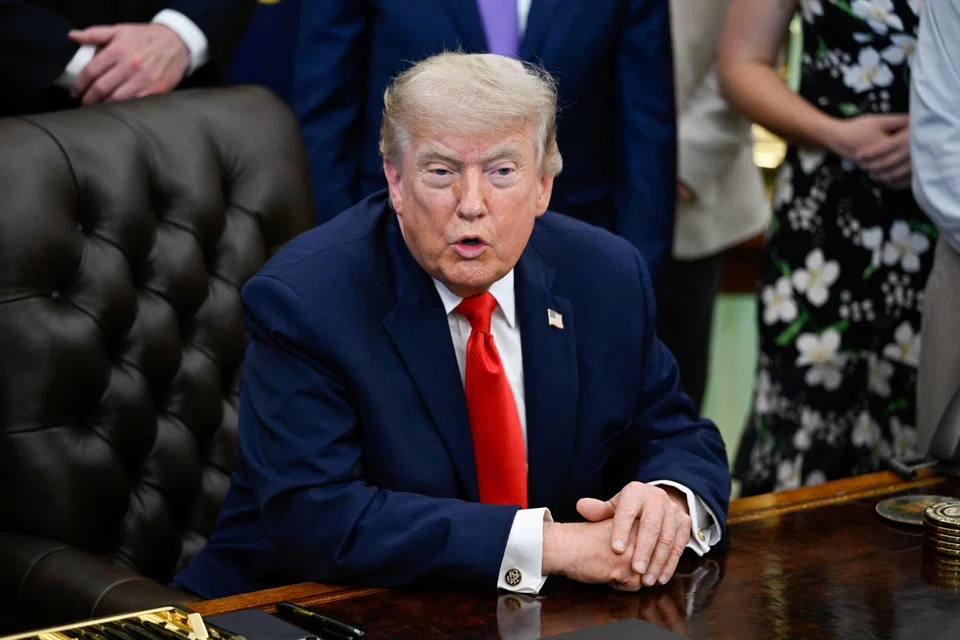
    • US President Donald Trump has not let up on his tariffs agenda, seeking to leverage other acts to achieve his signature economic policy. PHOTO: REUTERS
    Published Wed, Jun 17, 2026 · 06:00 PM

    [WASHINGTON] The pace of politics in much of the West often slows during the summer, but this June promises to be a busy one, with the White House accelerating its efforts to rebuild US President Donald Trump’s tariff wall.

    At the start of 2026, researchers at the Yale University Budget Lab calculated that the overall average effective US tariff rate for imports had jumped to its highest level since at least the Great Depression of the 1930s.

    The Supreme Court in February struck down most of Trump’s so-called reciprocal and fentanyl tariffs, ruling that a US president cannot use the International Emergency Economic Powers Act to implement them.

    But he has not let up, seeking to leverage other acts to achieve his signature economic policy.

    The efforts that the administration has put into pushing its tariffs has highlighted the way it is a nakedly political agenda.

    A busy schedule of tariff probes

    Global tariffs amounting to 10 per cent were imposed under Section 122 by Trump after February’s court ruling.

    Ahead of their scheduled expiry on Jul 24, US Trade Representative Jamieson Greer has his hands full.

    First, he is handling a US trade court ruling from May that those Section 122 tariffs are unlawful. Still, they will remain in place while the appeal process plays out.

    Second, he is in the middle of an investigation, based on Section 301 of the Trade Act of 1974, into 16 major economies for excess industrial capacity. The nations being probed include Asean countries such as Vietnam, Singapore and Indonesia.

    Section 301 allows the president to impose import taxes on goods without the approval of Congress. These tariffs can last as long as the US judges that these countries are continuing alleged discriminatory practices.

    This specific investigation is being undertaken, said Greer, because “the US will no longer sacrifice its industrial base to other countries that may be exporting their problems with excess capacity and production to us”.

    This suggests a political bent beyond the economic impulse.

    Vietnam also faces an additional probe looking into its handling of intellectual property rights. These investigations are expected to conclude this summer.

    Third, the White House has subjected 60 nations – including many that constitute Asean – to an investigation on forced labour allegations, based also on Section 301. It found that all contravened US red lines and will hence face new tariffs of 10 to 12.5 per cent.

    The Philippines, Singapore, Thailand and Vietnam are among the 44 that Greer has threatened with a 12.5 per cent tariff; the remaining 16 nations, including Cambodia, Indonesia and Malaysia, are slated for a 10 per cent duty.

    Such claims have been contested by the Asean nations, which regard the US decision as a further indication of the Trump team’s changing attitude towards a region that would generally prefer a more strategic relationship with the US.

    Beyond the new forced labour tariffs, new compliance burdens will be imposed on exporters in the region.

    This may encourage Asean nations to boost their economic integration agenda, including promoting common standards, to try to mitigate supply chain vulnerabilities.

    These potential levies will add to the remnants of the Trump tariff wall currently in place. This includes the sectoral US tariffs, which were not affected by February’s court ruling, announced last year on industries such as steel and aluminium.

    Tariff onslaught can destabilise ties

    In normal times, this radical tariff agenda would already be highly disruptive.

    What is stunning, however, especially to many longstanding US partners, is that Trump is intent on accelerating a political agenda amid the Iran crisis, the economic ramifications of which are still being felt despite the peace agreement announced on Jun 14.

    The renewed Trump tariff agenda casts fresh uncertainty, to say the least, over the trade ties between key Asean nations and the Trump administration.

    Since last year’s initial US tariff announcements, Indonesia, Cambodia and Malaysia have concluded so-called reciprocal trade agreements with Washington, while Thailand and Vietnam are still negotiating details of general framework agreements.

    These Asean countries, and others in Asia, are still seeking clarifications from the White House on the tariff deals. Greer has said they will remain in place, adding: “We’re going to stand by them. We expect our partners to stand by them.”

    So far, Asian nations which have signed tariff deals with Trump, such as Japan and South Korea, generally assert that they will continue to implement the agreements.

    One partial exception is India. Prime Minister Narendra Modi’s team has slowed the negotiating momentum with its proposed US deal amid the ongoing Trump tariff announcements.

    From a geopolitical perspective, the tariffs are straining ties with Asean, even though the bloc has long sought amicable relations with the US.

    While many of these partners have so far said they will adhere to deals previously struck with the US, the stronger political undertones of Trump’s new tariffs may change the picture.

    The writer is an associate at LSE Ideas at the London School of Economics