



Iran and Israel trade missile attacks, straining peace talks
The strikes risk leading to further escalation across the region
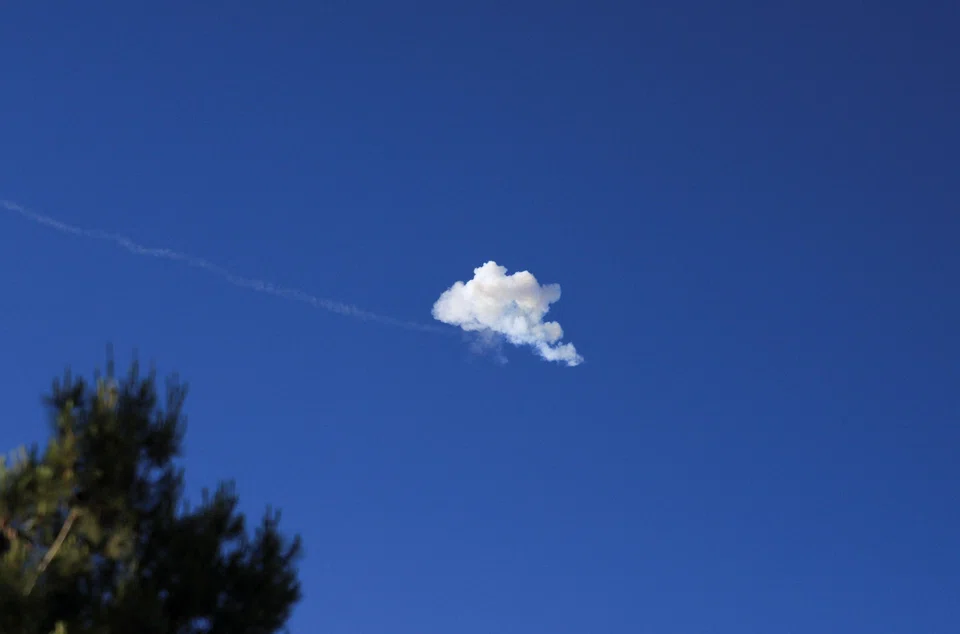
ISRAEL and Iran exchanged missile strikes on Monday (June 8) despite President Donald Trump’s calls for both sides to stop fighting and give peace talks a chance.
Iran launched a fresh wave of attacks just hours after firing ballistic missiles at Israel on Sunday. Israel responded with strikes on military targets in western and central Iran, while Iranian state media reported multiple explosions in the capital, Teheran.
Israel also struck Iran’s Karun petrochemical company in Mahshahr in a fresh offensive early Monday, the semi-official Fars news agency reported.
Iran’s offensive is a rare example of Teheran coming to Hezbollah’s defence and the most serious challenge yet to a ceasefire that took effect on April 8, halting a war that began in February when the US and Israel started bombing Iran.
The conflict left thousands of people dead across the Middle East, disrupted global energy flows and spurred a rally in oil prices that’s stoking fears of a surge in global inflation.
The latest bout of violence continued despite Trump on Sunday warning that a renewed escalation could derail efforts by Teheran and Washington to secure a new, 60-day truce. That would pave the way for negotiations on a broader agreement aimed at ending the conflict permanently.
The tit-for-tat strikes risk leading to further escalation across the region.
The Iran-backed Houthis said they launched a missile barrage on Israel from Yemen and will be imposing a “complete and total ban on maritime navigation for the Israeli enemy in the Red Sea,” according to statement on their Telegram channel.
The Houthis also vowed to escalate attacks depending on how the conflict unfolds, citing an escalation of pressure by the US and Israel on Iran and Lebanon.
SEE ALSO

Saudi Arabia on Monday sounded a missile alert in an area home to the Prince Sultan Airbase, which hosts US forces, the Associated Press reported.
Saudi Civil Defense said the “danger has passed” in the Al-Kharj governorate following an earlier public warning. Iran denied targeting the base.
Oil jumped after the flare up, with Brent crude rising as much as 5.1 per cent to trade nearly at US$98 a barrel. Stocks and bonds fell as investors grappled with a range of headwinds, including the flare-up in the Middle East conflict.
The Israeli shekel dropped 0.7 per cent to trade at 2.9782 per dollar at 9.25 am in Tel Aviv, taking its decline over the past week to more than 5 per cent after a weeks-long rally during which it traded at a three-decade high.
In a phone call with Israeli Prime Minister Benjamin Netanyahu on Sunday, Trump told him not to retaliate against Iran’s missile attacks and to allow more time for diplomacy, Axios reported, citing a senior US official and an Israeli source familiar with details of the call.
Netanyahu will convene a key security cabinet meeting at 11 am local time for consultations, an aide to the Israeli prime minister said, asking not to be identified, citing the sensitivity of the matter.
Since the US and Iran began negotiating an end to their war, Israel has insisted that any agreement won’t cover its conflict with Hezbollah. Iran has sought to keep Hezbollah under its security umbrella, while Trump has prioritised securing a deal.
“I’d rather not discuss that,” Zev Elkin, a member of Netanyahu’s security cabinet, told Tel Aviv radio station 103 FM when asked if Israel had coordinated its Iran strike with the US. “We’re a sovereign nation. We don’t need to get approvals. It’s a dialogue of real partners.”
Separately, the US president told the Financial Times that his Israeli counterpart would have to accept any deal the US reaches with Iran.
“I call the shots. I call all the shots,” Trump said. Netanyahu “doesn’t call the shots.”
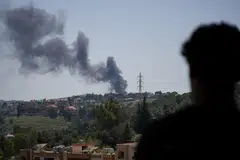
The latest strikes follow an escalation between Israel and Iran-back Hezbollah. Early Sunday, the Lebanon-based militia attacked targets in northern Israel, prompting a strike by the Israeli military in Beirut’s southern suburbs that killed two people and injured 11.
Mohsen Rezaee, a military adviser to Iran’s supreme leader, told the semi-official Iranian Students’ News Agency that Sunday’s missiles toward Israel were a “warning to cease their hostile actions” in Lebanon.
Last week, Hezbollah and Israel agreed to a partial ceasefire that would see a halt to attacks on Beirut in exchange for the same against northern Israel.
A few days later, Lebanon and Israel agreed to a conditional, more comprehensive truce contingent on Hezbollah withdrawing from an area close to Israel. The militant rejected that truce.
Israel used air-launched ballistic missiles to attack several targets inside Iran early Monday, Iran’s Islamic Revolutionary Guard Corps said in a statement carried by state-run Islamic Republic News Agency. Blasts were heard in the city of Karaj west of Teheran, the country’s semi-official Tasnim news agency reported.
In Washington, Trump’s team is floating a plan to steer Iranian assets frozen in the US toward helping Persian Gulf allies rebuild sites damaged in attacks launched by the Islamic Republic.
Trump said in an interview broadcast on Sunday that he wouldn’t unfreeze Iranian assets or lift any sanctions as part of an initial deal.
“If they behave, if they do a good job, we start talking” about releasing the assets, Trump told Kristen Welker in the interview taped on Friday for NBC’s Meet the Press.
Iran’s Deputy Foreign Minister Kazem Gharibabadi poured cold water on the idea, saying in a post on X that his country’s assets “are neither Washington’s war spoils nor a fund for paying its allies.” He also noted that Iran is still demanding “full compensation” for its own damages from the war Israel and the US started on Feb 28.
Several rockets breached Jordanian airspace on Sunday evening following a “renewed escalation” in the region, Minister of Government Communication Mohammad Momani said in a post on X.
Israel said on Monday that it identified a missile launch against it from Yemen. BLOOMBERG
Decoding Asia newsletter: your guide to navigating Asia in a new global order. Sign up here to get Decoding Asia newsletter. Delivered to your inbox. Free.
Share with us your feedback on BT's products and services
TRENDING NOW

LTA proposes combining car COE categories, adding rebate-surcharge system

StarHub to acquire MyRepublic’s mobile business amid ongoing telco consolidation

DBS, OCBC, UOB rout lops billions off STI as inflation, rate concerns spook investors

Grab CEO’s wife Chloe Tong on life with Anthony Tan and finding her purpose

