



Trump welcomes China’s Xi with fanfare, but no breakthroughs emerge
The US president’s remarks include a comment on ‘great friendship’, rather than focusing on policy differences
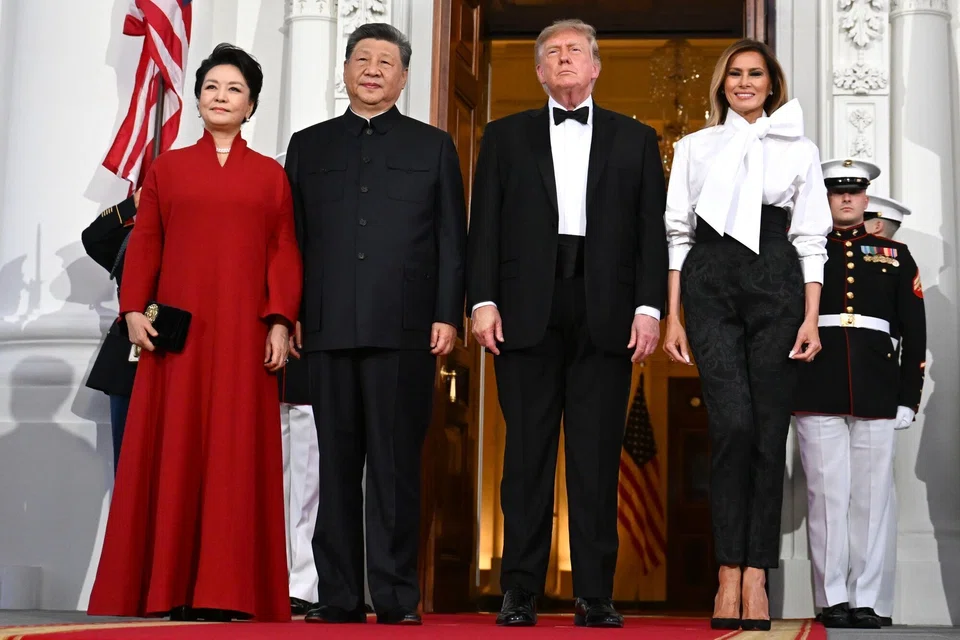
US PRESIDENT Donald Trump welcomed Chinese President Xi Jinping to the White House on Thursday (Sep 24) for a lavish summit that was heavy on symbolism but light on substance, with no sign of breakthroughs on thorny issues such as artificial intelligence, trade, Taiwan and the war with Iran.
The two leaders and their wives attended a state dinner, a black-tie affair of sesame-crusted sea bass and a guest list heavy with tech CEOs.
In his dinner toast, Trump said he and Xi “both understand we represent different systems, but the ties between our people endure and we’ve never gotten along better”.
He then invited dinner guests to tour the site of the new ballroom he is building nearby, hours after showing Xi a helipad he had built in the White House complex.
Construction projects are a frequent digression for a president who has put a lot of focus on remaking Washington’s physical infrastructure.
Xi said he and Trump had in-depth discussions and reached “common understanding on many issues” that provided “new strategic guidance for China-US relations”. He did not elaborate.
“China and the (US) must act as responsible major countries,” he said, calling for “a new approach for major countries to get along with each other”.
The meeting was striking for where it took place – in Washington, even as scores of world leaders were in New York for the United Nations General Assembly.
It took place at a time of rising public concern about the swift growth of AI, and as Trump struggles to resolve a war his administration and Israel began with Iran.
The conflict has sharply driven up energy prices and weighed heavily on his public approval as November midterm elections approach.
Taiwan talks
During a bilateral discussion in the afternoon, Xi urged the US to oppose “Taiwan independence”, going by a read-out from the official Chinese news agency, addressing one of the thorniest issues between the two countries.
The White House has not yet provided its own summary of the talks.
Xi had been expected to press Trump this week to halt arms sales to Taiwan. Following his visit to China in May, Trump said he was holding in abeyance an arms package to Taiwan worth some US$14 billion and called it a “very good negotiating chip”.
That move left some US allies in Asia and even some of Trump’s fellow Republicans concerned that he may be tempted to soften Washington’s support for Taipei, in exchange for economic wins.
China claims democratically governed Taiwan as its own territory and has not ruled out using force to gain control over the island.
The summit between the two leaders came shortly after Trump forcefully defended his use of military power in a speech at the UN earlier this week, suggesting he could “annihilate” Iran.
He took a strikingly different tone with Xi on Thursday, reflecting a power balance that has shifted towards the Chinese leader after a trade war that ended with a US climb-down on tariffs.
In remarks after Xi’s arrival on Thursday, Trump emphasised his “truly great friendship” with Xi, rather than focusing on policy differences, and said the two powers had made strides on trade since his trip to China in May.
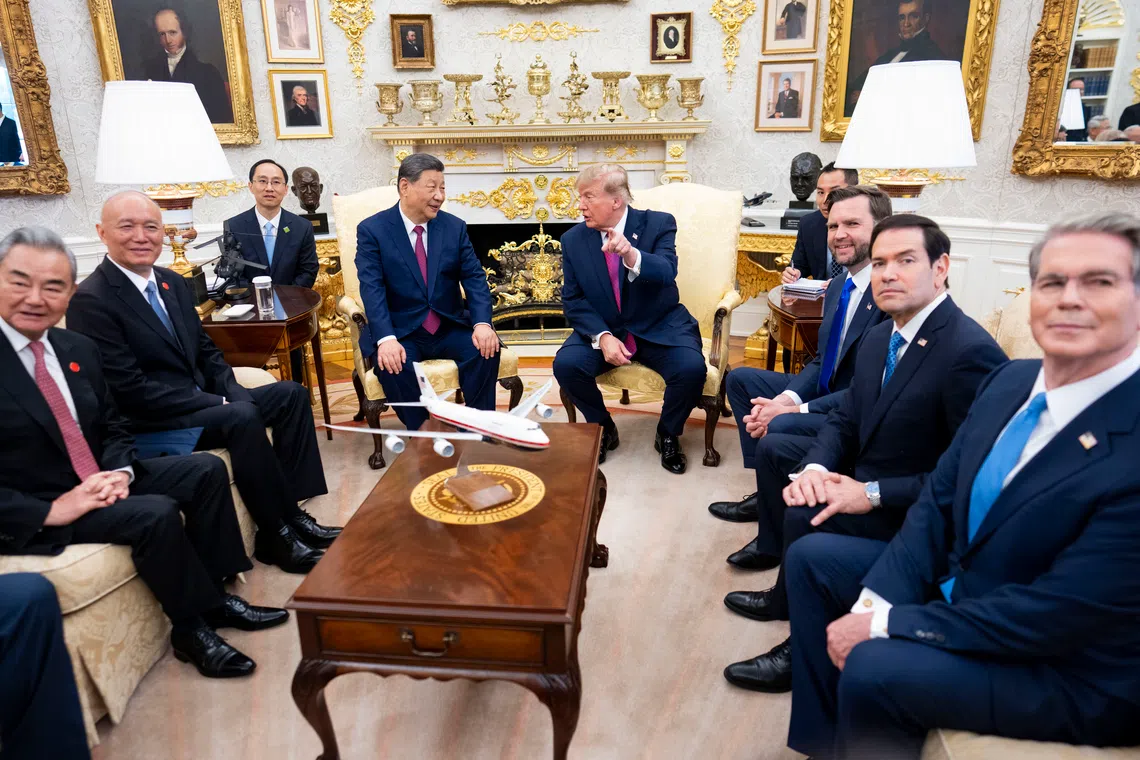
Somewhat more pointedly, Xi said the two countries’ interests were deeply intertwined and that competition between them should be a “healthy one”.
US companies were welcome in China, he said, adding that he hopes “Chinese companies are treated fairly here in the (US)”.
Xi also said both militaries should maintain regular dialogue to improve crisis prevention.
Personal versus national
Edgard Kagan, a former senior White House official for East Asia, said the contrasting rhetoric demonstrates the different strategy of each leader.
“The president is casting it very much as about his personal relationship with Xi,” he added, now with the Center for Strategic and International Studies.
“What I found interesting was Xi is being much more cautious, and suggesting that it’s less about the personal relationship than the national relationship.”
The summit, Xi’s first visit to Washington in more than a decade, is the second meeting this year between the leaders of the world’s two biggest economies.
For Trump, who relishes ceremony and prizes his ties with powerful leaders, the visit is as much a matter of national prestige as an opportunity for high-stakes diplomacy.
But their remarks were not carried live by any US television networks, which refused to provide footage in protest of the White House’s ban of CNN, MS Now and Politico.
During his comments on Thursday, Xi said both countries must “ensure that the development of AI is always under human control”.
Analysts said intense competition between the two powers in AI is likely to limit the scope for anything beyond symbolic agreements.
There has been little sign of Beijing being willing to exert pressure on Iran to yield to US demands. During Thursday’s meeting, Xi expressed support for the US and Iran to return to a ceasefire and eventually negotiate a peace deal, Xinhua reported.
The guest list for Thursday’s state dinner included CEOs such as Apple’s Tim Cook, Amazon’s Jeff Bezos, Alphabet’s Sundar Pichai, OpenAI’s Sam Altman, Tesla’s Elon Musk and Nvidia’s Jensen Huang.
Despite such an array, people familiar with US plans said Trump is likely to maintain firm export controls on US tech that Xi wants loosened. REUTERS
Decoding Asia newsletter: your guide to navigating Asia in a new global order. Sign up here to get Decoding Asia newsletter. Delivered to your inbox. Free.
Share with us your feedback on BT's products and services
TRENDING NOW

Once staunchly pro-China, Malaysian Chinese businesses are now distancing themselves from Beijing

Britain’s mansion tax shows the difficulty of targeting wealth
Three hats, one goal: How Ng Kian Swan runs sustainability at NUHS
COE review: The gap between luxury and mass-market cars isn’t the only one worth bridging

