Tumbling global government bonds puts yields on brink of 4%, highest level in nearly 20 years
Global government bonds have lost around 2.4% in 2026, compared with a 6.8% gain in 2025

A WORSENING bond sell-off is pushing the average yield on global government debt to within a whisker of 4 per cent, a level not seen since 2007.
Yields on Bloomberg’s Global Aggregate Treasuries index rose eight basis points to 3.99 per cent on Wednesday (Sep 23). US Treasuries have been a major driver of the losses, as strong economic data, stubborn inflation and mounting fiscal concerns reinforce expectations that interest rates will stay higher for longer.
The sell-off threatens to raise borrowing costs for governments, businesses and households while making stocks less attractive as higher yields chip away at the value of future corporate earnings.
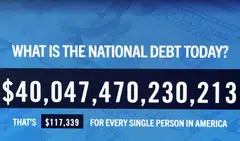
A five-year US debt auction this week ranked as the second-worst by one measure in data recorded since 2018, showing the pressure on Washington as it faces the rising cost of servicing around US$40 trillion of debt.
“Inflation is still high and sticky in a lot of places, labour markets are tight for various reason, and despite higher fuel and everything, prices, economies are still growing well,” said Amy Xie Patrick, a money manager at Pendal Group. “Given all of this, bonds are actually behaving rationally with respect to the economic fundamentals.”
Global government bonds have lost around 2.4 per cent in 2026, compared with a 6.8 per cent gain in 2025, according to the Bloomberg index. The gauge posted its biggest one-day loss since May on Wednesday.
The pressure spread to Asia on Thursday. Yields on policy-sensitive three-year Australian government debt jumped 13 basis points to 5.07 per cent, its highest since May 2011. New Zealand’s two-year yields climbed as much as 17 basis points to just under 4 per cent.
Japan’s 10-year yield hit its highest since 1996 as the market reopened after a three-day break and caught up with the global sell-off.
“There is still a lack of demand even from the locals – from pension funds to the banks to the lifers – in terms of supporting the JGB market,” Carol Lye, portfolio manager at Brandywine Global Investment Management, said in a Bloomberg TV interview.


Strategists at JPMorgan Chase and KKR see scope for US yields to climb further as energy-driven inflation, heavy government borrowing and the risk of additional central-bank tightening continue to percolate.
US five-year yields topped 5 per cent on Wednesday for the first time since 2007, while those on 10-year jumped the most since the Liberation Day tariff shock in April 2025. Strong economic data and surging oil prices prompted traders to ramp up bets on further US Federal Reserve tightening.
Swaps now fully reflect three quarter-point hikes over the next year, with significant hedging for a fourth. A US$70 billion five-year Treasury auction on Wednesday drew the highest yield since 2006.
Damien Loh, chief investment officer at Ericsenz Capital, said while short-dated bonds look cheap, he would avoid trading against the market’s momentum and price action. For investors looking to fade the sell-off, he favours yield-curve steepeners such as 2s10s or 5s30s as a better risk-reward trade.
Rising volatility is adding to the gloom, making investors more hesitant to step in even as higher yields make bonds more attractive. The ICE BofA MOVE Index, which measures US bond market swings, climbed Wednesday to the highest level since March.
“Most fixed income will like higher yields, but want them to be stable there – afraid of catching a falling knife,” said Hans Mikkelsen, strategist at TD Securities. BLOOMBERG
Decoding Asia newsletter: your guide to navigating Asia in a new global order. Sign up here to get Decoding Asia newsletter. Delivered to your inbox. Free.
Share with us your feedback on BT's products and services