



US debt crosses US$40 trillion threshold after doubling under Trump and Biden
The federal government’s IOU has now more than doubled in less than a decade
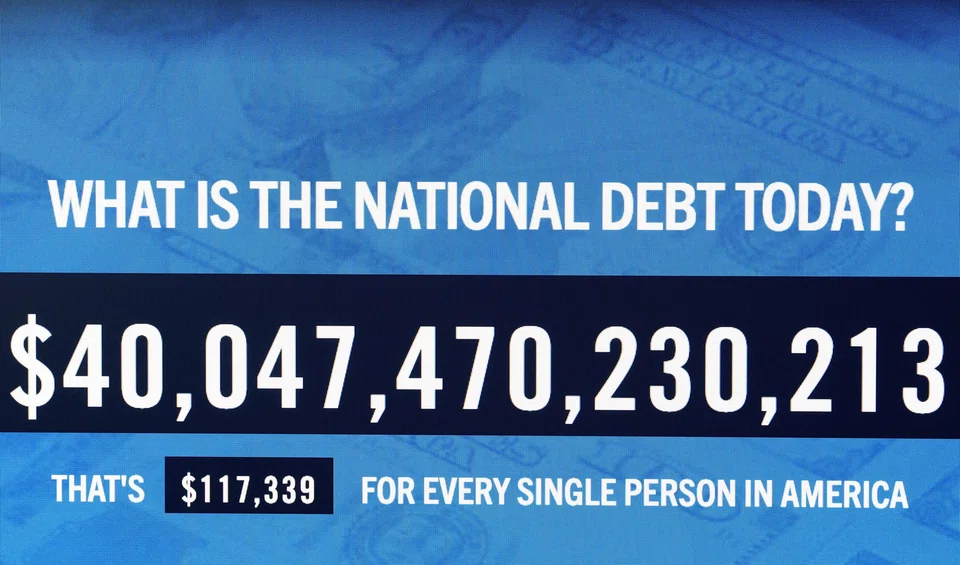
[WASHINGTON] Total US debt has topped US$40 trillion for the first time, the US Treasury Department said on Wednesday (Aug 19), drawing fresh warnings that a fiscal crisis is brewing as ballooning costs for social safety-net programmes and interest payments far outstrip revenues held back by tax cuts.
The US Treasury’s latest daily cash and debt balances statement showed total public debt outstanding at US$40.047 trillion on Tuesday, a total that includes Treasury securities held by the public of US$32.266 trillion and intra-governmental debt holdings of US$7.782 trillion.
The federal government’s IOU has now more than doubled in less than a decade, from US$19.95 trillion when US President Donald Trump was sworn in for the first time in January 2017.
Roughly one-third of that increase occurred during two years of frantic government borrowing to fund the Covid-19 pandemic responses undertaken by Trump and former President Joe Biden, while the fiscal policy choices of both presidents combined with long-running tax-and-spending imbalances account for the rest.
US Budget watchdog groups have been anticipating the crossing of the threshold for weeks and have issued stark warnings that a full-blown debt crisis could erupt unless lawmakers confront an unsustainable fiscal outlook and raise taxes, cut spending or both.
“Forty trillion dollars of debt doesn’t exist solely on the government’s ledgers; it is felt throughout the economy and finds its way to the pocketbooks of people one way or another,” said Maya MacGuineas, president of the nonpartisan Committee for a Responsible Federal Budget.
“The more we borrow, the more we exacerbate inflation, squeeze out other priorities in the Budget, and leave ourselves vulnerable to emergencies at home and turmoil abroad,” MacGuineas said in a statement just after the Treasury data was released.
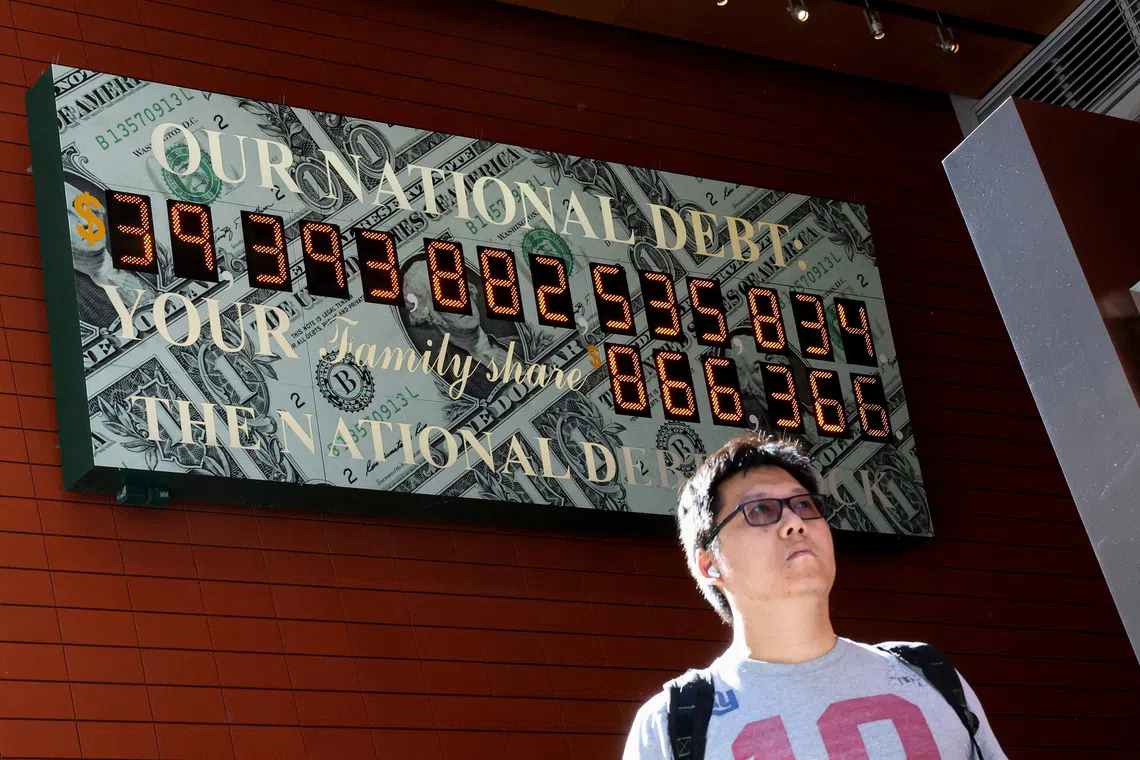
She said the US$40 trillion figure was reached less than five months after debt reached US$39 trillion, and has quadrupled in less than 20 years after taking until 1981 to reach US$1 trillion for the first time.
“It is staggering how predictable the fiscal decline of a global power can become,” MacGuineas added.



Global US creditors may already be growing wary, with demand from foreign investors holding nearly one third of Treasuries declining over the past year.
Days after a US$25 billion auction of 30-year Treasury bonds went off at the highest yield since 2021, yields on so-called long bonds on Tuesday hit their highest levels in nearly two decades as investors demanded greater compensation in the face of hefty US government bond issuance. Yields move inversely to bond prices.
On Wednesday, US Treasury Secretary Scott Bessent took a bold step to push long bond yields back, announcing a doubling of buyback sizes for 10- to 30-year Treasuries to at least US$4 billion per operation.
Higher Treasury yields at the longer end tend to push up interest rates for mortgages, car and commercial loans. With the mountain of debt showing no signs of abating, Trump on Wednesday repeated his frequent demand for lower rates.
Asked at the White House whether Americans should worry about bond market volatility, Trump said: “I don’t think so at all. I think we have a very powerful country, and we’re powering through these ridiculous interest rates – they’re ridiculous. Look, when our country is strong, interest rates should go down.”
Pandemic spending, and then some
The Treasury last week reported the fourth-highest monthly deficit in US history – US$432 billion for July – as tariff refunds turned customs receipts negative for the third month in a row and outlays for Social Security and Medicare benefits for seniors continued to grow.
The deficit for the first 10 months of fiscal 2026 has already exceeded the total gap for all of fiscal 2025 with two months to go in the current fiscal year.
Trump has largely ignored the dwindling number of fiscal hawks in his Republican Party, championing heavy spending across his two terms. Public debt rose by US$7.8 trillion during Trump’s first term, with more than half of it accumulating during the pandemic response over his last nine months in office.
Since Trump took office a second time in January 2025, the US debt load has increased by US$3.8 trillion, for total growth of US$11.6 trillion across his two terms so far.
Public debt increased by US$8.4 trillion during Biden’s term, also marked by heavy Covid-19 recovery spending, but driven as well by big-ticket outlays for infrastructure investment, clean energy subsidies and other priorities championed by his Democratic Party.
The Committee for a Responsible Federal Budget estimates that the policy choices of Trump and Biden have increased the federal debt trajectory beyond what would have accumulated under the existing spending statutes when each took office.
For instance, Trump’s landmark second-term legislative package – the One Big Beautiful Bill Act – will add another US$4.7 trillion in debt, according to the US Congressional Budget Office, the nonpartisan bookkeeper for federal lawmakers.
Trump has branded his second presidency as one focused on cost-cutting, marked by early federal agency job cuts ordered by the non-governmental Department of Government Efficiency. But much of his spending reductions has targeted so-called “discretionary” programmes, the smallest portion of the federal Budget.
The US spends roughly US$7 trillion annually, and 60 per cent of it is earmarked for so-called “mandatory” programmes, including payments for Social Security, Medicare, Medicaid and veterans’ care, that generally grow to keep pace with living costs.
Another US$1.1 trillion pays the interest on US borrowing, the cost of which rises as the debt pile grows and as interest rates climb.
The 2025 fiscal-year Budget marked the first time debt service costs exceeded Pentagon funding. In the first 10 months of the 2026 fiscal year, interest costs have eclipsed Medicare healthcare outlays to become the second-largest line-item in the federal Budget, behind the Social Security pension system.
The US is spending more to fund the retirement and healthcare costs of the “baby boom” generation, straining the trust funds behind Social Security and Medicare even as payroll and income tax revenues fall short of covering federal costs. REUTERS
Decoding Asia newsletter: your guide to navigating Asia in a new global order. Sign up here to get Decoding Asia newsletter. Delivered to your inbox. Free.
Share with us your feedback on BT's products and services
TRENDING NOW

GCash parent Mynt rises in market debut after South-east Asia’s top 2026 IPO

In the age of AI, what is a university education for?

Singapore to use ‘every legal and regulatory lever’ against companies linked to haze: Shanmugam

‘IPOs are not the only vehicle’: KKR heads for record exits even as firms stay private for longer

