



US and Iran exchange strikes as both sides feud over control of Hormuz
US military hits tanker deep within the Persian Gulf near Iran’s key oil export terminal
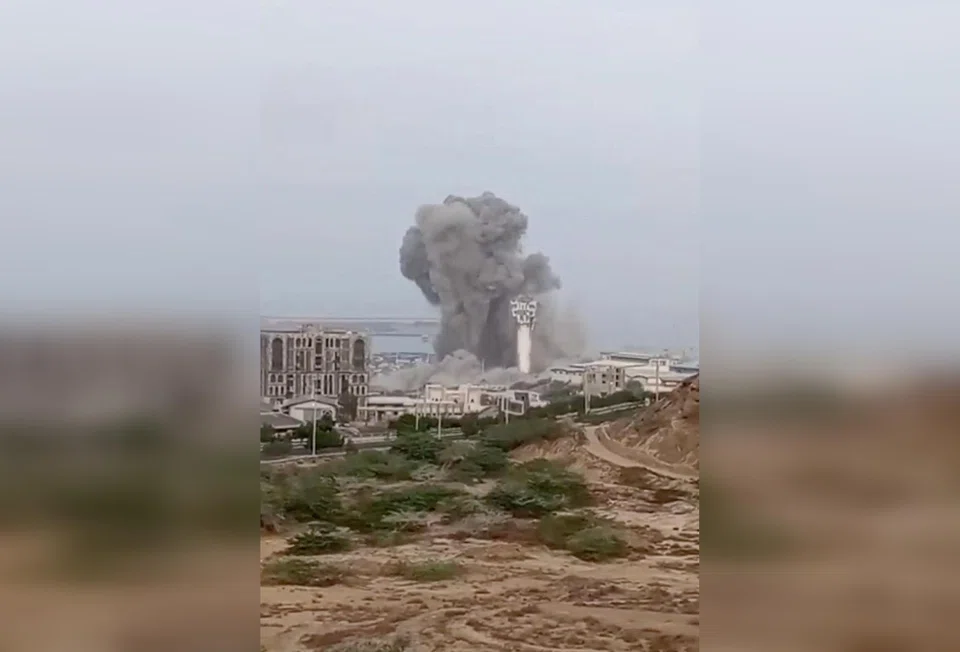
THE US launched more airstrikes on Iran after US President Donald Trump pledged to intensify the bombardment until Teheran stops attacking ships in the Strait of Hormuz and agrees to open the waterway.
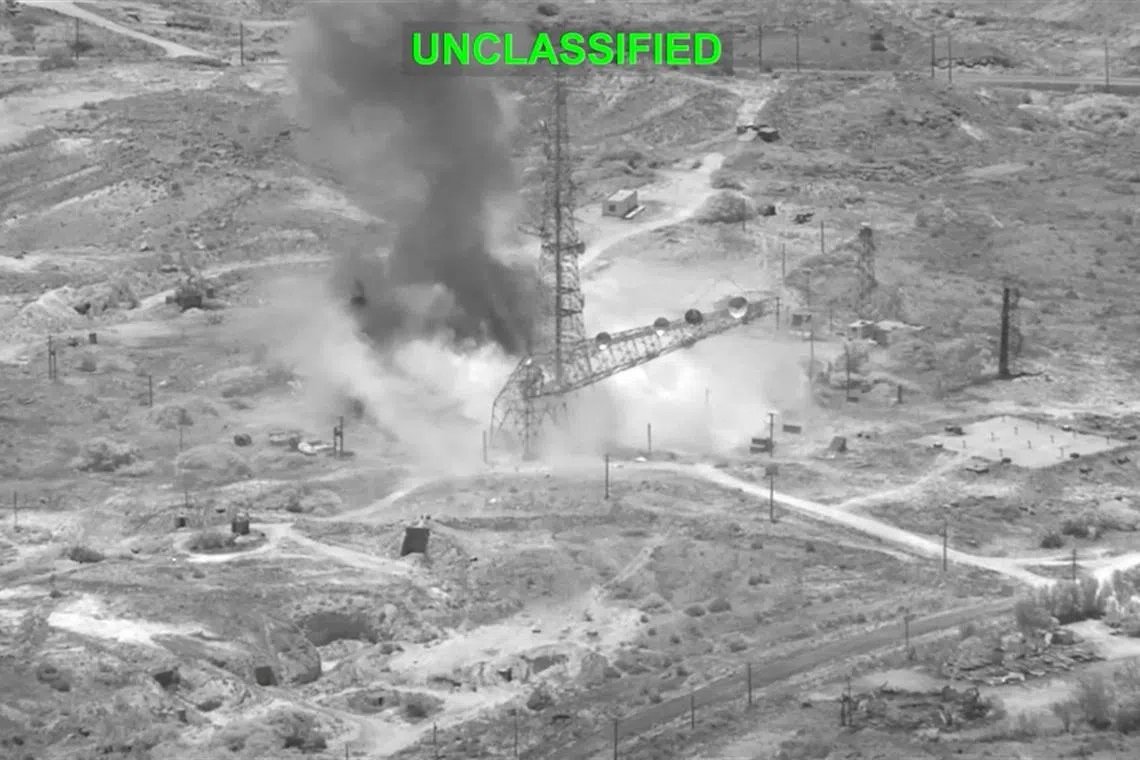
In a 90-minute operation, the American military hit missile storage and launch sites on Greater Tunb Island in the Persian Gulf near the strait.
US Central Command said in a post on X late Wednesday (Jul 15) that it had launched a subsequent wave of strikes to “degrade Iran’s ability to threaten” shipping in the waterway, targeting air defence sites, missile and drone facilities and coastal surveillance installations.
Air defences were activated in parts of Teheran, Iran’s state-run Press TV reported.
Trump announced Wednesday night on Truth Social that Iran had released an American woman detained since December 2024, praising the Islamic Republic for “this gesture of Goodwill” and saying she was safely outside the country.
Trump did not name the citizen, but her lawyer, Jared Genser, said in a social media post that she was Dena Karari, who had been trapped in Iran since December 2024. Media outlets including the New York Times and the Guardian also identified the woman as Karari, a dual US and Iranian citizen.
A US-Iran interim peace deal signed in June has all but collapsed over the past week as the two sides feud over control of the vital strait, through which Saudi Arabia, Qatar, the United Arab Emirates and others send most of their energy exports.
Brent crude rose for a fourth day to above US$85.25 a barrel on concerns that escalating Middle East tensions will further disrupt energy supplies.
Trump reiterated his claims that Iran is seeking more talks after US strikes have degraded its missile and drone capabilities.
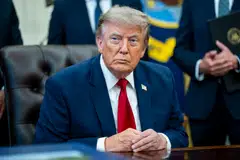
“We received a call just as I was coming here that they want to meet,” Trump said in an interview with Fox Business. Teheran has not publicly confirmed a desire to resume negotiations, however.
US strikes Iranian-linked tanker
As Iran threatened to attack ships seeking to transit the strait, the US said it had assisted a double-digit number of vessels overnight.
US Central Command said that its forces had fired missiles into the smokestack of a Curacao-flagged “unladen” tanker as it sailed toward an Iranian port.
The vessel “ignored multiple warnings as it attempted to violate the US blockade,” US Central Command added. “The ship is no longer transiting to Iran.” Two other ships were turned back earlier.
The head of the International Maritime Organization, a United Nations body, on Wednesday told Bloomberg Radio the Strait of Hormuz remains too dangerous for commercial vessels to transit. That was its most significant warning to the shipping industry since the June agreement.
Each side blames the other for breaching the terms of the so-called memorandum of understanding, which was worded ambiguously on how quickly vessels would have free passage through Hormuz.
US Vice-President JD Vance, in an interview with US media, described the US approach as “a delicate diplomatic dance” combining economic pressure, military action and negotiations.
Rejecting arguments that talks with Iran are futile, he asked: “What is your proposal to get people to stop shooting at ships in the Strait of Hormuz?”
Explosions reported in Iran
The latest wave of US attacks has mostly singled out military sites in the south of the Islamic Republic, such as radar, missile and drone facilities. The bombing campaign remains far less intense than during the height of the war in March and early April, when Teheran and other major cities were under constant fire.
Iran shows little sign of backing down. “The Strait of Hormuz will remain closed until the United States accepts Iran’s lawful system, and a mechanism based on the Iranian will governs the strait,” the Iranian army said in a statement cited by the semi-official Fars news agency.
“The region’s oil and gas exports are either available to all or available to none,” the IRGC said, according to a report from Iran’s Press TV.
Parliament speaker and top negotiator Mohammad Bagher Ghalibaf said Iran has “no reason to remain committed” to the deal if Teheran is not benefiting from it but stopped short of formally withdrawing from it.
EU’s aviation safety regulator raises its threat level for airlines
US Congressional Republicans are moving to increase war spending despite the political risks of supporting an unpopular campaign that has pushed up consumer prices, while the Trump administration is advancing plans to extend a shipping waiver to ease movement of oil, fuel and fertiliser as supply disruptions threaten.
The European Union’s aviation safety regulator, meanwhile, raised its threat level for airlines flying through the Middle East. It cautioned carriers against going through the airspace of Bahrain, Kuwait, Qatar, the UAE and the Gulf of Oman.
Iran said US strikes have killed more than 30 civilians in recent days, including seven people in a missile attack on a barracks in Iranshahr on Wednesday.
The US maintained its naval blockade, first imposed in April and lifted after June’s memorandum of understanding, a move that may further weaken Iran’s economy. BLOOMBERG
Decoding Asia newsletter: your guide to navigating Asia in a new global order. Sign up here to get Decoding Asia newsletter. Delivered to your inbox. Free.
Share with us your feedback on BT's products and services
TRENDING NOW

LTA proposes combining car COE categories, adding rebate-surcharge system

StarHub to acquire MyRepublic’s mobile business amid ongoing telco consolidation

DBS, OCBC, UOB rout lops billions off STI as inflation, rate concerns spook investors

Grab CEO’s wife Chloe Tong on life with Anthony Tan and finding her purpose

