US launches fresh strikes on Iran in tit-for-tat exchange, threatening to reignite six-month conflict
Two supertankers hit in Hormuz strait, shipping intelligence firms say
 Add BT as a preferred source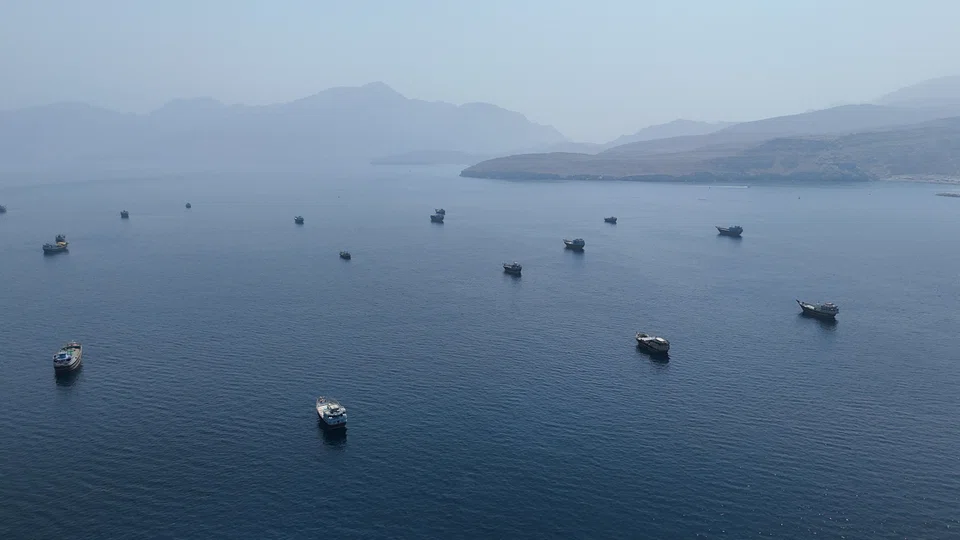
[WASHINGTON/DUBAI] The US launched new air strikes on Iranian targets on Tuesday (Sep 1), in a move that threatened to reignite the six-month-old conflict that has driven global energy prices higher and weighed heavily on US President Donald Trump’s popularity at home.
The strikes followed an exchange of fire over the Aug 29-30 weekend – the first since July – and after two tankers were hit on Monday leaving the Strait of Hormuz, the global oil supply waterway that Iran has effectively closed to shipping. Brent crude futures, already up 2 per cent on the day, jumped almost 2 per cent more on the reports.
Teheran remained defiant, warning that it would prevent oil being exported from the Gulf, despite a threat by Trump to hit Iran “hard” in response to the renewed Iranian strikes, and a warning from US Treasury Secretary Scott Bessent that Washington was about to impose new sanctions.
Trump has repeatedly vowed over the course of the conflict to unleash new attacks on Iran but has not always followed through. Bessent on Aug 24 said he would significantly escalate economic sanctions against countries that do business with Iran, though Washington has not revealed specifics about that plan.
Neither threats of strikes nor new economic sanctions appear to have materially changed the position of Teheran, which has been under heavy economic sanctions for half a century.
US says it hits Revolutionary Guard
“Today at 12 pm ET (1600 GMT), US forces began striking Islamic Revolutionary Guard Corps (IRGC) targets in Iran,” US Central Command posted on X. “The strikes follow recent attempted attacks by the IRGC against commercial shipping in the Strait of Hormuz and against American service members deployed to the region.”
Iran’s state broadcaster said there had been reports of explosions on Iran’s Qeshm Island, on the northern side of the strait.
The state-linked news agency Nour News said there had been reports of explosions in the port city of Bandar Abbas and in Chabahar, a port on the southern coast. The state news agency IRNA also reported the sound of explosions in Jask and Sirik, and state media said US forces attacked a civilian airport in Jiroft in southern Iran.
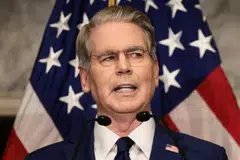
Trump said on his social media channel that if Iran retaliated for the attack, “they will be hit again at a much harder and higher level.”
The Fars news agency cited an IRGC spokesperson as saying the US “will regret its new attacks”.
Scale of new hostilities unclear
The US Embassy in Qatar urged Americans currently in the Middle East to exercise “heightened vigilance and be aware of potential flight cancellations, airspace closures, and travel disruptions”.
The six-month-old conflict had shifted into an economic stand-off before the weekend strikes, in which US forces attacked Iran’s Larak Island on Aug 30 and Iran responded by launching missiles at two US air bases in Jordan.
Iranian President Masoud Pezeshkian had said early on Tuesday at a regional summit in Kyrgyzstan that Teheran would reciprocate immediately if Washington honoured its commitments under a June Memorandum of Understanding that was intended to halt the conflict.
The MOU declared an end to fighting that has now killed thousands in Iran and Lebanon since US and Israeli strikes began on Feb 28. But it also deferred many of the most difficult issues and paved the way for a broader 60-day negotiation period – which passed without further agreement.
Iranian officials have shown no public sign since then of bowing to pressure.
“If the enemy wants us not to export oil from the Persian Gulf, no one will be able to export oil,” Iranian parliament speaker Mohammad Baqer Qalibaf was quoted as saying by Iranian media.
Foreign Ministry spokesman Esmaeil Baghaei told a press conference in Teheran that Washington was “addicted to making excessive demands and has mistaken negotiations for dictating terms”.
The heightened tensions have renewed fears of oil supply disruptions from the world’s key crude-producing region.
“The tit-for-tat missile exchanges between the US and Iran bring validation to those who believe that even if not a ‘forever war’, this conflict will run and run,” said PVM analyst John Evans. REUTERS
Decoding Asia newsletter: your guide to navigating Asia in a new global order. Sign up here to get Decoding Asia newsletter. Delivered to your inbox. Free.
Share with us your feedback on BT's products and services