



US strikes Iran and blocks oil sales in new test of ceasefire
The spate of attacks is a reminder of the continued risks to ships crossing through Hormuz
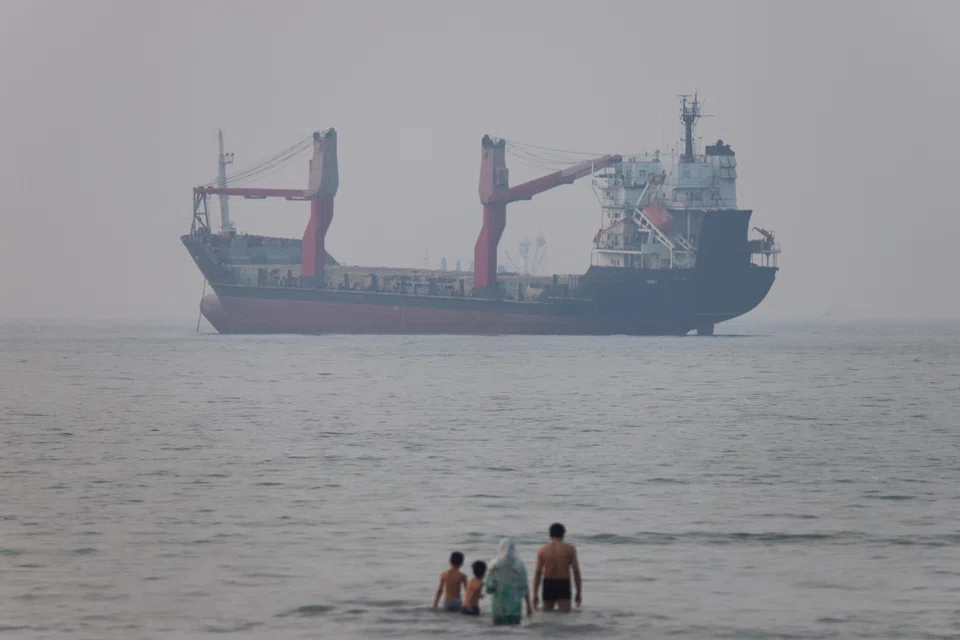
[NEW YORK] The US carried out a new round of strikes in Iran targeting more than 80 sites and revoked a waiver allowing new sales of Iranian oil, further imperilling a peace agreement after a series of attacks on ships in the Strait of Hormuz.
American forces struck Iranian air defence systems, command and control networks, coastal radar sites, anti-ship missile capabilities, and more than 60 Islamic Revolutionary Guard Corps small boats, US Central Command said on Tuesday (Jul 7), calling it “an immediate response” to Teheran’s latest attacks on commercial vessels transiting the Strait of Hormuz.
Central Command said that the latest American attacks had been concluded. It remained unclear if and how Iran would retaliate, but Axios reported that the country’s military had carried out drone assaults on Bahrain.
Hours earlier, the US Treasury Department announced it was barring new sales of Iranian oil after Jul 7, a key incentive intended to get Teheran to abide by a deal that calls for reopening the strait.
Taken together, the American actions marked the most serious threat yet to the interim agreement signed between the two countries’ leaders on Jun 17. They also threatened to scuttle negotiations aimed at achieving a permanent peace within 60 days of that deal. US President Donald Trump approved the strikes on Iran while he was in Turkey for a Nato summit, according to a US official who asked not to be identified.
Brent oil climbed more than 2 per cent to trade near US$76 a barrel early Wednesday. The rebound, after futures had plunged in the second quarter as regional tensions cooled, could rekindle inflationary concerns in global markets.
Brent prices touched a peak above US$126 a barrel in late April, two months after the US and Israel began the military campaign against Iran. Prices returned towards pre-conflict levels this month on growing signs of a recovery.
Both sides accused the other of violating the ceasefire. The US blamed Iran for the strikes on commercial shippers in Hormuz over the last day, the most since the agreement went into effect.

Iran called the US operation and the waiver revocation violations of the two sides’ agreement. Deputy Foreign Minister Kazem Gharibabadi vowed “decisive actions” in response.
A US official, speaking on condition of anonymity before the American strikes, said that Iran would only receive the benefits of the deal if it behaved responsibly, but added that negotiators continued to work in good faith towards a final accord, signalling Washington was not ready to abandon the peace process.
The end of attacks on commercial shipping and the previous 60-day waiver allowing Iranian oil sales were key elements of the memorandum of understanding that halted fighting between the US and Iran.
That deal was meant to create space for more detailed negotiations on the fate of Iran’s nuclear programme and the future of the strait. But Iran has had difficulty in selling its crude, as price discounts narrowed, Chinese demand remained relatively muted and other nations fretted over the durability of the US waiver.
Even so, the memorandum has held only tenuously. In late June, Iran struck a Singapore-flagged container ship in the strait, prompting the US to retaliate and setting off a series of back-and-forth attacks.
Teheran has repeatedly said that it would not allow vessels to transit the waterway without its permission, though it denied any involvement in an attack on a Qatar-linked vessel. Trump had pushed for ships to pass freely through the strait as they had done before the US and Israel began attacking Iran in late February.
Bob McNally, president of Rapidan Energy Group and a former White House official, said that the waiver revocation “is a signal to a complacent market that the ceasefire may not be as durable and solid as thought. The market has some risk pricing to do”.
The spate of attacks is a reminder of the continued risks to ships crossing through Hormuz, even with military forces protecting vessels that choose to cross by a route near Oman’s coastline.
Iran has also sought to steer commercial ships towards its shores and keep them from using the Omani route, according to US chief of naval operations admiral Daryl Caudle.
He said Iran had laid mines in the strait as a way of channelling ships nearer to Iran. Their goal is to “force shipping into their side of the actual Strait of Hormuz”, he said.
“The Iranians are determined to show that they are in control of the Strait and that the only way to pass through safely is to take the northern route,” according to Claire McCleskey, co-founder of sanctions advisory firm Clarity Compliance Consulting and a former US Treasury official.
The reversal in the US stance occurred just as oil flows and production from the Persian Gulf were starting to approach prewar levels. US authorisation for sales of Iranian oil played a significant role in calming investor worries about supply shortages and helped tame oil prices.
Now, a return to hostilities and a renewed threat to energy flows through the critical strait could once again plunge global markets into volatility.
Talks between the US and Iran were suspended as Teheran began a funeral for the late Supreme Leader Ali Khamenei, who was killed on the first day of the war in late February.
Qatar said that the next meeting would be scheduled as soon as possible after the ceremonies. Khamenei will be buried in his hometown of Mashhad on Jul 9. BLOOMBERG
Decoding Asia newsletter: your guide to navigating Asia in a new global order. Sign up here to get Decoding Asia newsletter. Delivered to your inbox. Free.
Share with us your feedback on BT's products and services
TRENDING NOW

Britain’s mansion tax shows the difficulty of targeting wealth

Once staunchly pro-China, Malaysian Chinese businesses are now distancing themselves from Beijing

The only common thing in S-E Asia is that we all eat rice: Cisco’s Asean president

Singapore data centre operator DayOne opts for US IPO at likely US$20 billion valuation

