US waives Iran sanctions, Trump warns Teheran it must abide by agreement
Tanker traffic through Hormuz picked up on Monday
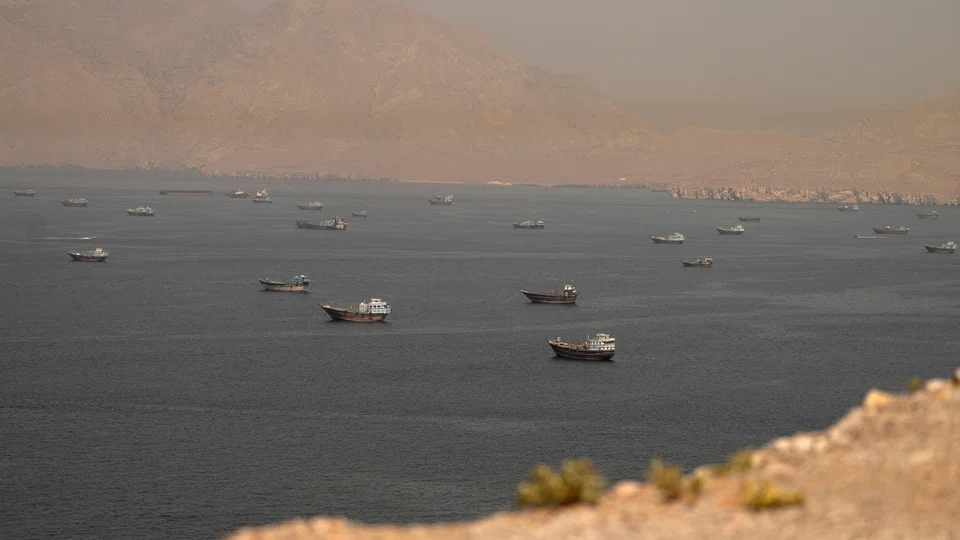
[DUBAI] The United States waived sanctions on Iran for 60 days from Monday (Jun 22) after the first talks under a nascent peace deal, with US President Donald Trump saying he will “do what I have to do” if Iran does not stick to its side of the agreement.
US Vice-President JD Vance said talks with Iranian officials in Switzerland had laid a good foundation for a final peace deal, but Iran denied it had begun discussions on its nuclear programme or agreed to invite International Atomic Energy Agency inspectors back to the country.
Foreign Ministry spokesperson Esmail Baghaei said on Tuesday Iranian officials had not held a meeting with IAEA chief Rafael Grossi in Switzerland and had no plans for the UN nuclear watchdog to inspect Iran‘s damaged nuclear facilities.
The two sides, trying to build on the interim deal they signed last week after more than three months of war, agreed a roadmap towards a permanent agreement within 60 days at the talks in the Swiss mountain resort of Buergenstock, mediators Pakistan and Qatar said.
They agreed on a mechanism to end fighting between US ally Israel and Iran-backed Hezbollah in Lebanon, and opened a communications line to help ensure safe passage for commercial ships through the Strait of Hormuz, a vital waterway for global oil supplies that Teheran has blockaded during the war.
In the first of several steps envisaged under the agreement to provide economic relief to Iran, the US Treasury announced a waiver until Aug 21 on sanctions, allowing Teheran to sell oil and related products and receive payment for them.
Ali Bahreini, Iran‘s ambassador to the United Nations in Geneva, said “good progress” had been made in the talks and that two working groups would be established in coming days to focus on the removal of sanctions and Iran‘s nuclear activities.
He told reporters five parts of the initial deal need to be fully implemented before negotiations begin on the nuclear dossier and any role for the IAEA.
The ambassador also said Lebanon was an “unquestionable” part of the interim accord between the US and Iran, and that it includes the withdrawal of Israeli troops from Lebanon.
Officials reported a sustained lull in fighting in Lebanon under the agreement aimed at ending hostilities across the region, even as Israel said it would maintain a security zone in southern Lebanon and continue to act to “neutralise” threats against Israeli soldiers and citizens.
Israel and Lebanon were due to start a new round of talks in Washington on Tuesday.
Tanker traffic through Hormuz started to pick up on Monday, with the foreign minister of Oman affirming his country’s commitment to international law and toll-free safe passage during negotiations with Iran over administering the strait.
US-Israeli attacks on Iran and Israeli strikes in Lebanon have killed thousands of people and displaced millions.
The war with Iran has also shaken financial markets around the world and pushed up global oil prices, which have fallen since the interim deal was reached. Crude prices fell further on Tuesday after settling 3 per cent lower on Monday.
Vance delivers upbeat assessment
Vance said on Monday that Iran had agreed to allow in nuclear inspectors and to establish mechanisms to handle its frozen assets and manage ceasefires at the talks, which he said were “a very good foundation for a successful final deal.”
The war with Iran has become a political liability at home for Trump and his fellow Republicans in Congress, with public opinion polls showing Americans deeply frustrated by a rise in petrol prices since the war began and midterm elections looming in November. Trump also face pressures from Republicans who say Iran‘s nuclear programme must be completely shut down.
Trump said on Truth Social on Monday that Iran will agree to have weapons inspections to ensure “nuclear honesty.”
“If Iran doesn’t live up to their agreement, or if they’re not behaving, I will do what I have to do,” Trump later told reporters.
Iranian President Masoud Pezeshkian said on X on Tuesday that the effectiveness of the talks depended on full commitment to the obligations that have been agreed and their precise implementation.
He cautioned that “statements outside the agreed text do not help advance negotiations.”
Iran has limited inspections by the IAEA since the US and Israel launched a first round of airstrikes last year, and suspended them entirely when war broke out with renewed attacks on Iran in February. It says its nuclear programme is peaceful.
Iranian Foreign Minister Abbas Araqchi said on social media that Teheran had secured waivers for oil and petrochemical exports, the release of some of its frozen assets abroad and the launch of a reconstruction and development plan for Iran.
Vance said White House envoy Jared Kushner, Trump’s son-in-law, had come up with a process whereby the US and Qatar would have control over Iranian funds when they are unfrozen, and the money could be spent on US corn, soy and wheat.
“So, the money that we lift is going to go to our farmers,” Trump told reporters.
Iran‘s Central Bank Governor Abdolnaser Hemmati said there was no such obligation, and that at least some of the remaining frozen funds could be used to buy other non-sanctioned goods, Iran‘s Tasnim news agency reported. REUTERS
Decoding Asia newsletter: your guide to navigating Asia in a new global order. Sign up here to get Decoding Asia newsletter. Delivered to your inbox. Free.
Share with us your feedback on BT's products and services