


US stock market rally likely to carry through into 2024
The bull market is set to take the S&P 500, Nasdaq 100 and other major indices to record highs next year
THERE hasn’t been a bubble in technology stocks this big or fast-expanding since the dotcom days, and the upward momentum is set to become even more powerful in 2024.
Speculative excitement about artificial intelligence (AI) technology generated gains of 60 per cent, or roughly US$7 trillion, for the Nasdaq 100 index in 2023. Nvidia alone went from being a fringe semiconductor maker to sporting a market capitalisation equivalent to two General Electrics, two Boeings and one ExxonMobil combined.
Strategists expect the US stock market’s rally to carry through into 2024, as more speculators chase this torrid momentum and double down on bullish interest rates, AI and weight-loss bets.
From hawkish to dovish
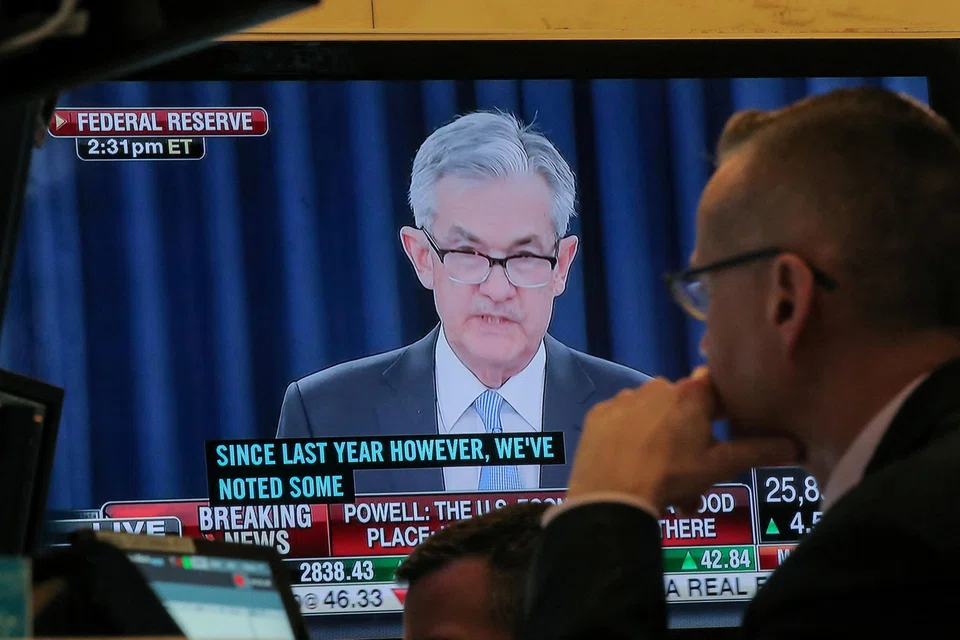
While the US stock market has been in bull-market territory since the summer, its birth will likely be dated Dec 13, the day that Fed chairman Jerome Powell unexpectedly informed investors that he was switching emphasis from hawkish rate hikes to dovish rate cuts.
The genesis of the bull market was perfectly rational. Post-pandemic inflation had induced an unusually long 18-month bear market, beginning with Russia’s invasion of Ukraine in early 2022. Since then, there have been several false starts as investors hoped the Fed would relent on interest-rate tightening.
Even as consumer inflation retreated steadily from its summer 2022 peaks, Powell repeatedly warned that the central bank would continue tightening monetary policy if needed.
Investors entered the fourth quarter of 2023 with pessimism, believing that either the US economic expansion was dead or that inflation was about to return (or both), and that the Fed would continue raising rates either way. Then, in early December, Powell surprised the market with a volte-face, dropping the stern tough-love persona he had projected for much of the last two years in favour of a kind of fairy godfather act.
With a wave of his magic wand, Powell convinced global markets that all their fears were a fantasy. Rate cuts were on their way, he vowed, with inflation all but history and a recession increasingly unlikely.
Said Brad McMillan, chief investment officer at financial advisory the Commonwealth Network: “2023 will be remembered for the recession that never happened.”



Many were caught flat-footed by the bull market that Powell’s speech kicked off. A steady gain for the S&P 500 morphed into a violent rally in December. The Nasdaq 100 has added about 20 per cent since Oct 26 for a 55 per cent return in 2023.
“Typically, after one year of very strong performance, it’s very rare that the second year is negative,” said Quincy Krosby, chief global strategist at brokerage LPL Financial.
Investors are best served jumping on bandwagons that are moving as fast as this one – as long as they are nimble enough to jump off again before the inevitable crash.
The behaviour of the bull market is set to become as irrational and exuberant as the dotcom era of 1999-2000, or even the cryptocurrency rallies of more recent years. In particular, the rapid appreciation of the “Magnificent Seven” – Nvidia, Google parent Alphabet, Amazon.com, Apple, Facebook-owner Meta, Microsoft and Tesla – has divorced itself from rational corporate-profit analysis.
Goldilocks is back
The seven largest stocks on the S&P 500, all of which are on the frontier of the nascent AI industry, are having an indefatigable run – the same way that dotcom hot stocks such as Cisco Systems ran 25 years ago.
The lesson from those speculative booms is that such momentum-driven rallies defy sceptics for improbable lengths of time, and they typically coincide with eras of falling interest rates. The Fed has all but guaranteed it will bring interest rates down in 2024.
There is another thing that the dotcom days and the current era have in common: Goldilocks. This is the concept of growth being neither too hot to spur the Fed into inflation-fighting, interest-raising mode nor too cold to prevent corporations from turning a profit. Almost all the data recently – from the steady jobs growth to the down-tick in consumer price inflation, which is now at the cusp of the Fed’s comfort zone – has been right in the sweet spot for Goldilocks economics.
Another data point in this category was a 3.1 per cent increase in retail sales estimated by the MasterCard SpendingPulse gauge for the six weeks from Nov 1 to Dec 24. This solid but not spectacular US holiday shopping season has convinced at least one Wall Street strategist that Goldilocks, the handmaiden of all great stock booms, is back in town.
“American consumers are the grease in the economic engine,” said McMillan of the Commonwealth Network. “Their ability and willingness to spend are pivotal to economic growth, especially in the near term. Low unemployment and higher salaries are creating a just-right scenario for this to play out.”
Another strategist said the consumer is in a sweet spot now but will be in an even better position when the Fed starts cutting rates, likely in the spring of 2024.
“Higher rates have put a dent in the consumer but the good news is they haven’t been knocked out,” said Ryan Detrick, chief market strategist at financial consulting firm the Carson Group. “Lower rates are on the horizon, and that should be a boost to the consumer in 2024.”
Return to heyday for Wall Street
Another piece of the puzzle that is in place is sentiment on the “sell side” of Wall Street. It looks like 2024 could mark a return to the noughties heyday for Wall Street.
In recent years, investment bankers almost went extinct. Morgan Stanley prefers to think of itself as a financial advisory for the rich. Even Goldman Sachs, which made its name as a trading house with a banking licence, had tried to shift its strategy to a boring money-centred model by buying online consumer lending units.
Now, Morgan Stanley’s trading desk is driving profits once more. Goldman has renounced its consumer-banking tendencies and gone all in on stocks, bonds and hedge funds once again.
Even UBS, the Swiss bank that abandoned Wall Street activities in favour of the world’s wealthiest families 15 years ago, is back and hiring gunslingers again.
UBS has divulged plans to dive back into the business of selling stocks and raising corporate capital, bolstered by the bankers it amassed during its rescue of rival Credit Suisse. UBS aims to be the sixth-largest bank on Wall Street.
The next step for this market is a sleepy phase where it inches up slowly until it lulls the masses into high-risk positions in wildly overvalued sectors.
That will be followed by the “parabolic phase”, in which the gains become exaggerated by the day and investors pinch themselves when watching the easy money piling up in their bank accounts. Overall, this bull market has the potential to be a generational boom in stocks that will spout effusive fonts of gold before the inevitable implosion.
“With peak rates behind us, the potential for a more ‘risk on’ backdrop will benefit investment managers and brokers,” said analysts at brokerage Jefferies. Traditional money managers will benefit from increased mutual-fund inflows, they added.
For hedge funds and private equity firms, lower interest rates will increase the number of “exits” for businesses they invest in and make it easier to raise funds from clients.
This headlong charge into risky niches of the stock market has already begun. The week ended Dec 15 experienced one of the biggest inflows into stocks and equity funds in recent decades, indicated a survey by Bank of America Global Research.
A bust is coming, but it might not arrive until 2025. Some sceptics already see signs of overheating in the AI corners of the Nasdaq 100. The history of speculation suggests that these kinds of warnings will be ignored for a long time before they are borne out.
The story of 2024 could be a “broadening out” of the rally, said Detrick from the Carson Group.
“The large cap tech and communications, no question, are quite pricey after the huge rally they have seen this year,” he added. “The good news is that a lot of other groups are modestly valued. Small caps and mid caps are historically cheap relative to large caps.”
Some economists believe the US could still dip into recession in 2024, but not even that is likely to stop the stock market.
Krosby expects a “rolling recession” to continue, with the recent housing slowdown washing through various corners of the US economy but not bringing down the whole edifice.
The bull market is set to take the S&P 500, Nasdaq 100 and other major indices to record highs in 2024 and, potentially, much higher than that.
Decoding Asia newsletter: your guide to navigating Asia in a new global order. Sign up here to get Decoding Asia newsletter. Delivered to your inbox. Free.
Share with us your feedback on BT's products and services
TRENDING NOW

World’s largest offshore wind platform by Seatrium consortium on track to be completed by 2028

Is stamp collecting enjoying an analogue revival or are its best days over?

GovTech retrenches another 38 staff in second round of layoffs

MBS adjusted property Ebitda falls 20.6% in Q3 with fewer high-roller visits, weaker hold

