Waymo founder predicts ‘landslide’ robotaxi adoption in Singapore, driven by high car costs
The technology pushes AVs’ initial costs up, but they are cheaper to run, safer and greener: Sebastian Thrun

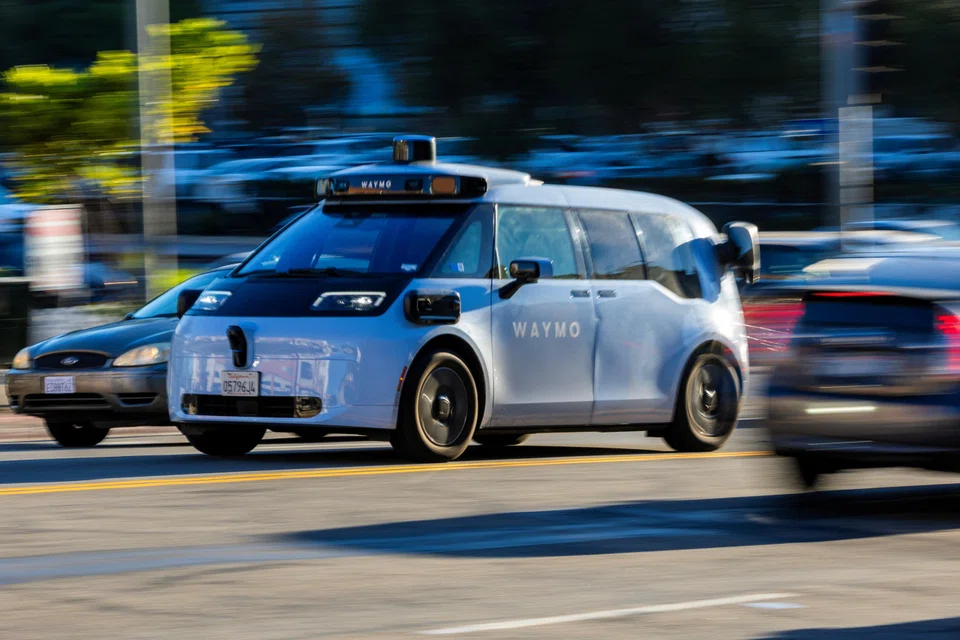
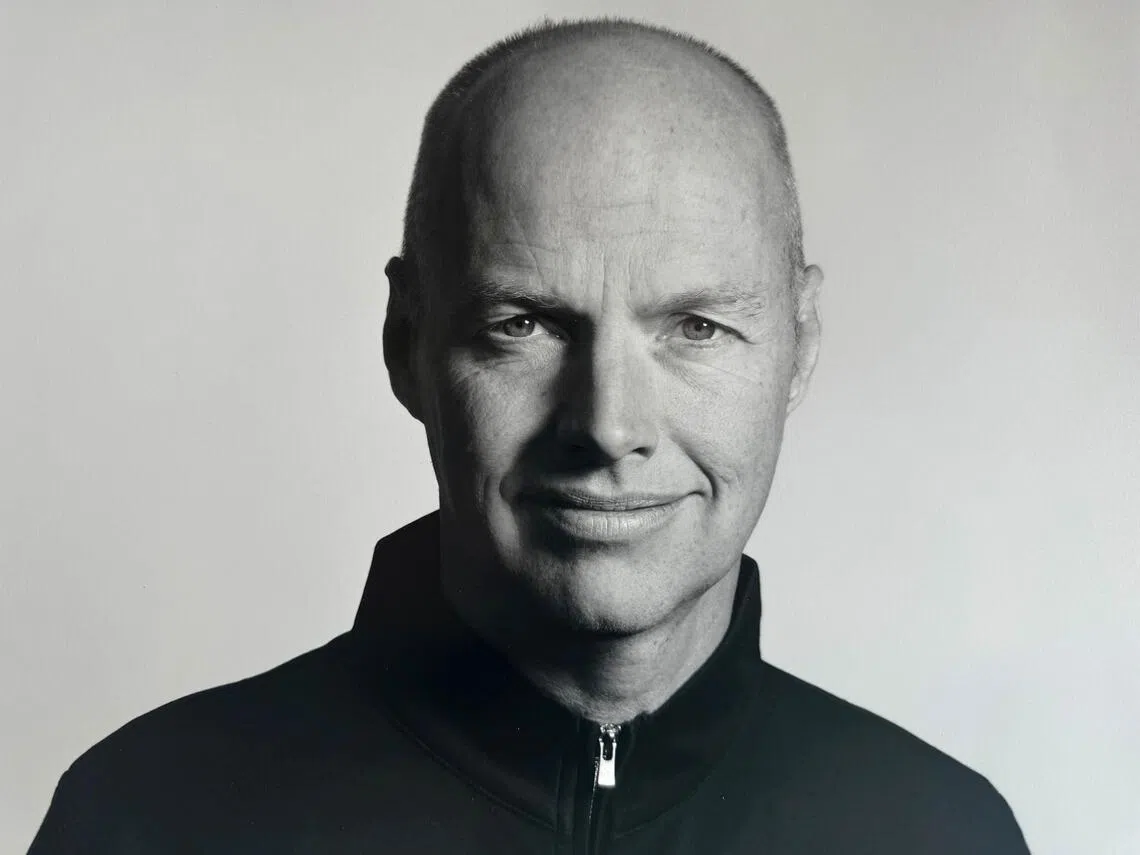
[SINGAPORE] Self-driving car pioneer Sebastian Thrun expects that there would be widespread adoption of autonomous vehicles (AVs) in Singapore – and even sooner than in cities such as San Francisco, simply because it makes more financial sense.
“Once the economics of AVs beat car ownership – and that’s going to happen in Singapore before San Francisco for obvious reasons – we are going to see a massive landslide in which the population will just accept self-driving cars,” he said.
Thrun was speaking to The Business Times in a remote call on the sidelines of Livex, a global urban development and investment exhibition held in Abu Dhabi earlier in October.
“Safer than human drivers”
Thrun is a leading figure in AV research whose expertise is in areas such as artificial intelligence, robotics and air taxis. He is also an adjunct professor at Stanford University.
The German-American leads Sage Labs, a San Francisco-based company specialising in agentic AI and e-commerce. He does not have a role in Waymo now, but was a key figure in its founding.
In 2005, he helped Stanford win the US Defense Advanced Research Projects Agency Grand Challenge for AVs, now considered a major watershed in the technology.
He spearheaded Google’s Project Chauffeur in 2009, which was spun off and renamed Waymo in 2016.
The American AV company announced its entry into Singapore on Sep 16 and plans to offer bookings for trips in its vehicles in Singapore by 2028.
AV technology has advanced to the point where economics are the prime factor, rather than safety or other concerns, said Thrun.
SEE ALSO

“The fundamental differentiator that makes a technology succeed – I hate to say it – is not safety, even though that is absolutely important. It’s actually price.”
If implemented properly, AVs offer the benefits of private vehicles in solving the last-mile problem, but matched with the costs of mass transit.
Public transport, he said, “doesn’t solve the last-mile problem”. “With self-driving cars, you can solve all this with potentially the economics of mass transit. So it’s the best of all worlds.”
He believes that safety, the top misconception about AVs, is no longer a problem, and Waymo has a well-established safety record to show for it.
It is already operating robotaxi services in a dozen cities in the US, and will soon expand to Canada and Spain.
Thrun said that this is the result of high trust and a positive response to the technology. “Previously, there was quite a fear about this technology... Would it really keep people safe? Would it take away jobs from people? But neither of these fears have been realised at this point.”
Waymo’s real-life driving data has shown that its AVs are about 17 times safer than human drivers, he added.
The company’s published safety data as at June 2026 indicates that the company’s cars have covered more than 430 million km without a human driver.
Compared with humans, AVs are involved in 95 per cent fewer crashes with serious injuries or fatalities, 82 per cent fewer airbag deployments and injury-causing crashes, and more than 80 per cent fewer collisions with pedestrians, cyclists and motorcyclists.
Laughing, Thrun said of AVs: “They don’t text, they don’t drink, they’re not distracted … and they won’t talk about politics.”
Autonomous region
Thrun said that AV technology has matured faster than observers expected and skipped potential hurdles while doing so. A number of mature AV companies are now in close competition.
At one point, planners expected to have to embed sensors in key infrastructure to enable roads, for example, to “talk” to vehicles through technology known as vehicle-to-infrastructure communication.
But advancements in technologies, such as those for sensors and computing ability to read the environment, mean this has not been needed.
“That all went away. The reality is that you’re not going to start a business requiring all major highways to be torn up with little magnets,” said Thrun.
This pace of development means that the mass adoption of robotaxis is only a few years off, he added. “The same way we saw a shift from big PCs and desktops to laptops, for (companies like Waymo), mass adoption is in the order of a few years off.”
He cited the rapidly dropping cost of AV technology as one reason.
“When we started out, a lidar sensor cost US$75,000. Now, that same thing costs US$200. So the costs have come down tremendously, and they will come down even more as self-driving becomes mainstream on highways in the world.”
Most AVs use multiple sensors – cameras, radar and lidar – but companies such as Tesla and Xpeng are focusing on a camera-only approach, betting that they can safely bridge the technology gap and reap cost savings.
Thrun said that lidar and radar add a level of safety that is “hard to match” because they enable cars to physically sense an object. Cameras, on the other hand, must first see, then recognise obstacles.
“A Martian beamed onto a highway would be detected by lidar, but a camera may not recognise it,” he added.
Singapore’s AV drive
AVs could be particularly beneficial to Singapore as a place with a small land area, but high demands for transport.
With its well-maintained road network, replicating the system used in American cities in Singapore would take minimal doing. Self-driving cars would be more efficient than private cars, and possibly even reduce the need for parking spaces.
“(A car is) super expensive in Singapore, but it’s parked all the time, whereas a self-driving car not only adds a safety level, but also flexibility. Eventually, it would keep the city greener because it’ll waste fewer resources parked somewhere.”
Singapore has run AV test beds since 2017. Test beds with passengers are now operating in Punggol by Grab and ComfortDelGro, although for now, they are self-driving shuttles that run on fixed routes, not point-to-point robotaxis.
With Waymo’s entry, Singapore will have three AV projects running. More will come. Competition, especially from China, is heating up with the likes of Didi, WeRide and Pony.ai being “incredibly mature” players, on par with global counterparts.
The exact implementation of AVs will vary by market and the competitors present, but it is clear that costs are coming down.
“There’s economics and scaling challenges, supply-chain challenges… there’s still a public-trust challenge,” said Thrun, adding that such trust cannot be expected in a new city from the get-go.
Self-driving cars compete directly with ride-hailing businesses such as Grab, Didi and Uber, he said, but AVs – after covering their higher initial costs – are cheaper to run.
“In all cases, self-driving cars are more economical in that they don’t require the on-board driver, but they require higher hardware investments and higher maintenance costs,” he added.
“In my best estimate, the hardware costs still run approximately US$80,000 to US$100,000 per vehicle, but this number is rapidly coming down.”
Decoding Asia newsletter: your guide to navigating Asia in a new global order. Sign up here to get Decoding Asia newsletter. Delivered to your inbox. Free.
Copyright SPH Media. All rights reserved.