Why China’s new central bank chief will defy the easy tags
The race to identify monetary bosses as hawks or doves is futile. Policy is driven by circumstances, and China’s aren’t great
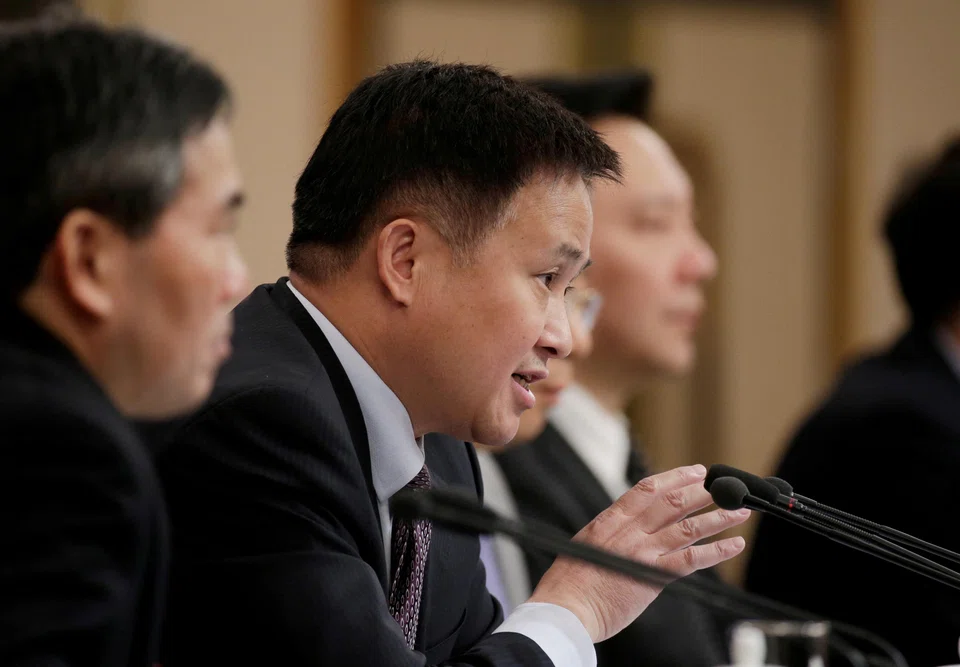
CHINA’S new monetary boss, Pan Gongsheng, barely has his feet under the desk and he is likened to a hawk. In time, that label may prove wide of the mark. Beijing needs to juice the economy and needs of the hour will steer decision-making.
Few things are as frustrating as the rush to assign avian analogies to central bankers to convey their policy preferences and predict a course of action. Many of these terms lack context and a sense of perspective.
History is littered with examples of officials who readily pivot when circumstances require. Recall that when Ben Bernanke first became US Federal Reserve chair in 2006, he pushed back against perceptions he would pursue easy money. Many now remember him as a card-carrying dove after he rescued the country’s financial system and began quantitative easing (QE).
Reserve Bank of Australia governor Philip Lowe is perceived to be more hawkish than his deputy, Michele Bullock, who will succeed him in September. Yet for most of his seven-year term, Lowe was routinely described as very dovish. So which is it?
Brace for the haste to sketch Kazuo Ueda in such terms after the Bank of Japan decides rates on Friday (Jul 28).
Putting leaders of the People’s Bank of China (PBOC) into boxes is especially fraught because they work within a political system that doesn’t assign high value to transparency. Another popular critique is that the PBOC doesn’t operate autonomously in the manner of the US Fed or Bank of England. True enough, but even that comparison could use some explaining.
It’s not good enough to write Pan off as a functionary who can’t do much because the PBOC isn’t independent. His voice will matter even if it isn’t the final word.
Shades of grey
Central bank singularity has healthy shades of grey at the best of times. Few are entirely free of political constraints. Many have their mandates handed to them by fickle legislatures. The Fed has always been very attentive to the mood in Congress, which created the institution in 1913.
The European Central Bank (ECB) comes close to purity, with its independence secured in a treaty. The ECB, however, is guardian of the euro – the single currency that was born of a deeply political project. The broad point is that the way central banks are often described can be deeply flawed.
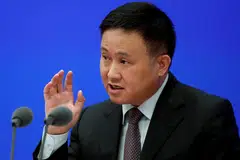

So what confronts Pan, who was named governor on Tuesday? Top-line indicators aren’t favourable: Growth stumbled last quarter and inflation is so dangerously low that it literally didn’t exist last month. Consumer prices showed zero increase in June from a year earlier. It’s tempting to say “Japanification” has come to China, but that would do a disservice to Japan, whose inflation is now pretty high by comparison.
Under Pan’s predecessor, Yi Gang, interest rates were reduced, albeit modestly, and reserve requirements for lenders cut. The goal is to release more money into the economy.
There are questions whether China should embark on Western-style QE. That might be a stretch, given how Chinese leaders like to deride how the US handled the 2007-2009 financial crisis. But this is a system capable of pivots when the status quo outlives its usefulness.
So why would Pan, a former deputy governor and one-time boss of the agency that regulates foreign exchange, be depicted as hawkish? During his career, he’s adopted some tough regulatory steps aimed at mitigating financial risks, such as curbs on the property market. (It’s conceivable they will be loosened in an effort to get the real estate sector off the floor.)
He was also the public face of government investigations of Jack Ma’s Ant Group, according to Bloomberg News. He has more than a passing acquaintance with initiatives that have crimped growth and been seen as market-unfriendly.
Does it matter?
This isn’t necessarily a guide to how Pan will behave. Yes, he’s subject to the constraints of the system and he’s no rebel. He’s worked closely with Yi, who had to have been worried by inflation’s southward turn. During a speech in April, Yi indicated that inflation of 2 per cent is ideal. “Two per cent is the central banker’s dream,” he told the Peterson Institute for International Economics.
It’s entirely possible that China keeps at it: small cuts in interest rates, lowering reserve requirements every once in a while, and tolerating a gradual retreat in the yuan. The leadership might also stick with its view that risk and debt are fine things to fret about.
Implicit in this is that President Xi Jinping can live with a pace of growth that doesn’t return to the halcyon days and resembles the trajectory of other big economies, such as the US, Germany or France. Would this make Xi himself a hawk or a dove?
Tags tend to obscure more than enlighten. Two very recent examples: Minneapolis Fed president Neel Kashkari is today designated a hawk. A few years ago, this would have been a laughable categorisation; Kashkari was a reliable vote for easy money and happy to dissent at the Federal Open Market Committee to make the point. James Bullard, who recently stepped down as president of the St Louis Fed, was lately a prominent voice for higher rates, faster. In 2010, he was a driving force for expanding QE.
Times change and policy adapts – as do the people making and implementing it. Cute but incomplete labels do a disservice. BLOOMBERG
Decoding Asia newsletter: your guide to navigating Asia in a new global order. Sign up here to get Decoding Asia newsletter. Delivered to your inbox. Free.
Share with us your feedback on BT's products and services