World Economic Forum 2026: Hope for ‘multi-bilateralism’
As the world fragments towards multiple poles, Davos holds out for a possible yet fragile new global economic order
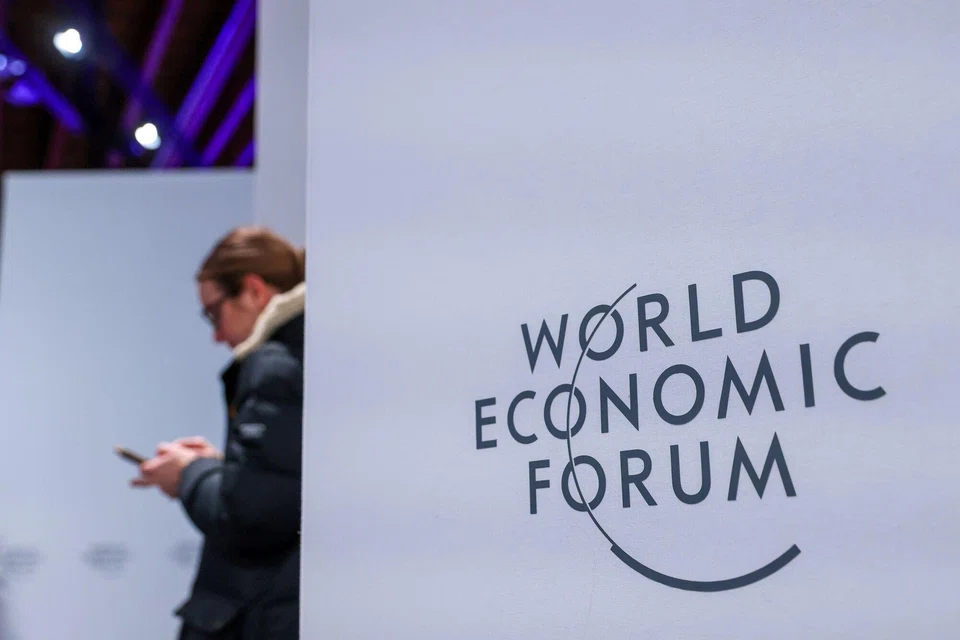
THIS week’s visit of US President Donald Trump to Davos has, perhaps inevitably, made the global headlines at the World Economic Forum (WEF). However, beneath the US presidential bubble sucking political oxygen from the event, there has been wide-ranging, important discussion about the future of the global economy.
The 2026 Davos theme is “A Spirit of Dialogue”, addressing issues from responsible innovation to investing in people in the age of artificial intelligence (AI). The goal remains fostering public-private collaboration to shape governmental, industry and social agendas.
Amid a plethora of discussions and reports this week, a consensus is forming: the economic landscape is being fundamentally remade.
Canadian Prime Minister Mark Carney made a powerful speech, arguing that “a rupture, not a transition” is underway. BlackRock calls this a wholly “new regime” compared to the post-2008 financial crisis era, which was characterised by accommodative monetary policy and massive liquidity injections.
Today is defined by persistent inflation, higher interest rates and whipsawing market volatility, requiring a fundamental re-evaluation of investment strategy.
While a full breakdown of the economic order remains plausible, what is emerging is a fragile, “multi-bilateral” economic world order – defined by growing networks of loosely coordinated bilateral and regional agreements and wider networks.
This is a potential mid-way equilibrium. It sits between the diminishing likelihood of returning to a post-1945 rules-based multilateral system and the worst-case scenario of all-out economic conflict. Crucially, despite the proliferation of Trump tariffs, the world has so far avoided damaging retaliatory escalations.
Global growth may remain uneven, led by emerging market powers such as India. This is proving a fragile expansion, buffeted by economic nativism, supply chain security risks and the weakening of global institutions.
So far, global gross domestic product growth in the 2020s has been the weakest since the 1960s, though somewhat masked by the AI boom and its corresponding stock market frenzy.
SEE ALSO

Multiple major economic blocs
In this fragmented landscape, there are multiple poles. Boston Consulting Group highlights four key poles, each with distinct priorities, alliances and rules shaped by geopolitics, industrial policy and wider strategic partnerships.
China: The main pole in the Global South is China, the world’s largest economy on purchasing power parity (PPP) terms according to the International Monetary Fund. PPP compares the relative value of currencies by measuring the price of a common basket of goods and services across different countries.
Unlike the US under Trump, China remains engaged in key multilateral agreements, such as the Regional Comprehensive Economic Partnership. Beijing, already the largest trading partner for around half of developing nations, is increasingly pivoting to the Global South to secure raw materials, including rare earths, fuelling tensions with the West.
The US: A second critical node is centred around the US. Under Trump, Washington is moving further from its role as defender of a rules-based order. Intensifying the trend that started under former president Joe Biden’s Inflation Reduction Act, the US is actively repatriating economic activity, including manufacturing, to reduce trade deficits.
The Brics bloc, excluding China: Centred around the emerging market minus China, this disparate node includes Brazil, Russia and India. Much of this bloc views trade as a growth engine, but integration is limited by sovereignty-related concerns.
Industrialised democracies: The final pole includes the European Union, the UK and Japan, as well as key developing nations such as Mexico, Peru and Vietnam. These nations rely on plurilateral agreements, willing to cede some sovereignty for rules-based cooperation. One example is the Comprehensive and Progressive Trans-Pacific Partnership (which includes Singapore), an agreement pioneered by the Obama administration, but abandoned by Trump.
A multi-bilateral or zero-sum world?
A valuable insight from this year’s WEF is that there is potential for these competing visions to merge into a coherent whole.
Unlikely as it seems, this multi-bilateralism may be the best realistic hope. For this to materialise, the “globalists” in the fourth pole may have to concede that the world will not return to the post-1945 order, at least any time soon. Meanwhile, defenders of alternative approaches would need to recognise that a zero-sum economic game is misguided; win-win scenarios are still possible.
One key indicator of this future’s viability will be if Trump and Chinese President Xi Jinping, leaders of two opposing poles, can reach an ambitious, comprehensive and sustainable deal to settle tensions. If they move beyond the warm words they sometimes exchange, perhaps during Trump’s visit to Beijing in spring, this could help consolidate this new order.
Yet, there remains the uncomfortable possibility of the world hurtling towards zero-sum economic warfare. Despite this risk, Davos 2026 highlights that significant parts of the old settlement might be salvaged. A multi-bilateral economic order is more complicated and less satisfactory than the post-World War II status quo, but it is superior to a zero-sum destiny that otherwise looms ahead.
The writer is is an associate at LSE Ideas at the London School of Economics
Decoding Asia newsletter: your guide to navigating Asia in a new global order. Sign up here to get Decoding Asia newsletter. Delivered to your inbox. Free.
Share with us your feedback on BT's products and services