Gloomy predictions from Fed chair Powell mean no future shocks
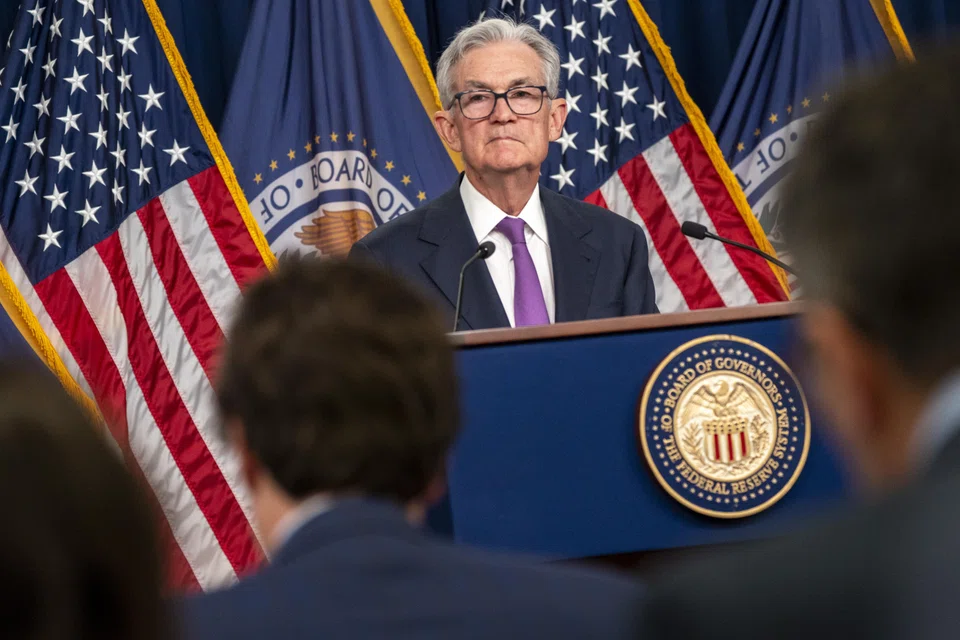
IF ECONOMICS is the dismal science, Jerome Powell may be one of its greatest practitioners.
Investors have come to expect a dose of gloom from the Federal Reserve chairman at his post-Federal Open Market Committee meeting press conferences. On Wednesday (Sep 20), he outdid himself on the stern stakes.
The Fed left rates unchanged at the current level of between 5.25 per cent and 5.5 per cent. The rhetoric that accompanied the policy move, however, has Wall Street strategists calling the move a “hawkish pause”.
The central bank’s “dot plot”, which aggregates individual members’ rate projections, now reflects a forecast for one further rate increase this year.
For 2024, which is when investors were anticipating a market-friendly “pivot”, the central bank has now reduced its expectations for rate cuts to a mere two, from the former level of four.
“The Fed continues to anticipate a prolonged struggle to bring inflation under control, in keeping with the higher-for-longer mantra,” said Sam Stovall, chief investment strategist at research firm CFRA, in a note to clients.
Even Powell’s optimistic statements sounded gloomy.
The most cheerful thing an economist can do is upgrade his growth outlook. As soon as Powell noted that consumer spending has been surprisingly strong lately, however, he tempered the positivity of the outcome by adding that more growth means more inflation.
In case there was a shred of silver lining left for the stock-market bulls, he further added that higher inflation would require more interest-rate hikes from the central bank.

“The Fed’s message was positive for the economy but less so for asset markets,” said strategists at Standard Chartered, in a note to clients. “During the press conference, Fed chair Powell emphasised that the unexpected robustness of the economy was the key driver of the projections’ changes… (and) a somewhat higher path of rates may be needed to rein in surprisingly strong activity.”
Powell noted that wage inflation had moderated recently, but also nodded to risks on that front. It was too soon to say what the implications of the United Auto Workers strike at the Big Three Detroit automakers would be, he said, adding that the scope and duration would bear watching.
There is a chance that the settlement of the strike – and similar labour disputes in other industries – could bring on another wave of wage inflation.
Market bulls might take comfort that the Fed chair has not said he will hike rates until the US goes into recession. At least, not in those exact words.
“There is a path to a soft landing,” Powell said, holding out hope that the US economy could still cling to positive territory. Yet, he immediately tempered that hope: “It’s not the base case.”
Fed officials have long addressed markets like stern doctors telling their patients what’s good for them. Powell dispensed his medicine like a particularly blunt oncologist, warning the patients that the medicine may kill them.
There is a “long way to go” to bring core inflation down from its annual rate of roughly 4 per cent currently to the Fed’s 2 per cent target.
“Reducing inflation is likely to require some period of below-trend growth (and) some softening in the labour market,” Powell warned. In other words, the Fed may very well have to bring on a recession.
The message came across loud and clear. The policy-sensitive two-year Treasury yield closed at a 17-year-high. The broad S&P 500 fell 2 per cent from its peak of the session.
Even for an economist, Powell appears to have a gloomy outlook. It may be a strategy. Fed officials have long warned that an excitable stock market only makes their jobs harder. By forecasting a worst-case scenario, the Fed may hope to avoid future shocks.
Said Josh Jamner, investment strategy analyst at money manager ClearBridge Investments: “We believe the Fed may be erring on the side of caution and not wanting to overpromise and then under-deliver.”
Decoding Asia newsletter: your guide to navigating Asia in a new global order. Sign up here to get Decoding Asia newsletter. Delivered to your inbox. Free.
Share with us your feedback on BT's products and services