Homeownership is not working out for the UK’s middle-class millennials
Rising service fees on apartments and a tight market for houses leave them stuck in place or falling behind
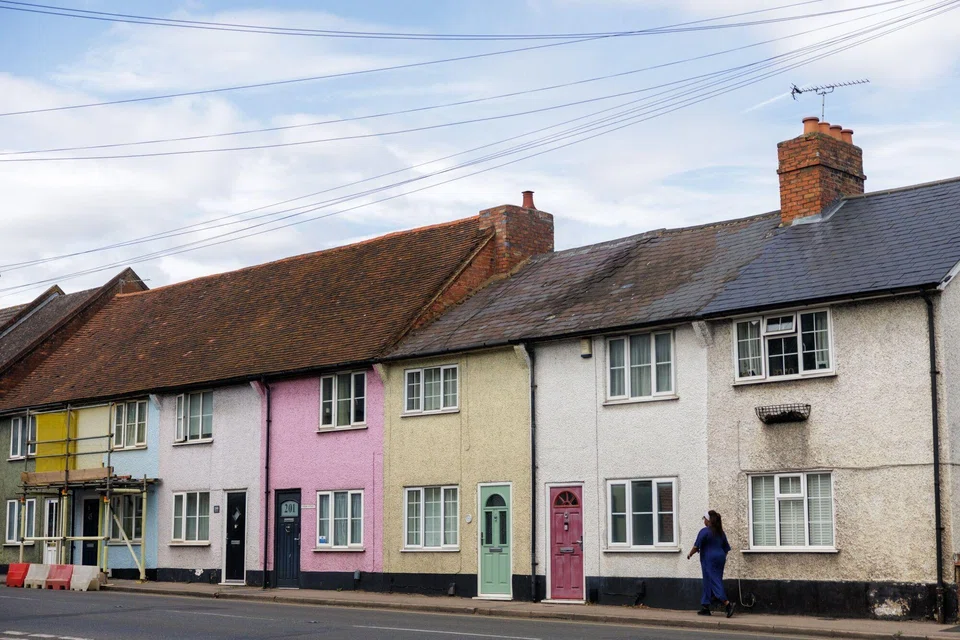
[LONDON] The property ladder that has helped generations of young Britons achieve wealth and stability is breaking down.
Rising service fees on apartments and a tight market for homes have left many millennials stuck in place – or falling behind.
Shenali Jashani and her partner thought they were setting themselves up for life when they bought their apartment in west London five years ago.
They planned to stay for a few years, then use the equity to buy a house outside London once they were ready to have children.
“We were really proud that we had saved the money,” the 32-year-old management consultant said.
That plan has not worked out the way they expected.
Escalating service fees and charges on the apartment made it difficult to sell when they tried to move last year.
Estate agents pressured the couple to drop the price so low that affording a house to move into would be a struggle.
They ended up taking the flat off the market, spending thousands of pounds to cap some of the fees and are trying again to sell for at least £355,000 (S$611,198), the amount they paid.


But when Jashani did the sums, she realised they would be better off now if they had just continued to rent.
“We did everything that you’re supposed to do,” she said. “I don’t want to regret it, but it’s really hard to not feel angry about the whole thing.”
Britons, like Americans, are obsessed with homeownership.
Buying property represents not just shelter and stability, but also financial security – and the vast majority would rather buy than rent.
Average home prices rose by 263 per cent in the UK and by 507 per cent in London between 1996 and 2016.
For those lucky enough to have bought in time, the uplift in values created millions of pounds in property wealth and has allowed many to graduate to larger and more valuable homes.
Property wealth makes up 40 per cent of the household wealth in the UK, much of it held by older generations.
The picture has changed in the last decade, especially for Londoners, apartment owners and first-time buyers of smaller properties.
In the leafy, semi-suburban parts of outer London where many young professionals buy their first homes, flat prices have dropped by 5.5 per cent since January 2020, an analysis by estate agency Knight Frank showed.
Meanwhile, house prices have risen by more than 10 per cent, it added.
As a result, millennials, the generation born in the 1980s and early 1990s, are finding that moving onto the next stage of homeownership has become unexpectedly difficult.
Apartments in England and Wales are usually leasehold, an arrangement in which the purchaser – or leaseholder – effectively buys the right to live in a property for a set number of years.
They can sell that right, but the freeholder remains the so-called real owner of the property and usually charges fees for its upkeep.
The second property-ownership step is often a leap from leaseholder to freeholder, which usually means more control over costs and more stable property values.
Conor Nakkan, senior researcher at the Intergenerational Foundation, a UK think tank, said: “For many millennials, the housing ladder has stopped working.
“Flat prices have stagnated, moving costs are high and the larger homes they might once have expected to move into are often out of reach.”
Spiralling costs
The market for houses has overtaken the apartment market for a host of reasons.
A glut of apartments has hit the UK market in the past two years, as new, tougher regulations around property-letting have prompted many landlords to sell up.
Some tax breaks and other government incentives for first-time buyers have been removed or reduced.
Other incentives cap the value of properties they can be used for, severely limiting their utility in the expensive London market.
A Lifetime Individual Savings Account is a tax-efficient savings wrapper that allows holders to put up to £4,000 a year towards a first home, topped up to £5,000 with a 25 per cent government bonus.
However, it can only be used on homes worth less than £450,000, well below the average asking price for a London apartment.
In addition, the aftermath of the Grenfell Tower fire, which killed 72 apartment dwellers in west London in 2017, left thousands of homeowners in legal and financial limbo over the individuals responsible for ensuring their homes were safe from similar accidental blazes.
Mortgage lenders subsequently refused to lend to apartment owners in buildings deemed to have a higher-than-acceptable fire risk.
Building owners were also often slow to pay for costly repairs and safety upgrades, while a shortage of surveyors to inspect and certify buildings caused delays.
Spiralling fees and unfair terms set by freeholders or their property managers can further make selling up more difficult for apartment owners.
Opaque or unreasonable charges increase the financial burden of leasehold apartments, reducing their value and putting buyers off.
The UK government has announced plans to cap these charges and give leaseholders more control, but most of the overhaul is yet to take place.
Paula Higgins, CEO of Homeowners Alliance, an advice and campaign group, said: “All this talk about reforming leasehold, but it not actually happening yet, is really putting a damper on the market.”
Higher interest rates weighing on property market
Amber Needham, 29, bought her first home nearly five years ago, about 32 km outside London.
She sold the one-bedroom apartment in Dartford, Kent, for £162,000 earlier this year – £7,500 less than she paid for it, even after successfully campaigning to change her building’s managers because of the extremely high service fees they were charging.
The experience was “really upsetting, to the point I actually just started to resent the flat so much”, she said, now renting.
“It almost feels like I’ve gone backwards in life.”
Higher interest rates are also weighing on the property market for prospective buyers.
In December 2021, the average mortgage rate for a buyer with a 10 per cent deposit, fixed for two years, was 2.51 per cent. Now, it is more than 5 per cent.
That is a particular problem for would-be homebuyers with big mortgages and small deposits. Stamp duty, the upfront tax charged in the UK when an individual purchases a property, has also risen.
That all means fewer purchasers exist, with less buying power.
Lucian Cook, head of UK residential research at Savills, an estate agency, said: “Normally what you find, in a strong market, is that the buyers are competing for property.
“The property is competing for buyers.”
Delayed milestones
For many would-be so-called second-steppers, the bottleneck in the housing market means delaying life milestones such as having a family.
Childcare costs in the UK are among the highest in the world, eating up about 25 per cent of household income on average.
Space is another issue. The average London apartment with 62.2 square metres is not necessarily the ideal set-up for children.
In Britain’s capital city, making the jump from a two-bedroom home to a three-bedroom one costs about £234,000 more on average, a Savills analysis from March found.
It also cost roughly an extra £15,000 a year in mortgage costs – based on a 25-year mortgage at prevailing rates.
Many young parents cope by moving out of the city and closer to family who are willing to help out, but that strategy is harder to implement in a sluggish property market.
Birth rates have fallen to record lows and are dropping faster than average in London.
Tom Bill, head of UK residential research at Knight Frank, said sitting tight until the market improves is one option, but no obvious sign exists of a turnaround being imminent.
Conflict in the Middle East and political instability at home in the UK are threatening to keep interest rates higher for longer.
“Hopefully, things will become clearer over the next couple of months,” he said.
“There’s a lot to weigh up. But some people can’t think about their timing too much, because they need to move.”
That is the dilemma faced by Sam Shaw, 31, who tried to sell the two-bedroom apartment he and his wife own in a century-old converted house in south-east London earlier this year.
They had planned to move to a four-bedroom house in west London close to both their parents, intending to start a family.
However, the purchase collapsed, after they failed to get any offers at or above the price they paid for their apartment five years ago.
“Childcare is expensive, you work full-time jobs and people can’t afford to give up jobs,” he said. “You need help from your parents, but you can’t sell your flat to move closer to home to get that help. So it does feel tricky.”
The couple will try again to sell at a profit later this year, but at some point they might have to cut their losses and move on, he says.
“I am worried that it will turn out to be a bad investment.” BLOOMBERG
Decoding Asia newsletter: your guide to navigating Asia in a new global order. Sign up here to get Decoding Asia newsletter. Delivered to your inbox. Free.
Share with us your feedback on BT's products and services