Hong Kong’s Budget is back in the black – but not without sacrifice
The good news is thanks largely to an asset market boom and the government’s austerity measures
THE dice are finally rolling in Hong Kong’s favour again.
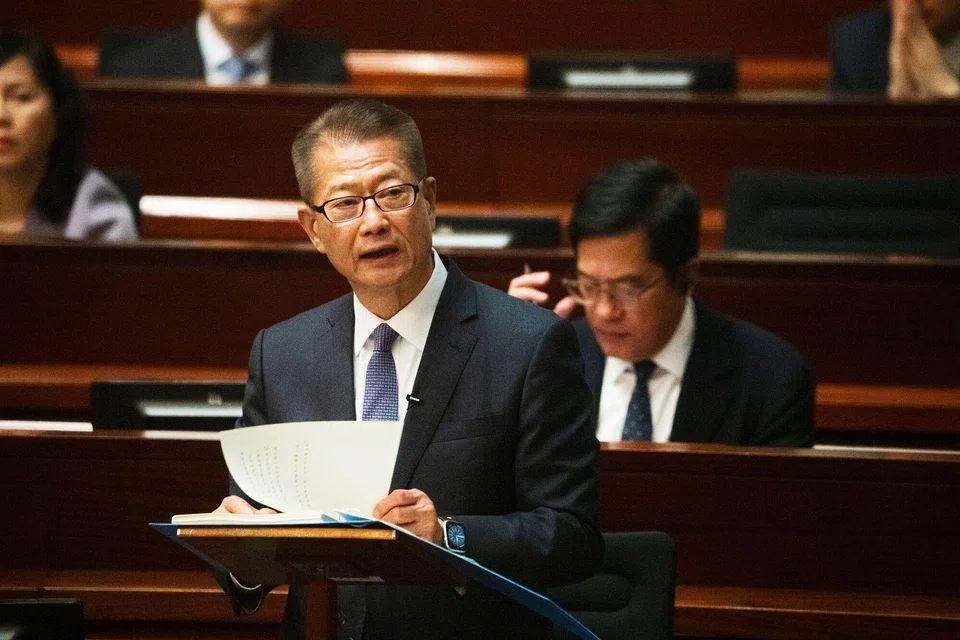
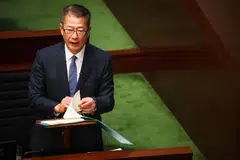
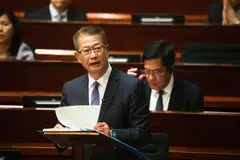
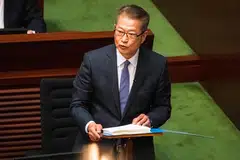
With good timing and some skilled accounting, including civil service job cuts and education funding reductions, Financial Secretary Paul Chan has brought the city out of the red three years earlier than expected.
Hong Kong will post a fiscal surplus of HK$2.9 billion (S$469 million) for the 2025/2026 financial year that concludes on Mar 31, Chan announced in his Budget speech on Feb 25.
It is a significant turnaround from the HK$67 billion deficit he forecast only 12 months ago – and a reminder that a lot can change in a city’s financial situation in the short span of a year.
The good news – after a three-year streak of large deficits initially expected to end only in 2028 – is thanks largely to an asset market boom and the government’s austerity measures.
“The global environment has remained volatile, and Hong Kong has continued to undergo economic transformation,” Chan said. “Yet, Hong Kong has always thrived amid changes and progressed through innovation... Our economy has recalibrated its course and is advancing steadily.”
He projected that Hong Kong’s economy will grow by 2.5 to 3.5 per cent in 2026.
Gross domestic product rose by a surprisingly strong 3.5 per cent in 2025, in a third straight year of growth after the city’s stretch in the doldrums from social unrest and the Covid-19 pandemic.
Between 2027 and 2030, it is expected to expand by an annual 3 per cent in real terms.
Economic sentiment in Hong Kong has improved markedly.
In 2025, home prices rose for the first time in four years, with banks now forecasting double-digit gains in property values for 2026.
The benchmark Hang Seng Index ended 2025 up a whopping 28 per cent, and has risen a further 4 per cent so far in 2026.
Initial public offerings (IPOs) have jumped, too, with the listing of more than 110 companies raising US$37 billion (S$47 billion) in 2025, and 100 more in the pipeline for 2026 so far.
Retail sales have also eked out gains for eight straight months, as the city welcomed 12 per cent more visitors in 2025, compared with the preceding year.
All these factors enabled Hong Kong to achieve an operating account surplus through its taxes collected. The capital account remains in deficit.
The operating account covers the government’s short-term expenses to keep it running, while the capital account is for long-term investments to drive the city’s development and growth.
The consolidated amount comes up to a HK$2.9 billion surplus, which also includes bond sale proceeds that the government will have to repay when the bonds come due.
Fiscal reserves will reach HK$657.2 billion by the end of March 2026.
Hong Kong’s economic growth and improved financial situation – another HK$22.1 billion surplus is expected in the 2026/2027 fiscal year – allow Chan greater flexibility to invest in the city’s future.
Among his key measures, some HK$30 billion will go towards accelerating artificial intelligence (AI) adoption and developing the Northern Metropolis border tech hub near Shenzhen.
The finance chief will lead a new committee to facilitate AI use across industries, with an initial focus in biotech and smart robot technology. Societal initiatives will provide training for people and integrate AI into public service systems, including for traffic management and flood control.

“The government is taking such an active role in investing so much into tech and AI because Hong Kong needs new growth pillars that can produce high profit margins and provide high value-added jobs,” economist Billy Mak told The Straits Times (ST).
“The AI push is also a part of China’s broader strategic direction.”
Hong Kong is in the midst of formulating its first five-year plan to align its policies with Beijing’s 15th five-year plan.
The city’s big investments in its future – even in the face of existing constraints from its capital account deficit – will pay off given time, said Mak, an associate professor at Hong Kong Baptist University.
“The investments can add to Hong Kong’s GDP, bringing returns in the form of corporate earnings, public listings and tax revenue in the long run.”
Additionally, businesses and residents will enjoy a tax reduction on their profits and salaries, potentially increasing Hong Kong’s appeal to international firms and talents.
But the funds for these expenses do not come without sacrifices.
While the city’s operating account is now in the black, the authorities have, over the past year, slashed funding for schools, clawed back university grants, cut budgets for social services, and raised public hospital fees for some.
Some 10,000 jobs will also be axed in the civil service, which employs roughly 4.5 per cent of the city’s 3.8 million-strong workforce.
The government will cut recurrent expenditure by another 2 per cent over the next two fiscal years.
It is also set, for the first time in 40 years, to tap its Exchange Fund, which serves as the last line of defence to maintain the Hong Kong dollar’s peg against the US currency.
The government will transfer HK$150 billion from the fund’s profit account to support the development of the Northern Metropolis and other infrastructure projects.
Ken Ip, associate director of Saint Francis University’s Innovative Incubation Centre, noted that the government had become more deliberate in its budget resource allocation.
“It appears to be shifting from relying heavily on land revenue, towards a more balanced approach that combines fiscal discipline with strategic investment in industry and infrastructure,” Ip told ST.
“Resources are being channelled into technology, financial innovation and industrial policy rather than across-the-board expansion of recurrent spending.”
The budget’s “striking” swing from an initially expected HK$67 billion deficit to a HK$2.9 billion surplus reflects the economy’s cyclical recovery more than any kind of structural reinvention, he added.
“The key question is durability. If growth remains asset-market dependent, volatility will return. If diversification efforts succeed, this year’s rebound could mark a genuine fiscal reset,” Ip said.
“The real test will be whether the economy five years from now is more diversified and less exposed to asset cycles.” THE STRAITS TIMES
Decoding Asia newsletter: your guide to navigating Asia in a new global order. Sign up here to get Decoding Asia newsletter. Delivered to your inbox. Free.
Share with us your feedback on BT's products and services