Hormuz closure exposes Taiwan and Korea’s AI energy trap
Taiwan and South Korea are reliant on fossil fuel imports to power their factories
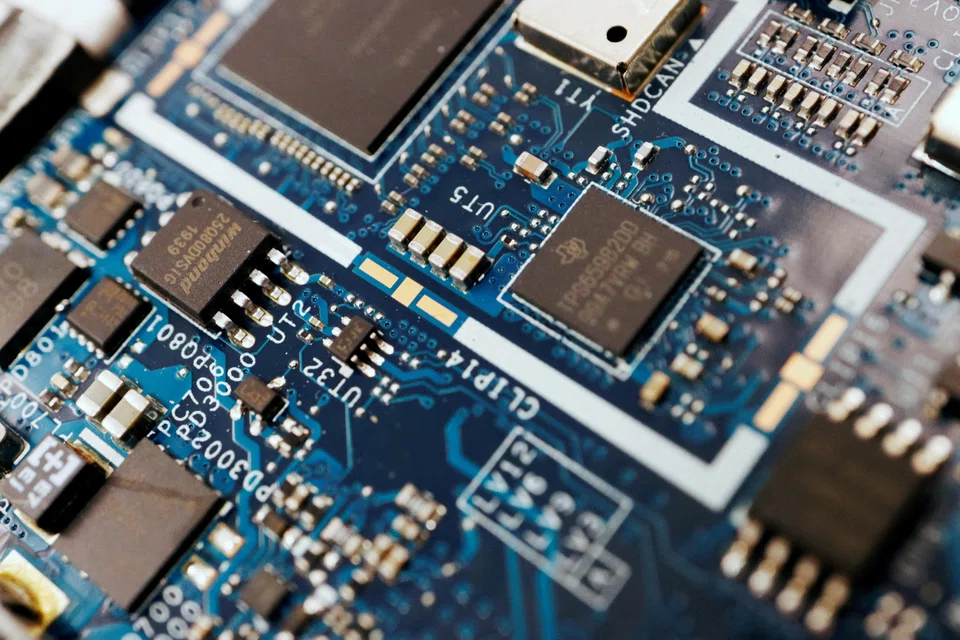
THE ripple effect of the ongoing Strait of Hormuz crisis is spreading far and wide, with Taiwan and South Korea – the two indispensable hardware anchors of the global artificial intelligence (AI) era – bearing some of the biggest impact.
Both economic powers have doubled down on gas imports for their power generation needs in the past few years, a structural flaw that the current energy crisis has exposed. As the main manufacturers of the high-end semiconductors and memory chips powering the world’s tech revolution, their competitiveness and local companies have come under serious risk.
The concern isn’t just around energy spending. The world’s biggest tech buyers, including Apple, Google, and Microsoft, have all committed to ambitious clean energy targets.
For Samsung, SK Hynix, and TSMC, whose fabrication plants – also known as fabs – run on whatever the grid provides, meeting those supply chain requirements is becoming structurally difficult when that grid is largely powered by gas.
Wired to the grid, exposed to the world
Taiwan and South Korea are reliant on fossil fuel imports to power their factories. With chip fabrication among the most energy-intensive industrial processes on earth, grid composition matters a lot.
Taiwan accounts for 60 per cent of global chip manufacturing revenue and 90 per cent of the most advanced chips, which are crucial for the AI sector. Yet the country relied on imports for 95 per cent of its energy needs last year, including more than 38 per cent of its natural gas and 70 per cent of its crude oil from the Middle East.
Meanwhile, in South Korea, SK Hynix and Samsung collectively control around 70 per cent of the global market for DRAM (dynamic random-access memory) – the memory chips that power everything from servers to smartphones. Similarly, the country imports 94 per cent of its energy and 72 per cent of its crude oil from the Middle East.
The dangers of having so much energy imported has become apparent starting February this year, as the US-Iran war disrupted shipping through the Strait of Hormuz.
While Taiwan’s government says it has enough liquefied natural gas (LNG) supplies to last throughout May, the cost of replacement shipments is surging. Should supply interruptions persist, the country would need to turn to the spot market – where the JKM, the Asian benchmark price for LNG, has spiked around 80 per cent since the war began on Feb 28, according to National Central University professor Chi-yuan Liang.

In South Korea, volatility in oil and gas prices has already shaken economic confidence. The South Korean won has plunged to a 17-year low, and mounting pressure on production costs from rising oil prices is intensifying stagflation fears. Manufacturing costs are projected to rise by 0.71 per cent for every 10 per cent increase in international oil prices.
Doubling down on gas
This dependence on imported fossil fuels looks set to only increase.
Instead of shielding its economic engine with price-stable, cleaner energy, South Korea is deepening fossil fuel dependency – and binding its highest-growth industries to it. Under the government’s 11th Basic Plan for Electricity Supply and Demand, which is due for revision this year, LNG generation capacity is expected to surge from 43.2 gigawatts (GW) to 69.2 GW by 2038, largely driven by coal-to-gas conversions and new infrastructure such as the Dangjin LNG Terminal.
The most consequential expansion lies where gas meets Korea’s tech ambitions. Six new LNG facilities totaling 3 GW are in the works to power the Yongin National Semiconductor Cluster, one of the world’s largest chip complexes in development.
Furthermore, a new bill would allow AI data centre operators to sign direct power-purchase agreements with LNG generators. It will also exempt AI data centres built outside the Seoul metropolitan region from grid-impact assessments, the regulatory checks that evaluate how new industrial connections affect the stability and capacity of the wider electricity network.
This effectively tethers South Korea’s AI-driven growth to volatile fossil fuel prices.
More importantly, the proposed legislation would lock tech exports into a high-carbon footprint at a time when global buyers demand carbon-neutral supply chains.
In Taiwan, the Ministry of Economic Affairs has promoted some supply diversification, specifically increasing the share of LNG procured from the US from 10 per cent to between 15 per cent and 20 per cent by 2029. This includes a long-term, 25-year purchase agreement signed with Cheniere, the largest LNG exporter in the US. Signed in February, the deal includes LNG deliveries of up to 1.2 million metric tons annually set to begin in 2027.
However, this diversification strategy offers only an illusion of security as it does not insulate Taiwan from geopolitical risks. Instead, it simply swaps one geographical dependency for another while reinforcing the country’s reliance on imported fossil fuels.
Customers are already watching
The pressure to increase the renewable uptake of major industrial players is building from both an environmental and commercial standpoint. And the loudest voices have to come from companies like TSMC, Samsung, and SK Hynix.
TSMC has already signalled the problem, saying that Taiwan needs to add renewable capacity to its grid faster. Without it, the company cannot meet its own net-zero goal by 2040, let alone those demanded by its biggest customers.
Samsung has been less ambitious with a net-zero commitment by 2050, despite facing the same pressure.
Chip fabs running on majority-gas grids will increasingly struggle to meet the requirements set by buyers like Amazon, Google, and Microsoft as they keep moving toward carbon neutrality.
Customers can’t easily swap chip suppliers today, as no one else produces what TSMC and SK Hynix make at scale. But that may not always be the case.
TSMC’s Arizona fabs run on a significantly cleaner grid, and Intel’s foundry ambitions haven’t gone away. Meanwhile, countries including Vietnam have increasingly ambitious semiconductor plans.
The Hormuz crisis has made the cost of inaction tangible for the governments involved. For the companies, the business case for advocating loudly for renewable buildout – rather than quietly accepting whatever the grid provides – has never been stronger. And for the cleantech and renewable energy companies that can credibly serve industrial-scale chip manufacturing demand, an enormous opportunity is taking shape.
Energy company Ørsted began delivering power from its 920 megawatt Greater Changhua offshore wind farm directly to TSMC’s fabs in 2025, the first project of its kind.
In South Korea, SK Hynix and Samsung have signed solar power purchase agreements. However, they cover just a fraction of domestic fab needs, and the Yongin semiconductor cluster is projected to require up to 10 GW when fully operational. That gap is the opportunity.
For cleantech companies that can credibly serve industrial-scale chip manufacturing, the Hormuz crisis has just made the business case undeniable.
The current crisis is a wake-up call: Energy security in the AI era is no longer defined by how well you hedge against fossil fuel markets but by how fast you can build your way out of them. TECH IN ASIA
Decoding Asia newsletter: your guide to navigating Asia in a new global order. Sign up here to get Decoding Asia newsletter. Delivered to your inbox. Free.
Share with us your feedback on BT's products and services