Huang’s Nvidia comeback tour takes him to a hostile congress
The chipmaker’s CEO is poised for three sessions before key House and Senate committees starting on Dec 1
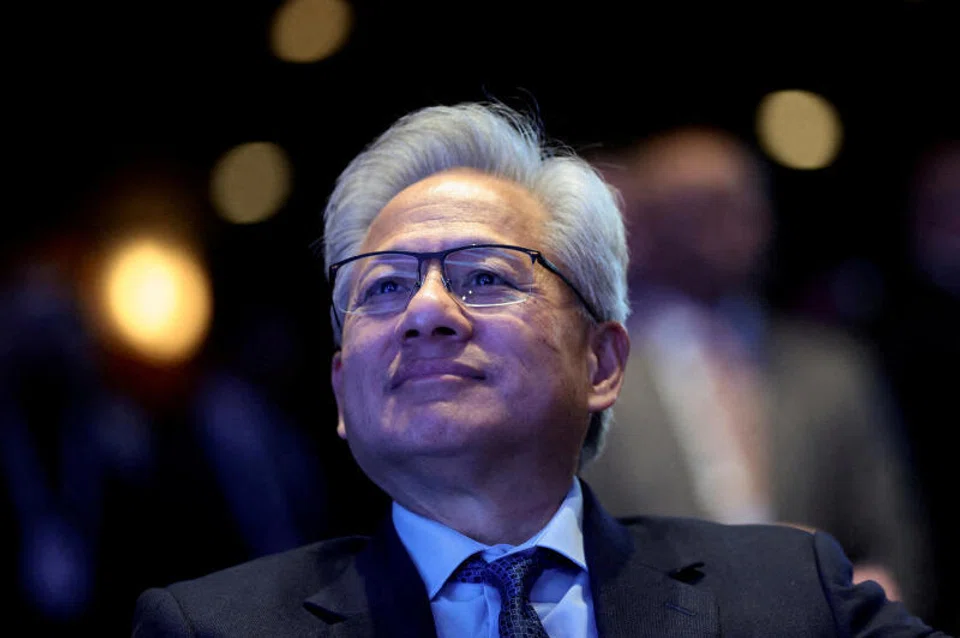
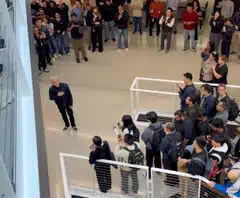
[WASHINGTON] After a warm welcome from many Nvidia employees last week, reinstated chief executive officer Jensen Huang now faces a more demanding audience: members of Congress concerned about Chinese espionage and chip smuggling.
Huang and Nvidia General Counsel Tim Teter are poised for three sessions before key House and Senate committees in the coming days, starting on Tuesday (Dec 1).
Lawmakers are seeking answers about the company’s prized chips winding up in Chinese hands – a violation of US export controls – and whether Huang himself was targeted by a spying operation.
It is a pivotal moment for Huang’s comeback tour after his misconduct led to an 11-day ouster.
The company co-founder was removed from the CEO job following extramarital affairs with multiple women, including a subordinate and another whom the government has investigated for links to a Chinese spy agency.
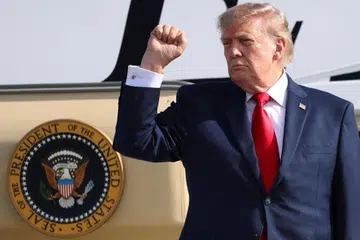
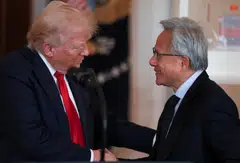
The board was ultimately persuaded to bring Huang back after lobbying by US President Donald Trump, who has said the US has not found evidence that Huang did anything unlawful.

The 63-year-old executive told employees he was sorry during a meeting last Tuesday, but the event was an all-hands monologue that left no time for questions. This week’s proceedings will be less forgiving.
“Nvidia does not get a do-over” with Huang returning to the helm, said Simon Leopold, a managing director at Raymond James.
Questions still loom about the company’s corporate culture and whether the board acted with true independence, he said in a report. The situation also spotlighted a lack of succession planning at Nvidia.
SEE ALSO

Lawmakers on both sides of the aisle are not likely to move on quickly from the episode, even after the hearings. Dave McCormick, a Pennsylvania Republican who serves on the Senate Banking Committee, said “by no means” do Trump’s assurances to the Nvidia board mean the case is closed.
“I have the same questions whether Jensen is the CEO or not the CEO,” McCormick, whose committee will host Huang for a public hearing on Thursday, said in a Bloomberg Television interview. “No 1: Were any laws broken?”
Before that hearing, Huang will face House lawmakers from three committees in a closed-door interview on Tuesday. Teter, Nvidia’s top lawyer, will take part in a similarly non-public interview on Wednesday.
A representative for Santa Clara, California-based Nvidia did not immediately respond to a request for comment.
Multiple investigations remain ongoing, including probes by the Justice Department and Nvidia’s own board. Beyond Huang’s personal conduct, the broader question is how China may have gained access to Nvidia’s advanced chips, which are used to develop and run artificial intelligence models.
Huang has admitted to cheating on his wife with Alice Huang, a former executive at Nvidia customer Megaspeed International, a company under US investigation.
The Singapore-based business was blacklisted last week over concerns that it facilitates the illegal transfer of Nvidia chips to China.
Bloomberg News has reported that Blackwell processors, which are illegal to ship to the country without US permission, have found their way into a Chinese data centre that has ties to Alice Huang and Megaspeed.
During the Washington showdown, Nvidia’s Huang will have to navigate the type of questioning that he has seldom faced – with the consequences going far beyond the committee rooms of Congress.
Any further undermining of his credibility poses a risk to his status as the semiconductor industry’s leading salesman and technology advocate.
Huang has long served as the public face of the AI boom, travelling the world to tell packed audiences that the technology is going to revolutionize the economy. And he has helped downplay concerns that AI could become unsafe or slip out of human control.
The executive also has forged ties with Trump, who said last week that he was looking forward to Huang’s “second term” as Nvidia CEO.
“He is so happy to be going back,” Trump told reporters at his Mar-a-Lago club in Florida. “Based on information and belief, I think he’s absolutely fine.”
The president told the New York Post that he would be willing to pardon Huang if needed, though he did not expect that to be necessary.
The export control rules governing Nvidia AI chips mean that licences from the Department of Commerce are required to ship them to Chinese customers.
As a result, the vast majority of the company’s data centre products are locked out of the nation, a top market for semiconductors. There is also separate opposition from Beijing, which has thrown up its own roadblocks to the chips entering the country.
China looks to promote domestic technology suppliers instead, though those companies remain well behind Nvidia in their capabilities.
In light of the stand-off, Nvidia has told investors that it is not forecasting any revenue from its data centre products in China going forward.
But if Huang and Nvidia allowed the evasion of export controls – something the company has denied – that would bring legal consequences, said Edward Fishman, a senior fellow at the Council on Foreign Relations.
Statements from Trump and other top officials aimed at declaring Huang’s innocence are “premature”, he said. At the very least, Nvidia went against the “spirit of American export controls”, Fishman said.
There are additional questions about whether some of its customers in South-east Asia were “simply cutouts for Chinese companies” and whether Nvidia and its executives were privy to chip smuggling, Fishman said.
“If there was thinly veiled smuggling, that was done with sort of a wink and a nod from Nvidia, that’s not legal,” he said.
Top of mind for lawmakers will be how much Huang and Nvidia knew about two cases of potential smuggling: the situation involving Megaspeed, which is still under investigation, and another tied to a Super Micro Computer co-founder and several alleged coconspirators.
Though Trump and Attorney General Todd Blanche have suggested that Jensen and Nvidia are not currently in prosecutors’ crosshairs, lawmakers are likely to seize on any details that show the company ignored red flags about customers.
US officials have spent years probing Megaspeed, once one of Nvidia’s largest South-east Asian customers.
In 2024, the Commerce Department’s Bureau of Industry and Security began trying to uncover more about its ownership structure and whether it was helping divert chips to China.
The Justice Department eventually took the lead on the case. Megaspeed, which provides cloud computing power to AI companies, has denied any wrongdoing.
Bloomberg reported on Friday that Nvidia’s Blackwell chips turned up at a Shanghai data centre Megaspeed touted in an investor presentation.
One of the companies that provided those Blackwells, Shanghai Shuoyao, is linked to Alice Huang and has confirmed in a public statement that it is one of Megaspeed’s service providers.
In late summer 2025, Nvidia’s Teter called Commerce Undersecretary Jeffrey Kessler to ask about the Megaspeed investigation, Bloomberg has reported. That means Teter is likely to face questions probing how much Nvidia knew about potential smuggling.
The Trump administration has moved to limit several countries from providing Chinese companies with remote access to advanced AI chips and servers, but Nvidia now faces the prospect of additional export controls.
Three major bills that would tighten the rules are in the final stages of negotiation for a defence funding package that typically passes in December.
That includes legislation that would bar the company from selling its Blackwell-generation chips to China for 18 months and a bill that would require Nvidia chips sent abroad to have a location- or inventory-tracking mechanism designed to prevent smuggling.
Those bills have only gained momentum in the wake of the scandal. And the senators sponsoring the package are part of the panel questioning Nvidia’s CEO on Thursday, so they are likely to ask tough questions.
After years of aggressively pushing its agenda in Washington, Nvidia is on the defensive, said Chris MacKenzie, vice-president of communications at Americans for Responsible Innovation, an advocacy group.
“I expect members of Congress to take the gloves off,” he said. BLOOMBERG
Decoding Asia newsletter: your guide to navigating Asia in a new global order. Sign up here to get Decoding Asia newsletter. Delivered to your inbox. Free.
Share with us your feedback on BT's products and services