

Huawei’s new AI chip finds favour with ByteDance, Alibaba which plan to place orders: sources
The 950PR is more compatible with Nvidia’s software system and has better response speeds
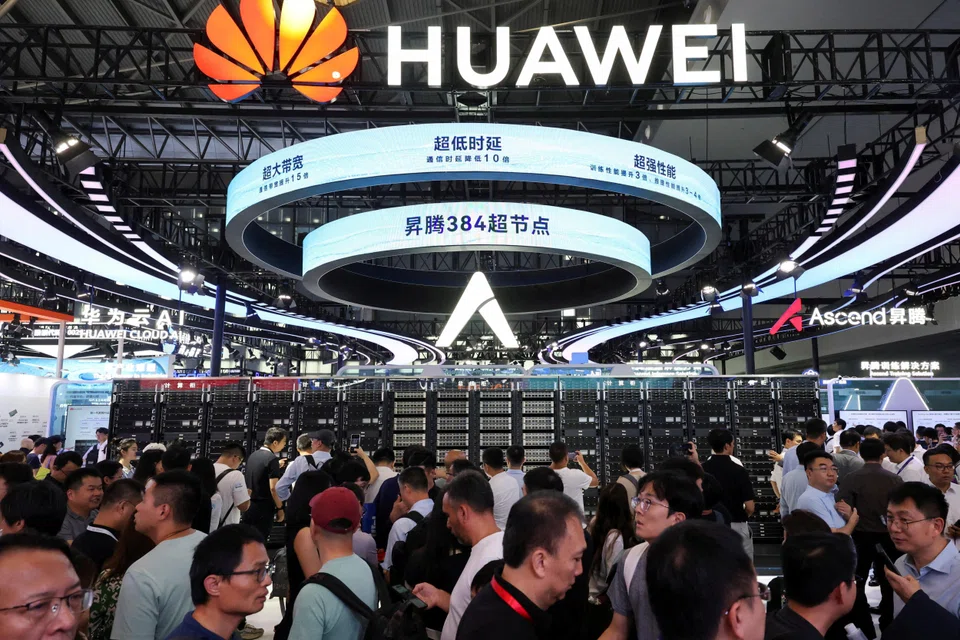
[SHENZHEN] Customer testing of Huawei’s new artificial intelligence (AI) chip, designed to challenge Nvidia in the China market, has gone well and Big Tech giants including ByteDance and Alibaba plan to place orders, sources said.
The development marks a milestone for Huawei.
Despite a government campaign to encourage the use of domestic semiconductors, the Shenzhen-based firm struggled to persuade large tech firms in the private sector to adopt its current flagship chip, the Ascend 910C, in large quantities, industry sources have previously noted.
This time around, tech firms intend to use the new 950PR more extensively.
They are much happier now that the chip is more compatible with Nvidia’s compute unified device architecture software system and has better response speeds, echoed three sources.
Huawei plans to ship around 750,000 950PRs this year, said two sources. They said samples were sent to customers in January and that mass production should begin in April, setting the stage for fully fledged shipments to start in the second half of the year.
The sources were not authorised to speak to media and declined to be identified.
Huawei, ByteDance and Alibaba did not reply to requests for comments.
Restrictions on Nvidia chips
The launch of the 950PR comes at a difficult time for Nvidia in China. Many of its AI chips have been banned from sale in China by Washington, on worries that the technology could boost the capabilities of the Chinese military.



In 2025, the Trump administration gave the green light to the sale of Nvidia’s H200 chips – more powerful than currently restricted products – albeit with a number of conditions that could limit amounts sold.
The H200 has also recently received approval from Chinese authorities, but it remains unclear when they will be allowed into the country.
Huawei mentioned its new chip last September when it outlined its long-term semiconductor plans for the first time, and said it would be launching some of the world’s most powerful computing systems.
The 950PR, which uses traditional Double Data Rate memory, will be priced at around 50,000 yuan (S$9,309) a card, while a premium version with faster high bandwidth memory will sell for around 70,000 yuan, the sources said.
Where previously Huawei had stuck to its proprietary compute architecture for neural networks software system, the new chips will allow developers at Chinese tech firms, which have generally used Nvidia’s software system thus far, to migrate those models more easily.
The sources said that compared to the 910C, the chip only offers a small improvement in raw computing power, but it is designed to excel in handling inference workloads – the process of running trained AI models to answer queries or execute tasks.
Demand for AI inference computing in China is surging as the country’s tech sector shifts its focus from model development to real-world deployment, a trend turbocharged by the rapid adoption of open-source AI agent OpenClaw. REUTERS
Decoding Asia newsletter: your guide to navigating Asia in a new global order. Sign up here to get Decoding Asia newsletter. Delivered to your inbox. Free.
Share with us your feedback on BT's products and services
TRENDING NOW

Once staunchly pro-China, Malaysian Chinese businesses are now distancing themselves from Beijing

New launch or resale unit? Here’s a guide for homebuyers
The lesser-known prospects in the Asian chipmaking supply chain

Cliff Tan has 7 million followers and a 4-month waitlist. Why won’t he expand his business?

