

India's central bank holds rates, awaits clearer inflation signal before acting
The Reserve Bank of India leaves its benchmark repo rate unchanged at 5.25%
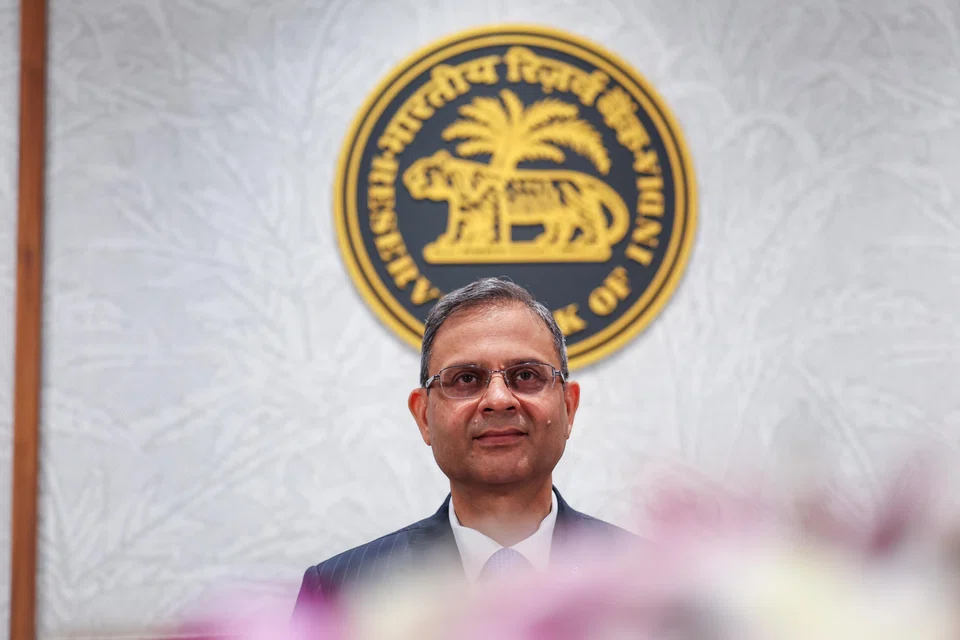
[MUMBAI] The Reserve Bank of India (RBI) left its benchmark repo rate unchanged at 5.25 per cent on Wednesday (Aug 5), as policymakers await clearer evidence on whether rising oil prices are fuelling broader inflationary pressures in Asia’s third-largest economy.
The decision to hold rates sets India apart from a growing band of regional peers including Indonesia, the Philippines and others that have responded to the inflationary fallout from higher energy prices and war-driven currency volatility by tightening policy.
Instead, the RBI announced a series of steps at the previous meeting to boost capital inflows and support the rupee.
The central bank’s six-member rate panel, which includes three external members, voted unanimously to keep rates on hold.
The rate-setting panel also retained the policy stance at “neutral”. An overwhelming majority of 68 out of 72 economists polled by Reuters had forecast that the RBI would stand pat on its benchmark interest rates.
Headline inflation has moved above target mainly because of higher fuel prices, while broader price pressures remain in check, RBI governor Sanjay Malhotra said while announcing the policy.
Signalling no rush to act until there is greater clarity on inflation, Malhotra reaffirmed the RBI’s “resolute” commitment to its inflation target.
India’s benchmark 10-year bond yield was largely unchanged at 6.78 per cent, while the rupee weakened over 0.1 per cent to 95.09. The benchmark Nifty 50 index was 0.1 per cent higher, while BSE Sensex stayed 0.5 per cent higher.
The RBI’s message was “well balanced, highlighting the risks and, hence, the policy decisions ahead being data-dependent”, said Upasna Bhardwaj, chief economist at Kotak Mahindra Bank.
SEE ALSO


Bhardwaj continues to see scope for cumulative 50 basis points of hikes in the policy rate between now and end-March.
Resilient growth
The central bank cut its forecast for average inflation in the current financial year to 5 per cent from the 5.1 per cent it projected in June.
The forecast for core inflation, which excludes food and fuel, was cut more steeply to 4.3 per cent from 4.7 per cent earlier.
Retail inflation in India rose above the central bank’s medium-term target of 4 per cent for the first time in 17 months in June but is projected to stay within its tolerance band of 2 to 6 per cent in the current fiscal year, giving policymakers breathing room on rates.
The central bank also nudged up its growth forecast to 6.7 per cent from 6.6 per cent, reflecting confidence in the economy’s resilience despite a mixed flow of incoming data.
While manufacturing activity has softened, with the purchasing managers’ index slipping to a five-year low, credit demand remains robust, expanding at nearly 18 per cent.
Domestic demand remains resilient but a weak monsoon, trade and geopolitical uncertainties could emerge as risks to growth, Malhotra said.
Balance of payments surplus
India’s external balance of payments is on course to post a “healthy surplus” in 2026, Malhotra said, adding that capital flow measures announced in June have boosted foreign inflows.
Those steps included a subsidised dollar deposit scheme aimed at the Indian diaspora, alongside incentives for banks and government companies to raise overseas borrowings.
The initiatives have drawn more than US$41 billion in inflows so far.
Those inflows, along with lower oil prices and central bank dollar sales, have helped steady sentiment toward the rupee. The currency has recovered about 1 per cent since June, although it remains down 5.4 per cent for 2026.
“We will continue with our policy of it (the exchange rate) being determined by market forces, while curbing excessive volatility, checking speculative behaviour and preventing disorderly movements to ensure that it is not out of sync with fundamentals or disruptive of economic activity,” Malhotra said. REUTERS
Decoding Asia newsletter: your guide to navigating Asia in a new global order. Sign up here to get Decoding Asia newsletter. Delivered to your inbox. Free.
Share with us your feedback on BT's products and services
TRENDING NOW

Once staunchly pro-China, Malaysian Chinese businesses are now distancing themselves from Beijing

Stocks to watch: HPL, Aims Apac Reit, Zico, Advanced Systems Automation, ComfortDelGro

‘How many will survive?’: Bubble fears arise as China’s humanoid robotics face reality check
Smaller board lots can’t fix a market run by three banks

