

India's rupee to stay on slight depreciating path as BOP goes into deficit in FY2023: DBS
 Add BT as a preferred source
DeeperDive is a beta AI feature. Refer to full articles for the facts.
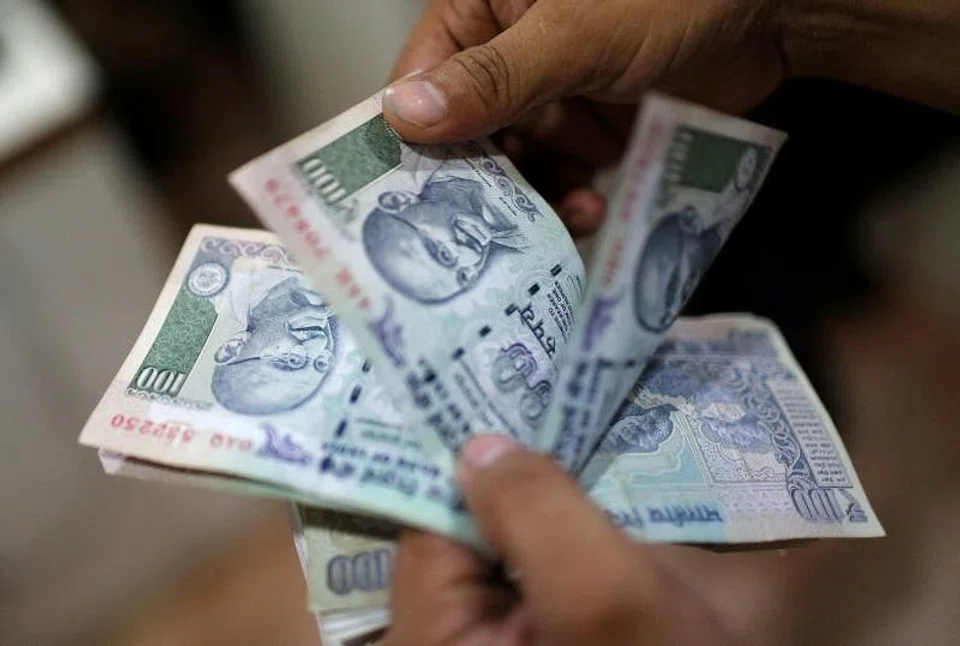
WITH more interest rate hikes likely coming from the United States Federal Reserve and an impending deficit in India's balance of payments for FY2023, the Indian rupee is likely to remain on a gradual deprecreciating path, heading towards 77 rupees against the US dollar, according to a DBS report released on Wednesday (Mar 23).
While the number of Indian exports are on course to exceed the government's target of of a record US$400 billion in FY2022, the boost to the trade balance is negated by a surge in imports, as oil imports doubled to US$141 billion by February this year, as compared to just US$72 billion in FY2021, said DBS senior economist Radhika Rao in the report.
Going into FY2023, Rao expects the risks to continue to be stacked against trade balance, as strong exports momentum will encounter a challenging global growth environment in the second half of the FY2023 as growth slows in China, US and the Eurozone.
With a trade deficit likely, widening India's current account shortfall -2.6 per cent of its gross domestic product (GDP), Rao expects India's balance of payments to moderate in FY2023, slipping into a deficit after 3 years of surpluses.
The current account deficit for FY2022 is likely coming in at -1.8 per cent of GDP owing to a trade deficit.
In addition to increasing imports on the back of rising oil prices, other factors pushing for a balance of payments deficit include tighter global liquidity, moderate portfolio flows as earnings expectations for domestic equities are tempered, and offshore loans losing momentum on higher borrowing costs, noted Rao.
Navigate Asia in
a new global order
Get the insights delivered to your inbox.
While the Reserve Bank of India (RBI) had been fending off appreciation pressures on the rupee amid the Covid-19 pandemic in 2020, these dynamics are likely to change in FY2023, she added.
"With the US Federal Reserve not only signaling a higher quantum of hikes but also likely to be frontloaded, flows into emerging markets will be subdued," said Rao.
"We don't expect the BOP deficit to push liquidity to a deficit but slow the pace of incremental rise. This is also in sync with the central bank's intention to keep liquidity flush (likely 3-4 trillion rupees) to avoid premature hardening in financial conditions," she added.
Instead, the RBI will allow for natural drivers such as the lower currency in circulation, balance of payment deficit, and higher domestic assets to correct the scale of surplus rather than direct liquidity absorption measures, noted Rao.
She expects the central bank to actively defend the currency this year. It had intervened heavily, as seen in how its foreign reserves had dropped US$11 billion in the current calendar year to prevent the rupee from sliding.
Rao pointed out that the reserves are being used to slow the volatility of the rupee, instead of reversing its weakening trend.
Keeping the rupee on a slight weakening path is also in line with the official leaning for a competitive currency, she noted.
"While the RBI maintains that it does not favour any level or direction for the rupee, containing volatility will be moot. Dollar sales to neutralise one-sided depreciation in the currency will also create the legroom for liquidity-neutral open market operations," she said.
READ MORE:
- Rupee sinks to record low as India markets sell off on oil surge
- Funds shunning India turns rupee into Asia's worst currency in emerging market
- India's factory growth accelerated in February; inflation remains a concern
Decoding Asia newsletter: your guide to navigating Asia in a new global order. Sign up here to get Decoding Asia newsletter. Delivered to your inbox. Free.
Copyright SPH Media. All rights reserved.
TRENDING NOW

StarHub hands Ensign InfoSecurity control back to Temasek in S$115 million deal, books S$200 million gain
Singaporeans can now buy record amount of yen per Singdollar

Air India asks Tata, Singapore Airlines for funds after US$2.4 billion loss

Keppel DC Reit posts 13.2% higher Q1 DPU of S$0.02833 on strong portfolio performance

