Indonesia sharpens axe on land clawback, raising stakes for regional palm oil giants
Potential fines may run into billions of dollars if disputed land is ultimately deemed illegal among investors’ concerns
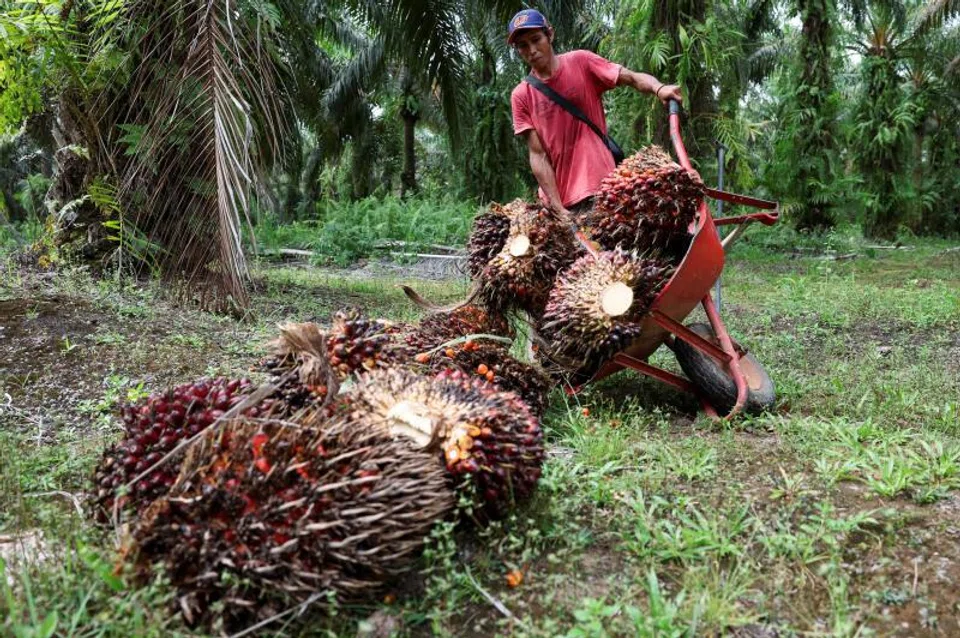
[JAKARTA / SINGAPORE / KUALA LUMPUR] As Indonesia escalates its sweeping land seizure drive, plantation and mining firms across the region are confronting higher regulatory and financial risks after President Prabowo Subianto said the government could reclaim a further four to five million hectares (ha) this year.
The campaign, which spans hundreds of companies across palm oil, forestry and mining, is raising investor concerns over policy predictability and asset security in South-east Asia’s largest economy, with potential fines running into billions of dollars if disputed land is ultimately deemed illegal.
Jakarta has framed the move – one of the most significant structural shifts in Indonesia’s palm oil and mining industries – as a governance clean-up, with Prabowo seeking to reclaim assets which he said drained billions of dollars from the state through years of improper and illegal licensing.
“We have taken action against hundreds of illegal mines and saved hundreds of trillions of rupiah, but there is still a lot of leakage,” Prabowo said on Wednesday (Jan 7).
Melissa Cheok, director at Sustainable Fitch, said: “In the short run, headline actions heighten concerns not just about validity of the government’s claims to confiscate land but also policy predictability and asset security.”
Regulatory risks hang over planters
The policy could hurt Malaysia and Singapore-listed companies with palm oil plantations in Indonesia, including upstream palm oil producers and resource firms.
While less than a handful of companies have flagged mounting regulatory headwinds linked to their Indonesian operations, more have been tightlipped on their exposure and the potential impact.
Most prominently, Singapore-based agribusiness giant Wilmar International, which holds more than 200,000 ha of palm oil concessions in Indonesia, is facing heightened regulatory risks as it confronts legal actions as the government steps up reviews of land ownership and confiscation issues.
CGS International analyst Jacquelyn Yow remarked last November that Wilmar International’s acknowledgment of headwinds in Indonesia, however, is “likely to reduce investor uncertainty and limit knee-jerk reactions to share-price movements when these cases conclude”.
Plantation groups, including Wilmar International and First Resources, declined to comment on the impact of Indonesia’s move on the company. The latter cited that the government’s regulatory discussions are still ongoing.
The Business Times’ queries to Golden Agri-Resources and Olam Group also did not draw a response by press time.
In August 2025, Bumitama Agri told BT that it was in discussions with the Indonesian authorities, though it could not specify how much land may be affected. Golden Agri-Resources said during a results briefing in August that the changes are expected to bring about “short-term pain”.
Potential fallout for Malaysian firms
Indonesia has identified 436 oil palm companies operating without proper forestry permits under a Forestry Ministry decree issued in March last year, covering more than one million ha of land.
Of the affected area, around 790,000 ha are currently undergoing a legalisation process, while applications for roughly 317,000 ha have been rejected outright.
The scale of exposure varies. Singapore-listed Bumitama Agri, an Indonesian planter which counts Malaysia’s IOI Corp as a major shareholder, has the largest area under review.
SD Guthrie has said less than 3 per cent of its roughly 180,000 ha of planted oil palm area in Indonesia is being assessed by the authorities. Genting Plantations and Kuala Lumpur Kepong (KLK) have also disclosed smaller areas under review and rejected.
These underscore that outcomes and potential financial impact will differ by company.
SD Guthrie declined to comment on the land seizure issue, while IOI Corp, Genting Plantations and KLK had not responded as at press time.
CIMB Investment Bank’s regional head of agribusiness research Ivy Ng pointed out that while none of the companies have confirmed actual land seizures to date, most have acknowledged heightened regulatory risks.
Potential impairments are a major concern.
Genting Plantations has so far been the only company to book a provision, setting aside RM66 million (S$20.9 million) for potential income losses.
While near-term effects appear manageable, according to CGS International, potential fines and regulatory risks could weigh on share prices, more so for those with significant land directly owned in Indonesia.
The share prices of Genting Plantations and KLK, which have more than half (57 per cent) of their land exposure in Indonesia, have drifted lower since the crackdown began in March 2025. Since early March, Genting Plantations has lost 12 per cent and KLK has slipped 3.2 per cent.
By contrast, IOI Corp and SD Guthrie, which have 12 per cent and 32 per cent of their plantation areas in Indonesia, respectively, have gained 8.2 per cent and 15.4 per cent over the same period, bolstered by elevated crude palm oil prices.
Nirgunan Tiruchelvam, head of consumer and Internet at Aletheia Capital, said potential supply constraints arising from Indonesia’s land enforcement actions could support palm oil prices over the longer term.
He added that sentiment could also be influenced by broader geopolitical developments. This includes US President Donald Trump’s rollback of environmental, social and governance priorities, which could help revive palm oil demand after years of being constrained by deforestation and biodiversity loss concerns.
While crude palm oil (CPO) prices were volatile in 2025, analysts from MBSB Research and Hong Leong Investment Bank projected a price recovery after February 2026, supported by seasonal low production, La Nina weather disruptions and tighter global supply.
The analysts forecast an average CPO price between RM4,200 and RM4,300 per tonne in 2026.
OCBC noted in its commodities outlook for the first half of 2026 that CPO prices are expected to ease slightly in 2026. The house predicts an average of around RM4,200 per tonne, compared to its estimate of RM4,300 per tonne in 2025.
Turning the screws tighter

Indonesia’s land grab has gained added momentum following severe floods and landslides in Sumatra late last year that killed more than 1,000 people, with deforestation widely cited as a key factor exacerbating the disasters.
The country’s penalties vary by commodity. Illegal nickel mining in forest areas carries the heaviest penalty at 6.5 billion rupiah (S$497,467) per hectare, compared with 1.76 billion rupiah per hectare for bauxite, 1.25 billion rupiah for tin, and 354 million rupiah per hectare for coal.
By the end of last year, the campaign had resulted in the seizure of around four million ha of concessions.
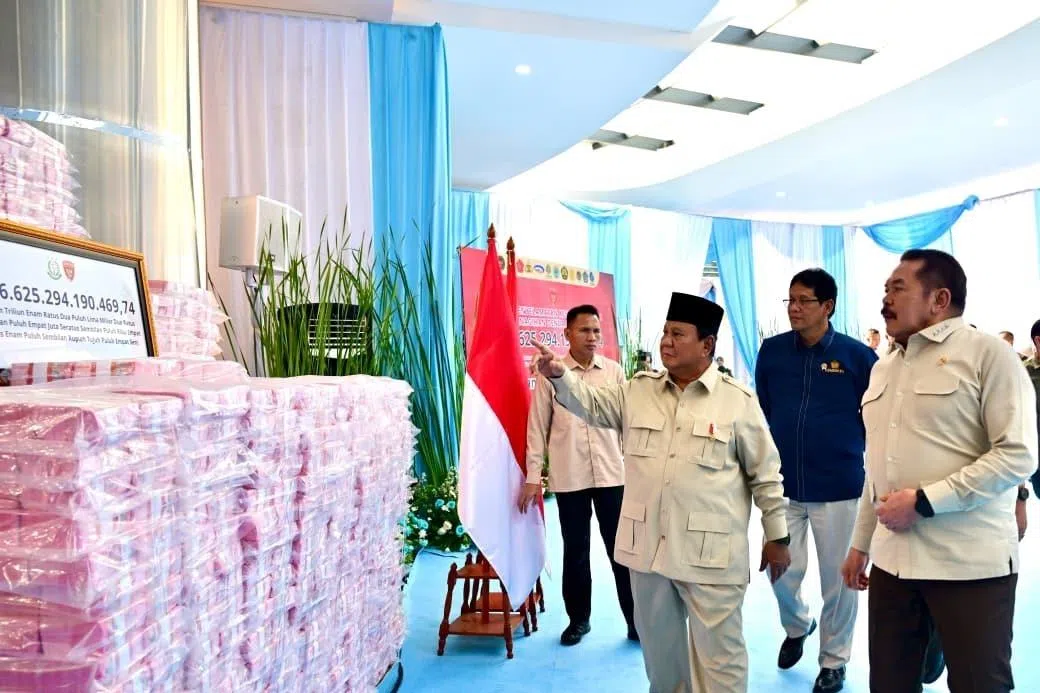
The government has also collected 2.34 trillion rupiah in fines from 20 palm oil companies and one nickel mining firm for operating beyond their designated concession areas, with the proceeds transferred to the state treasury.
The rising state-owned giant
The confiscated estates have since been handed over to state-owned Agrinas Palma Nusantara.
It is a newly established state-owned enterprise, created by the government last year to take over and manage plantation assets.
It has since been handed control of around 204,000 ha of oil palm plantations – roughly equivalent to the size of Tokyo – land that was seized by the task force as part of last year’s enforcement drive.
The company is led by Agus Sutomo, a retired Indonesian army general appointed as chief executive officer.
The Indonesian government has identified potential fines of up to US$8.5 billion that could be collected in 2026 from palm oil and mining companies found to be operating illegally in forest areas.
However, some miners – particularly those holding valid mining business permits – said the fines are onerous and are urging clearer rules.
They pointed to longstanding issues of overlapping land designations in the mining sector, where some areas are legally approved for extraction but remain officially classified as forest land.
Nanan Soekarna, chairman of the Indonesian Nickel Miners Association, said the industry supports tough enforcement against illegal operations but warned that companies with legitimate licences risk being swept up in the broader crackdown.
“Fines running into the trillions of rupiah are justified for illegal activities,” he said. “But for companies with valid permits, enforcement must be fair and proportional.”
He also urged the Forest Area Control Task Force to carefully consider objections submitted by nickel producers accused of encroaching on forest zones, noting that some companies have evidence showing the disputed land falls outside their designated mining permit areas.
Key test for investor confidence
Energy economist Fahmy Radhi of Gadjah Mada University said Prabowo’s crackdown on illegal mining and plantations signals a serious intent to restore control over Indonesia’s natural resources.
However, he warned that selective enforcement remains a key investor concern. Prabowo has indicated zero tolerance for illegal activity by any player, whether domestic or foreign, including companies registered overseas.
Fahmy also said the transfer of seized assets to state-owned enterprises such as Agrinas could support governance objectives if transparency and accountability are upheld.
State firms, he noted, are easier to monitor than private operators, but must demonstrate that reclaimed assets deliver tangible public benefits.
Cheok from Sustainable Fitch said: “The outcome will hinge on execution. Ad-hoc or politicised actions could undermine trust, while clear, rules-based application could enhance Indonesia’s business and sustainability profile.”