



Inside Asia’s family empires: Philippines’ Active Group builds its name on quality, not quantity
For more than 50 years, the developer has thrived by staying true to its vision

Inside Asia’s family empires: How they are transforming to seize the next stage of growth
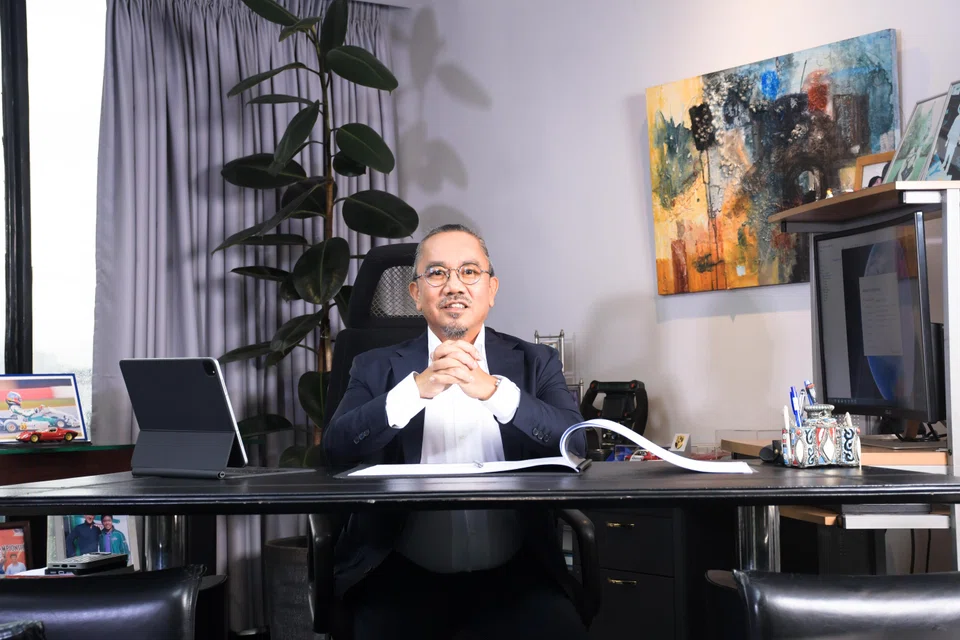
[SINGAPORE] Trained as an architect like his father, the younger Antonio Turalba has always sought to make the most out of the land he acquires.
This means building properties across the archipelago that offer value, not simply in terms of returns, but also in what they provide community and culture.
“As a smaller niche developer, we are able to offer the same quality at a better price than a larger developer,” said Antonio Turalba Jr, president and chief executive officer of Philippine real estate developer Active Group of Companies. “Show us the property, and we can see what it is best used for.”
The 58-year-old noted: “Of course, we always look at what works best financially as a business. But we’re not driven by the number of units to be built. I would rather produce quality than quantity.”
His son, Jose Antonio Turalba, known as Juha, has adopted this perspective in practice over the years. “(My father and grandfather) have always been very clear that we do not just build houses or subdivisions, we build addresses that people attach their family’s future to,” he said.
Behind the name
Founded in 1970, the group – which today operates with about 200 employees – has since developed more than 2,000 hectares of raw land into commercial and residential areas in the Philippines.
The group’s name “Active” came from the initials of its founders, the late Antonio Turalba Sr and Maria Cristina Turalba, spelling “ACT”.
Since taking over as CEO from his father in the mid-2000s, Turalba Jr has sought to maintain the legacy his parents built in the company’s quest for value.
The group’s flagship development, the Mount Malarayat Golf and Country Club in Lipa City in the province of Batangas, came to be in this fashion in the mid-1990s.
“My parents never had an intention to build a golf course,” he said. “But when they (experienced) the weather and saw the terrain, it was a picture-perfect golf course site.”
The country club, located 1,200 feet above sea level with views of the Malarayat mountain range, features a 210-hectare resort community and a 27-hole championship golf course.
Over five decades, the family has built the group into a conglomerate of four companies, offering a full suite of products and services for their development projects – from architectural design to construction, development and sales.
“It saves a lot of time from being wasted in the back-and-forth process with contractors,” Turalba Jr said. “We only design and construct what the company needs.”
The Philippines’ real estate development sector is no stranger to family-run conglomerates. The country’s largest developer, Ayala Land, is run by the prominent Zobel de Ayala family, which has been in the real estate business since the country’s colonial era.
Several more large, family-run developers made their names as the country developed economically in the 1970s, including SM Group, founded by the Chinese-born Henry Sy, and Aboitiz Land, the real estate business of the Aboitiz family conglomerate.
Active Group is different from these larger developers, Turalba Jr said. For one thing, a majority of the group’s developments – which include social housing projects, residential subdivisions, commercial buildings and resorts – are located outside Metro Manila, where the larger players dominate.
This was not always the case, Turalba Jr noted.
Antonio Turalba Sr and Cristina Turalba started out building and selling homes in the Metro area. This was before a real estate slump in the middle of the 1980s, which prompted them to move into horizontal development – building of villages on untrodden ground.
“In the Metro, there are very big developers who have been there for ages, so my parents started building around the fringes of the area,” Turalba Jr said.
The developments in cities such as Antipolo and Bulacan came under the “Town & Country” label, a name taken from the couple’s initials, T for Tony and C for Cristina.
These projects were master-planned, middle-income residential communities that took a variety of forms. For instance, Town & Country San Pablo offers “lot-only” properties, on which families design and build their own homes that share amenities such as a clubhouse, swimming pool and parks.
Today, the Town & Country series of residential subdivisions is in 20 locations, including greater Manila and Negros, an island in the central Philippines.
Beyond residential developments and social housing projects, the group has designed and built several office buildings in Metro Manila’s central business district in Makati; these include the 15-storey ACT Tower, where the group has its headquarters.
It is the Batangas province in southern Luzon that Turalba Jr thinks has the most room for growth. “That’s where we are focusing on at the moment,” he said.
The province, about an hour and a half’s drive from Metro Manila, is known for its scenic natural landscapes and affluent demographic. Turalba Jr believes it is ripe for development.
“We’re noticing a lot of buyers in this area who are not from around the Metro. It comes with the growth of population and income capacity,” he said.
Batangas, where Active Group currently has several resort communities, is set to grow as investments in industrial estates and infrastructure increasingly flow into the area, Turalba Jr noted.
They include a US$60 million port expansion project and a 27 km expressway to link Batangas to neighbouring provinces.
A steady hand
Among the large, publicly-listed real estate developers in the sector, another feature that sets Active Group apart is that it has remained private since its inception.
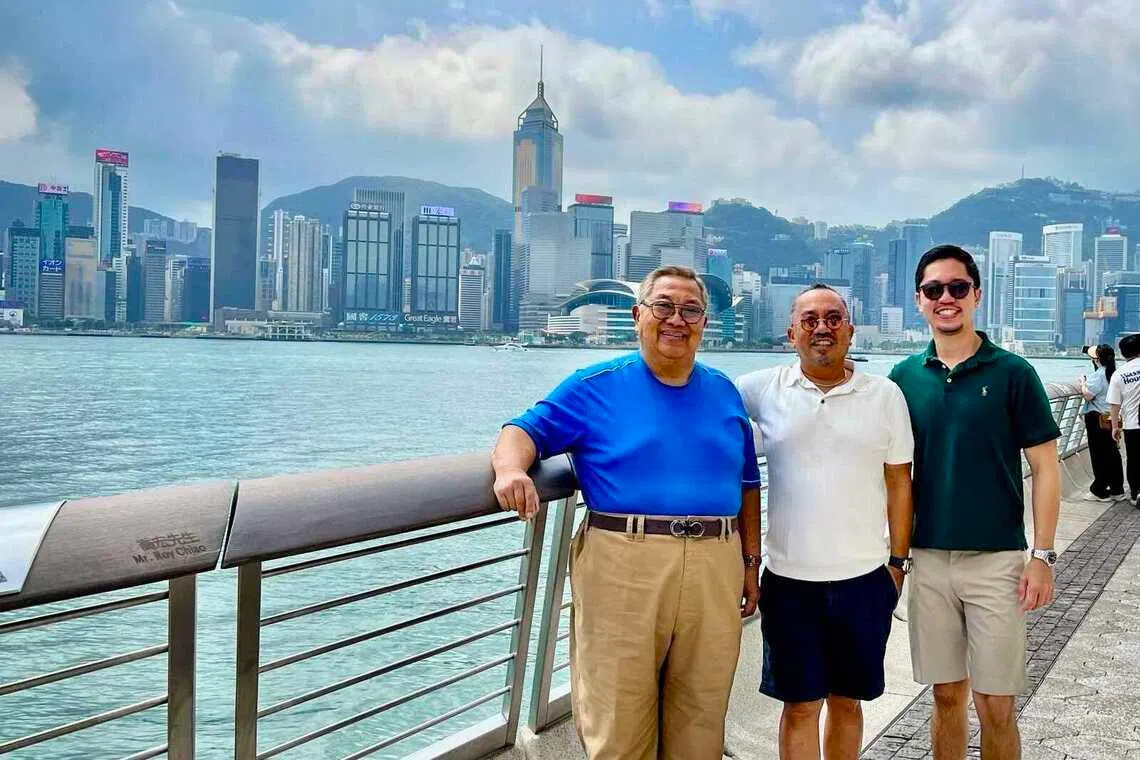
Apart from Turalba Jr, two of his sisters are involved in the group’s business, running the food and property management arms for the group’s hospitality developments.
His son, Jose Antonio, is now vice-president of sales and marketing.
The group had previously planned to take the company public in the late 1990s; the plan was to raise funds after taking out loans to purchase a number of properties.
But the Asian financial crisis in 1997 tanked the plans for the initial public offering, and landed the group almost US$4 billion in debt.
“We were lucky,” the CEO said. “The properties we acquired were good in value, so they covered our debt when we sold them.”
Since then, the family has preferred to keep ownership of the group private.
“Our reluctance (comes from the fear) that we will end up having to build for profit and shareholder value, which brings pressure to expand and build more units,” he said.
Instead, the group’s strategy has prioritised taking on a smaller, more tailored approach to each project – to “make sure the product is perfect for the area”, he noted.
Part of this comes in understanding the needs of people they build for. Some major cities in the country are bogged down by excess capacity in their residential condominium markets, induced by a post-pandemic construction boom among listed developers, even as demand struggled to keep up.
“If everything was more affordable, they would be able to sell,” Turalba Jr said. “There’s a mismatch between oversupply of units and underqualified buyers.”
He believes the market has room to grow outside the cities. “We’re seeing many people moving to the countryside, preferring to have more comfortable homes there,” he said.
This isn’t just for the most expensive homes, he noted. “We now build all kinds of real estate, from low-income housing to very high-end developments,” he said.
“Either way, we try to ensure that quality doesn’t diminish just because the prices are cheaper, or the lots are smaller.”
On leadership
Even as the company ethos remains, each generation of the family’s leaders hopes to bring a different leadership style to the table.
Turalba Jr’s son Juha, 32, is preparing to succeed his father to lead the company one day – having trained and started his career as an engineer, a different path from his father and grandfather, who were trained as architects.
“My father and grandfather think in terms of form, space and how people move and live in a place. My training as an engineer taught me to think in systems, constraints and performance over time,” he said.
Having joined the company in 2021, he has sought to strengthen systems for data-driven sales and marketing, and pushed for better use of technology across the group.
Turalba Jr, on his part, has opted for a more consultative approach than his father’s headstrong, highly entrepreneurial leadership style.
In this mode of leadership, he believes, lies the key to the company’s transformation from its entrepreneurial roots to a mature and sustainable business, while maintaining the vision his father created.
“To move forward is to create a good-quality team that works together, one that espouses the same values as my father: quality, passion for excellence, integrity and commitment to the customer,” he said.
“That is the way to keep Active Group the way we are for the next 50 years.”
TRENDING NOW

Once staunchly pro-China, Malaysian Chinese businesses are now distancing themselves from Beijing

Looking beyond looming CEO succession, should UOB potentially pursue a transformative merger?

Could stablecoins be the future of money?

Grab CEO’s wife Chloe Tong on life with Anthony Tan and finding her purpose

