

Iran attacks on US warships show limits of tanker reprisals
No US ships have been confirmed to have been hit by Iranian missiles in the exchanges
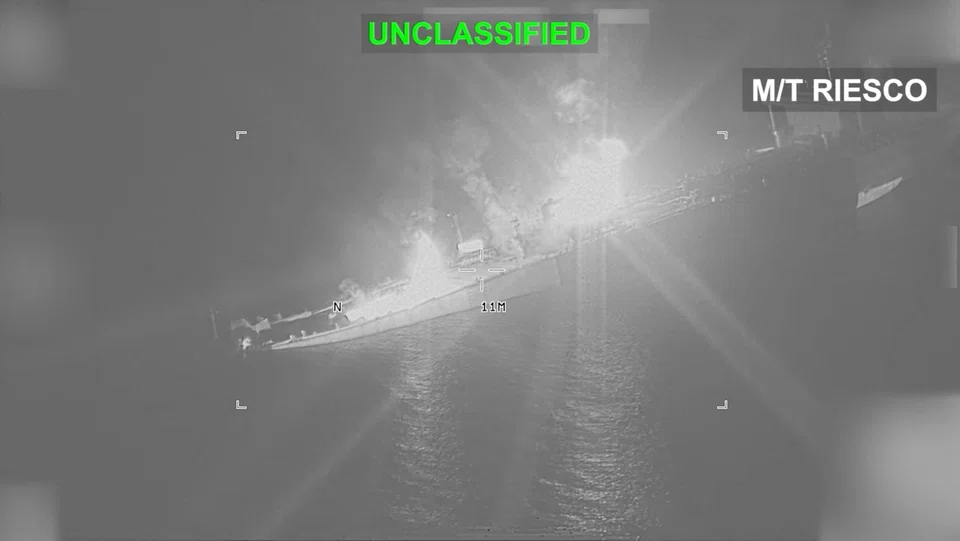
THE US tactic of striking Iranian tankers in reprisal for attacks on American warships faces a key obstacle: Teheran likely values putting a hole in an American destroyer more than losing an empty cargo ship.
US Central Command has said it “destroyed” eight tankers in the past few days after two Iranian missile attacks on Navy vessels, as part of a policy that military analysts describe as deterrence by punishment.
The Iranian ships belonged to the Islamic Revolutionary Guard Corps, a powerful faction separate from Iran’s regular military.
The tit-for-tat strikes come as the US and Iran jockey for control of the Strait of Hormuz, after a cease-fire expired last month.
Iran is seeking to control the flow of all cargo through the critical waterway, while President Donald Trump is maintaining a blockade focused on choking off the Islamic Republic’s vital oil exports.
While removing Iranian tankers from the fleet causes harm to the IRGC and country’s economy, Teheran would see the chance of striking a multibillion-dollar American naval vessel as appealing, said Kelly Grieco, a senior fellow at the Stimson Centre.
She pointed out that the first round of tanker sinkings by the Trump administration didn’t deter Iran from launching subsequent attacks against the US Navy.
“A successful hit would send the message that US naval forces cannot operate with impunity, giving Teheran something it could portray both domestically and internationally as a success,” Grieco said. “Losing the tankers certainly hurts, but Teheran may well think it is worth it.”
Secretary of State Marco Rubio reiterated the US’s commitment to the approach on Tuesday, signalling that Trump administration officials believed the calculus worked in their favour and against Iran’s.
SEE ALSO



“When they try to hit US naval ships, they will get hit themselves,” Rubio told reporters. “The back and forth is pretty straightforward. For every time they do that, or try to do that, they’re going to lose tankers.”
A senior Iranian official said that Teheran did not intend to back down and would endure economic pain, adding that the country has been rebuilding its military capabilities. The official asked not to be identified discussing sensitive matters.
So far, no US ships have been confirmed to have been hit by Iranian missiles in the exchanges. Although the exact weapons used have not been disclosed, the Pentagon has said many were ballistic missiles.
The US also hasn’t disclosed what systems were used to fend off the latest attacks. Navy ships have layers of air and missile defences, ranging from SM-3 Block IIA interceptors that can hit threats in space to SM-6 missiles for high-atmosphere shots and short-range Rolling Airframe Missiles designed to strike fast-moving targets close-in.
The SM-3 and SM-6, made by RTX Corp. subsidiary Raytheon, cost about US$15 million and US$5 million apiece, respectively.
That means repeated attacks on the warships impose costs that benefit Iran, said lead Becca Wasser, defence lead for Bloomberg Economics.
Teheran’s missiles most likely cost significantly less than the interceptors used to stop them, and can be built more easily, a calculus that has also played out in Iranian attacks on American bases across the Middle East.
Wasser said Houthi rebels launched about 480 rudimentary cruise missiles at US Navy ships between November 2024 and January 2025, leading to the use of billions of dollars’ worth of defensive weapons.
The US and its allies around the world have also struggled to refill their interceptor stockpiles amid heavy use in the Iran war.
“The sheer amount of air-defence interceptors consumed in every attack continues to be unsustainable,” Wasser said. “The US risks running bare, and the continued costs on US stockpiles may lead Washington to reevaluate its approach.” BLOOMBERG
Decoding Asia newsletter: your guide to navigating Asia in a new global order. Sign up here to get Decoding Asia newsletter. Delivered to your inbox. Free.
Share with us your feedback on BT's products and services
TRENDING NOW

Grab CEO’s wife Chloe Tong on life with Anthony Tan and finding her purpose

Brokers maintain ‘buy’ on CDL despite investor reservations over strategic review

Deal between tycoon friends sparks scrutiny of Philippine power sector

Hwa Seng Builder, two China companies win S$1.2 billion Tuas Road Viaduct phase two contracts

