

Iran war exposes the price of America’s collapsing goodwill in Asia
The conflict is compounding Washington’s trust deficit in the region in ways that carry consequences for its own interests beyond the rivalry with China
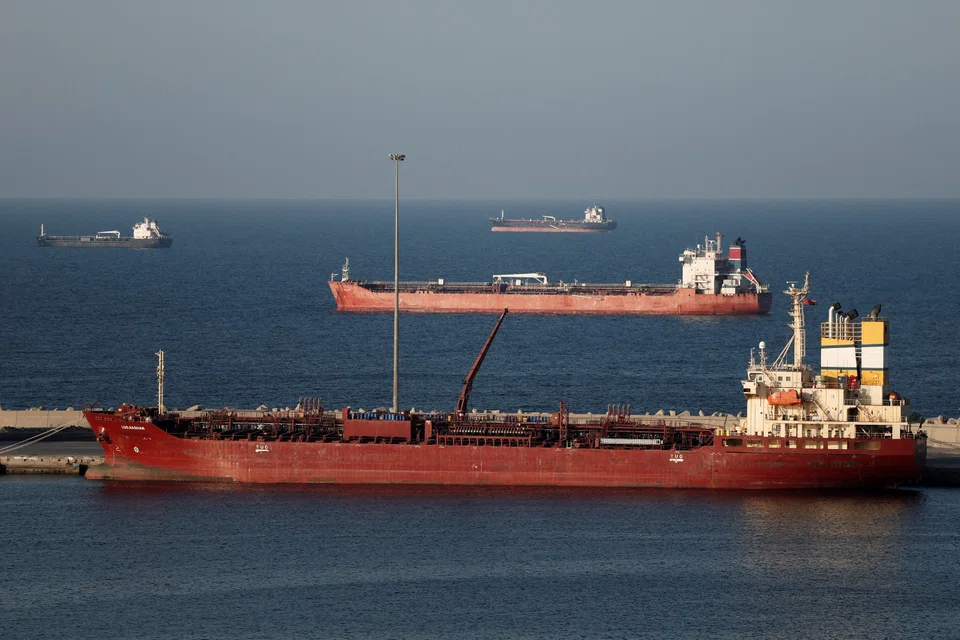
FOR Washington’s Asia hands, the idea that the Iran war is turbocharging America’s already declining popularity in this region ought to be an uncontroversial statement of fact.
The reasons for this slide in goodwill are not hard to see. From middle-class Indian households forced to cook with coal amid liquefied petroleum gas shortages, to inflation anxieties in Thailand and galloping petrol prices in Vietnam, people are feeling the knock-on effects of what is widely seen as a destabilising war of choice by the United States and Israel.
In Malaysia and Singapore, a survey released last week by the independent polling firm Blackbox Research laid bare the depth of that unpopularity. More than 70 per cent of respondents in both countries explicitly disapproved of the strikes, while only about 10 per cent attributed blame to Tehran. Consequently, American favourability sits at a dismal 33 per cent in Singapore and 35 per cent in Malaysia. By contrast, China enjoys approval ratings of 67 per cent and 74 per cent respectively.
Antipathy has been building since US President Donald Trump’s return to office in 2025, fuelled by weaponised tariffs and various other factors – not least, the impudence of the administration.
The release in April of the ISEAS – Yusof Ishak Institute’s annual State of South-east Asia survey will, in all likelihood, offer a broader barometer that points in the same direction. While it polls the region’s policymaking elite, it has historically proved a fairly accurate gauge of wider public sentiment about the major powers.
There have always been those who resented American power, influence and priorities. But there is good reason to think this wave is different. As Blackbox Research suggested in its report, with the Iran strikes and their knock-on effects on the region, the US has put its reputation on the line in a way that may not be easily reversed. At this scale, what Washington is witnessing could well be secular decline – not the cyclical ebb and flow of recent decades that America has usually managed to snap back from.
The question is what America’s Asia interlocutors take away from this trend. An aggregate of private conversations suggests they harbour two assumptions out of step with reality.
First, they accept that while Trump is deeply unpopular with the regional public, political elites will keep ties with Washington on an even keel. The logic is that, wary of China, Asian capitals still want two superpowers in the room, not one. Even Beijing’s closest regional partners need a back-up plan. They will never completely shut out the US.
Second, they assume, based on precedent, that this decline in goodwill is cyclical, not secular. It can bounce back easily enough under what they imagine will be a milder Republican administration after 2028’s presidential election – and even more so if the Democrats retake the White House.
SEE ALSO
In short: We know we are unpopular. We know you see us as an acquisitive, me-first bully right now. But we also believe this damage is reversible. It is not unrepairable.
Asia should work harder to disabuse Washington of that view, which vastly overestimates American standing. It should also press America’s Asia hands to think about the costs in terms beyond the US rivalry with China. Much attention is paid to whether Washington is losing influence to Beijing. Far less thought is given to what a near-irrevocable collapse of goodwill in Asia means for American interests in and of itself.
Soft power trashed
Whether one calls it goodwill or soft power, the Trump administration has trashed the very premise. Since this conflict began, allies have been routinely lampooned as freeloaders and cowards. The administration’s worldview is captured by Trump’s own declaration on Mar 16: “My attitude is: We don’t need anybody. We’re the strongest nation in the world.”
There is little recognition in Washington that positive public opinion is the political grease that allows foreign governments to cooperate on difficult initiatives.
Take a recent real-world example. The Partnership for Indo-Pacific Industrial Resilience, a US-led defence manufacturing initiative in Asia, has proposed plans for the Philippines to host a facility to load, assemble, and package 30mm cannon rounds – ammunition widely used by military aircraft and ground vehicles. This builds on an earlier proposal for an American ammunition hub at Subic Bay to plug logistical gaps.
On paper, this ought to be a straightforward win-win. Manila gets jobs and investment, while also helping reduce supply-chain risks by keeping military stockpiles closer to where they might be needed. America gets a more resilient forward logistics network.
But to make that happen, the Philippine government must spend real political capital selling the idea to a sceptical public and neutralising opportunistic domestic opposition, always eager to mine the seams of anti-US sentiment.
When the reservoir of American goodwill is badly depleted, local leaders lose the ability to make that case from a position of strength. And, just as one would expect, the political backlash was swift. The Makabayan bloc, a left-wing coalition in the Philippine Congress, has come out firmly against the proposed facility, arguing that it serves American strategic needs rather than Philippine ones.
“At a time when US war operations are devastating the Middle East and widening instability, the Philippines must not be turned into a logistical extension of US warmongering,” the bloc stated.
In this climate, how does Manila counter that? What narrative cover can the government offer its voters for helping a deeply unpopular superpower?
This is one example, but the broader point echoes across the entire region.
America’s bases and access agreements with allies and partners are not in immediate jeopardy – they do, after all, serve the security interests of host nations too. But Washington needs to recognise how quickly souring public opinion can force a political pivot. When pressed by an angry public, governments will choose whatever keeps them politically alive.
And the cost of that dynamic is severe, even if it is seemingly treated flippantly in Washington right now.
If allied governments can no longer justify strategic cooperation with the US because collapsed goodwill makes it politically toxic at home, America risks losing access to the bases, ports and strategic geography on which its military primacy depends.
Its projection of power – including what we are seeing now in the Middle East – does not happen in a vacuum.
Blind spots in America’s Asia policy
Because of Washington’s habit of seeing every move in Asia through the China lens, one gets the sense that the Trump administration – and indeed Asia experts in earlier administrations – has a blind spot about everything else that sliding American popularity sets in motion.
More precisely, they miss how it pushes countries to think harder about cooperating among themselves, without America, in ways that previously did not happen.
In this current war, yes, allies have signed tentative statements and made the requisite noises about heeding Trump’s call to help safeguard the Strait of Hormuz. But across the region, we are also seeing governments pursue options B, C and D with real urgency. As they scramble to deal with the oil shock from the conflict, leaders are telephoning one another, issuing statements of solidarity, and, as has now become the vogue, posting carefully choreographed photographs of themselves on the phone to fellow leaders.
There is something reminiscent here of the pandemic years, when countries also looked sideways to one another in search of help. But this time America is nowhere near the centre of the response. If anything, it is the reason others are looking for alternatives. This is the operationalisation, in real time, of what has been termed a “world minus one” order.
As Professor Amitav Acharya, one of the sages of Asian geopolitics, recently wrote, American actions in the latest war could well hasten the emergence of a “multiplex world”.
In that reality, US hyper-dominance – ironically, even as it projects more hard power than in recent times – gives way to a more diffuse system in which middle powers, regional powers and the Global South play a far greater role.
In this scenario, Prof Acharya of the American University in Washington notes: “Despite its vast military power, America will be distrusted and have to settle for a less prominent role in the global political, economic and diplomatic scene than has been the case since World War II.”
Impossible to cut US off
The best hope is that some faction within the American foreign policy establishment internalises the arguments being made here. The worst-case scenario is that Trump’s acolytes dismiss them as naive pearl-clutching.
To be clear, no Asian government is going to frame matters publicly in quite these terms. That is only fair. Few leaders can afford to invite the wrath of a mercurial American president. As many acknowledge, whatever their frustrations, they cannot simply cut America off. It remains the pre-eminent economic, technological and military power on earth.
That may prompt Trumpists to ask: Why even have this debate? If countries still have to work with us, why care about public opinion at all?
The answer comes down to the cost of doing business. When goodwill exists, cooperation between Washington and its friends and allies is fluid, and favours are granted more readily. Political leaders can take risks for one another. But when a relationship is held together by diktat and necessity rather than trust, the US risks going from leading a willing coalition to managing wary, resentful partners.
Washington can choose to stay on its current path, relying ever more on leverage and coercion in Asia and beyond, while caring little for goodwill. But there is a price to that model.
It is worth recalling the words of former defence secretary Jim Mattis – a man who once operated within Trump’s orbit – who warned Congress in 2013, while serving as commander of the US Central Command, that if the State Department’s diplomatic efforts were not funded fully, “then I need to buy more ammunition ultimately”.
Once diplomacy, soft power and public goodwill are stripped away, hard power is what remains. That is a far costlier way of sustaining influence. America must be prepared to foot that bill. It is far from clear that it is. THE STRAITS TIMES
Decoding Asia newsletter: your guide to navigating Asia in a new global order. Sign up here to get Decoding Asia newsletter. Delivered to your inbox. Free.
Share with us your feedback on BT's products and services
TRENDING NOW

Once staunchly pro-China, Malaysian Chinese businesses are now distancing themselves from Beijing

Britain’s mansion tax shows the difficulty of targeting wealth

Three hats, one goal: How Ng Kian Swan runs sustainability at NUHS
COE review: The gap between luxury and mass-market cars isn’t the only one worth bridging

