

Israel protests flare over Netanyahu’s new Supreme Court Bill

THOUSANDS of protesters blockaded Israel’s main airport and major highways on Tuesday (Jul 11) as Prime Minister Benjamin Netanyahu’s hard-right coalition pressed ahead with a justice Bill that has opened the deepest splits seen in the country in decades.
A day after parliament passed a key element in the Bill, which aims to curb the power of the Supreme Court, crowds of flag-waving protesters stopped morning traffic in major intersections and on highways nationwide. Some lay down on roads, while others threw flares.
Around 1,000 police were deployed at Ben Gurion airport, outside Tel Aviv, where thousands of protesters turned the area in front of the main entrance into a sea of blue-and-white Israeli flags.
The drive by Netanyahu’s nationalist-religious coalition to change the justice system has sparked unprecedented protests, stirred concern for Israel’s democratic health among Western allies, and bruised the economy.
“They are trying to ruin our judicial system, by putting and enforcing laws that will demolish democracy,” said Ariel Dubinsky, who joined one of the protests in Tel Aviv.
The proposals have also alarmed investors and helped push the shekel down almost 8 per cent since January.
The new Bill won a first of three required votes to be written into law late on Monday to the cries of “for shame” by opposition lawmakers.
If passed as is, it would curb the Supreme Court’s power to quash decisions made by the government, ministers and elected officials by ruling them unreasonable.
Checks and balances
The government and its supporters say that the overhaul is needed to rein in interventionist judges, many from the political left, who have encroached on the political sphere. They say the change will help effective governance by curbing court intervention, arguing judges have other legal means to exercise oversight.
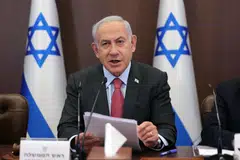

For critics, who include most of the country’s tech and business establishment, Supreme Court oversight helps prevent corruption and abuses of power, and weakening it will remove a vital part of Israel’s democratic checks and balances.
Some members of Netanyahu’s Likud party have said that the Bill will be watered down before it is brought to a final vote, which they hope to wrap up before the Knesset breaks for the summer on Jul 30.
But Simcha Rothman, the head of the Knesset Constitution, Law and Justice Committee which is drafting the Bill, told Army Radio: “I’m saying this explicitly: I am not convinced that any significant changes are to be expected.”
Divisions over the government’s judicial campaign have cut deeply through Israeli society. Netanyahu – who is on trial on graft charges he denies – had paused it for compromise talks with the opposition, but the negotiations collapsed in June.
Washington has urged Netanyahu to come to a broad agreement over any justice changes, and says that Israel’s courts should stay independent.
The head of Israel’s largest labour union urged Netanyahu not to allow what he described as extremism. “Where are you taking the state of Israel? What legacy will you leave behind? End this crazy chaos,” Histadrut chair Arnon Bar-David said. REUTERS
Decoding Asia newsletter: your guide to navigating Asia in a new global order. Sign up here to get Decoding Asia newsletter. Delivered to your inbox. Free.
Share with us your feedback on BT's products and services
TRENDING NOW

He built the Vingroup empire. Now South-east Asia’s richest man is handing some key roles to his sons

Despite the de-dollarisation debate, demand for dollar liquidity in Asia is growing
Can a first-time homebuyer couple earning S$18,000 a month afford a new EC unit?

Asia needs new energy security architecture

