

Jakarta airport closure extended as Anak Krakatau eruption disrupts flights
The suspension has affected 301 flights, including 58 international flights


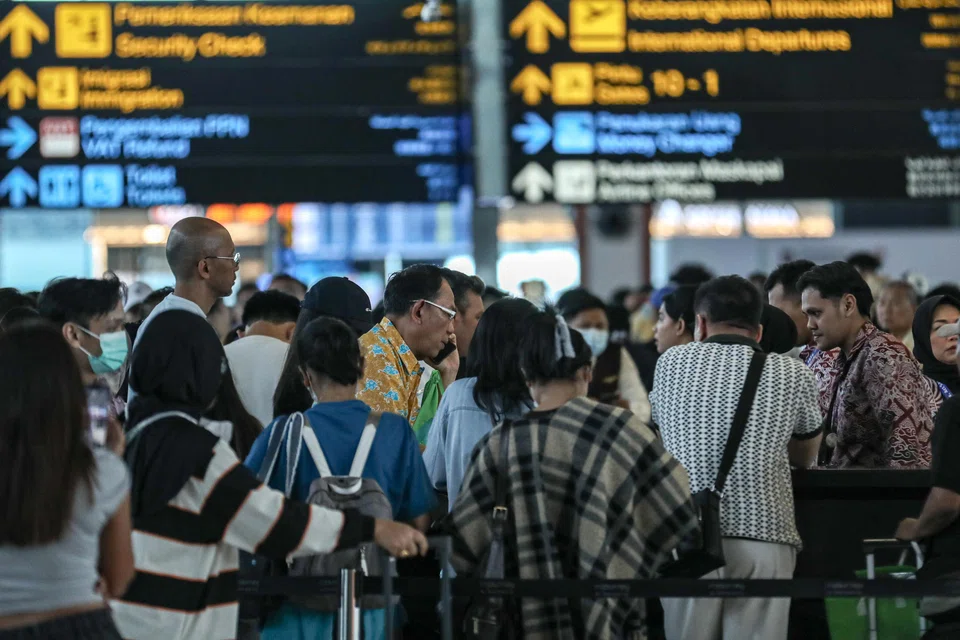
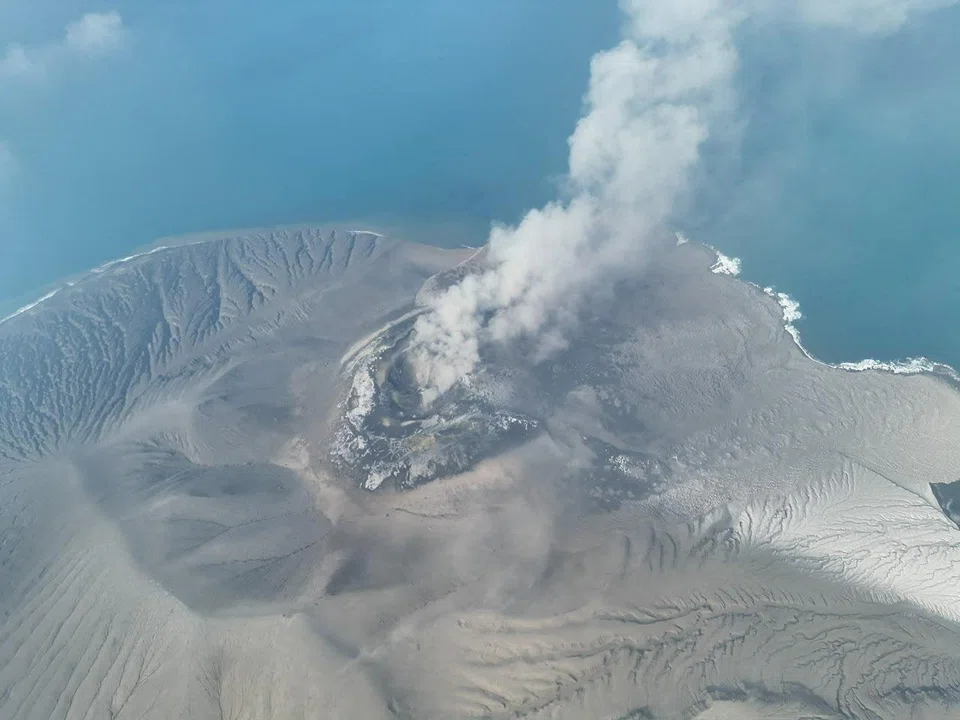
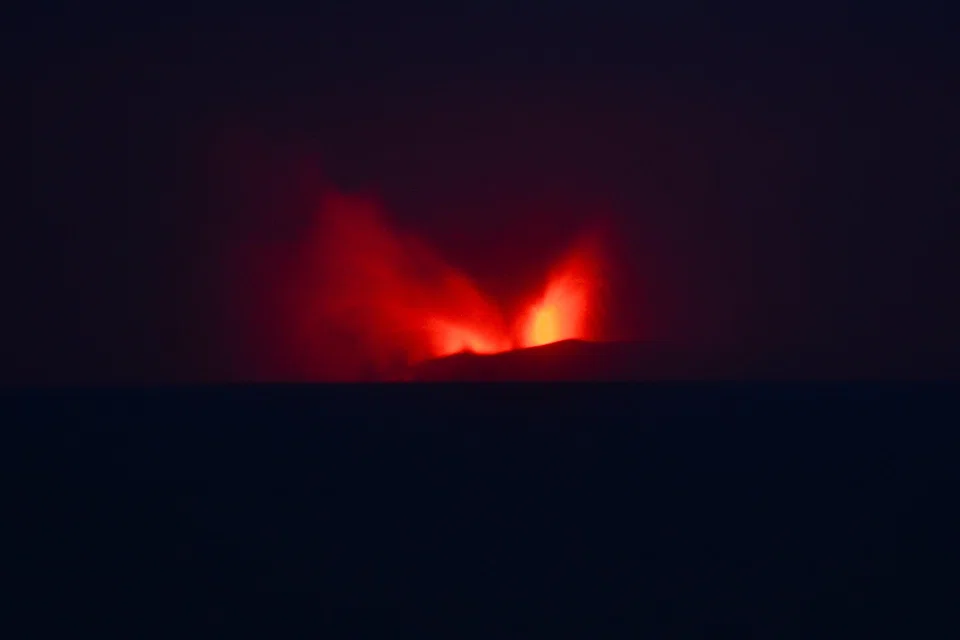
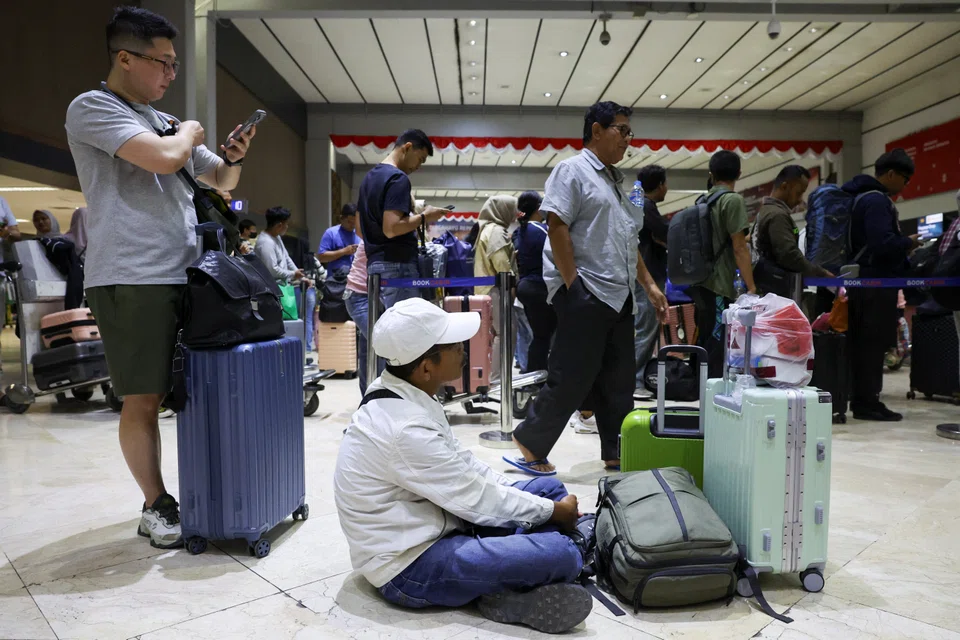
[JAKARTA] Eight airports in western Indonesia, including Jakarta’s main international gateway, will remain closed until Monday (Sep 7) as shifting winds spread volcanic ash from the continuing eruption of Anak Krakatau.
The disruption affected 301 flights at Soekarno-Hatta, including 58 international services, airport operator Angkasa Pura said.
A Changi Airport Group spokesman said that all 33 flights scheduled to depart Singapore for Jakarta on Sep 6 had been cancelled as at 6 pm Singapore time because of the eruption.
Transport Minister Dudy Purwagandhi announced the extended airport closures after 7 pm Singapore time, saying that the wind had shifted direction and was now carrying volcanic ash eastwards.
“This afternoon, the wind was blowing towards the west, but now the information from BMKG is that it is blowing east, with a speed of 5 knots at a flight level of 15,000 feet,” Dudy said at a virtual press conference, referring to the meteorological agency. “Based on that information, and after coordinating with all the stakeholders, we have decided that all eight affected airports will be closed until midnight.”
The eight are Soekarno-Hatta International Airport and Halim Perdanakusuma Airport in Jakarta; Radin Inten II and Muhammad Taufik Kiemas airports in Lampung; Pondok Cabe and Budiarto airports in Tangerang; Husein Sastranegara Airport in Bandung, West Java; and Atung Bungsu Airport in South Sumatra.
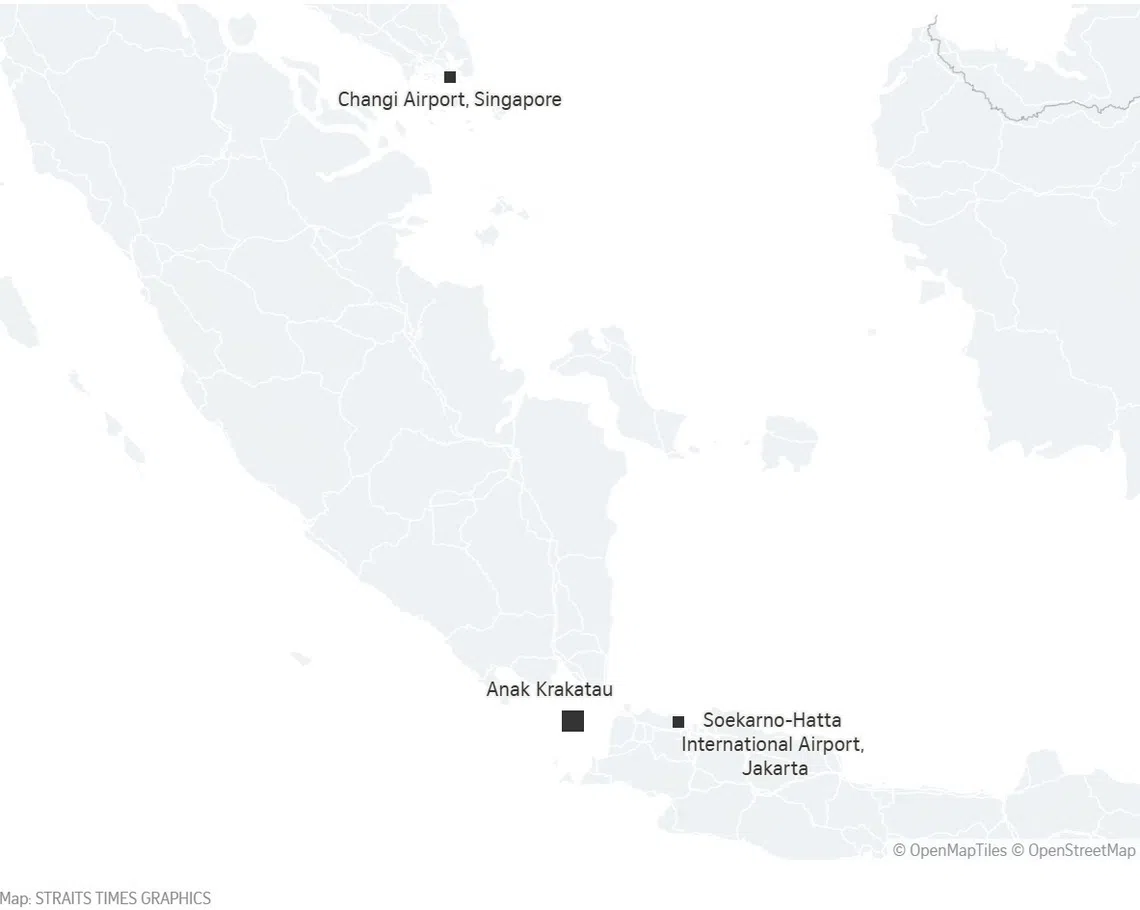
Soekarno-Hatta, Indonesia’s busiest airport, was closed for most of Sep 6, with its reopening repeatedly pushed back as the authorities monitored the movement of volcanic ash. It had most recently been scheduled to reopen at 9.30 pm local time.
Singapore Airlines (SIA) cancelled 19 flights between Singapore and Jakarta on Sep 6, while its budget arm, Scoot, cancelled another 12.
SIA said that the situation remained fluid and other flights between Singapore and Indonesia could be affected. Scoot noted that affected customers had been contacted and could rebook their flights or seek a full refund if they chose not to travel.

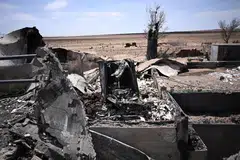
Garuda Indonesia has cancelled all flights to and from Soekarno-Hatta up to noon on Sep 7. Flights to and from Husein Sastranegara Airport in Bandung, West Java, and Radin Inten II Airport in Lampung have also been cancelled.
Hundreds of travellers were stranded at Soekarno-Hatta, with long queues forming at customer service counters as passengers sought to rebook their flight or get a refund.
President Prabowo Subianto urged Indonesians to remain calm but vigilant, particularly those in Jakarta, Banten, Lampung and areas around the Sunda Strait.
In a statement posted on his official Instagram account, Prabowo said that he had been monitoring Anak Krakatau’s activity and receiving updates since the eruption began.
He added that he had instructed government agencies, including BMKG and disaster management agency BNPB, as well as the military, police, local governments and the health and transport ministries, to continue monitoring the situation and ensure that preparedness measures and assistance were in place.
“People are urged to remain calm, but must not let their guard down,” Prabowo said.
He also urged people to stay away from Anak Krakatau and comply with the danger zone established by the authorities.
The Jakarta provincial government said that schools in the capital would switch to remote learning from Sep 7 until further notice as a precaution against exposure to volcanic ash. The measure applies to public and private schools across all levels, with the authorities saying children are particularly vulnerable to the effects of ash.
Dudy said airlines had been offered the option of diverting Jakarta-bound flights to alternative airports, including Kertajati in West Java, Juanda in East Java and Semarang in Central Java. Two Jakarta-bound flights from Jeddah and Madinah were diverted to Kertajati International Airport.
Dudy added that tickets for affected flights were refundable and urged airlines to process refunds quickly.
The authorities have warned that the disruption could have knock-on effects on aircraft rotations, fleet availability, subsequent flight schedules and terminal capacity, and urged travellers to check with their airlines before heading to the airport.
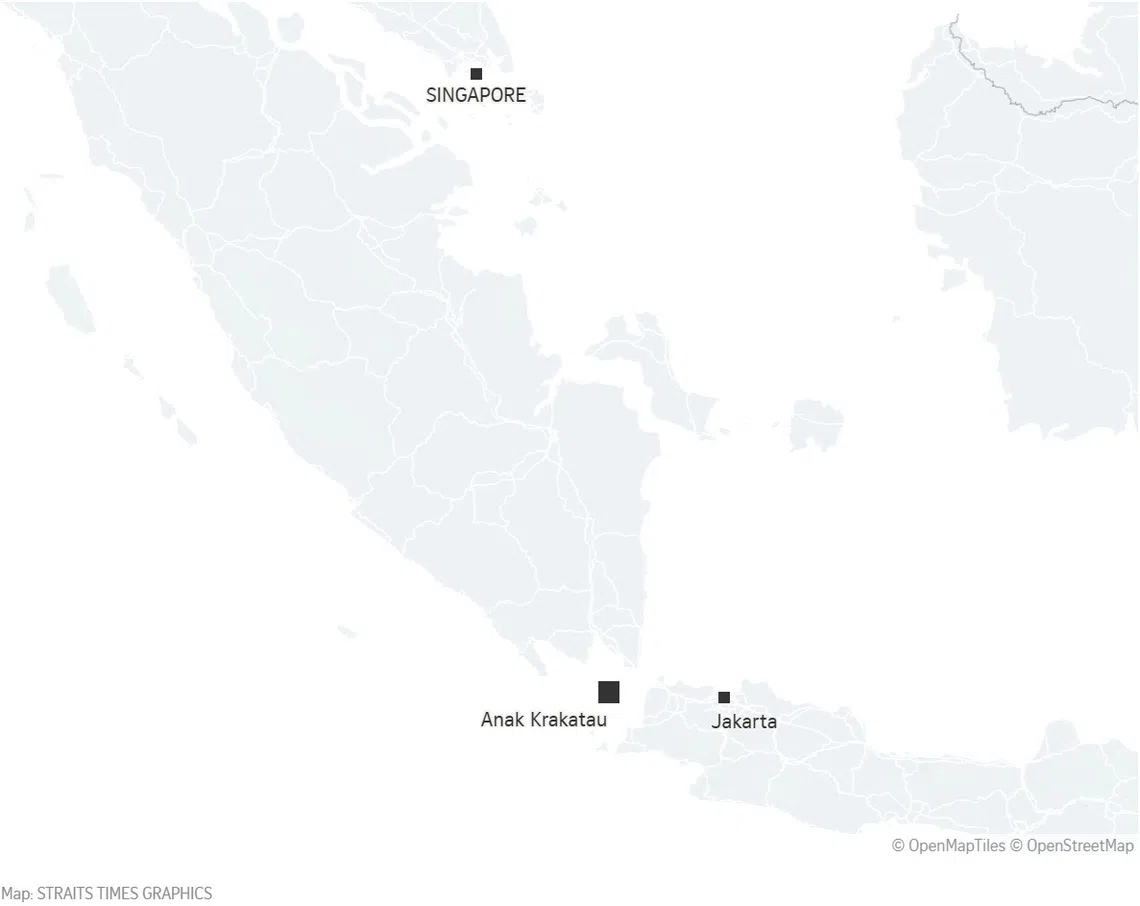
Anak Krakatau, located in the Sunda Strait between Java and Sumatra, has been erupting since late on Sep 4. Volcanic ash was detected at Soekarno-Hatta early on Sep 6, prompting the airport closure.
BMKG said that satellite imagery taken at 8am on Sep 6 showed two clusters of volcanic ash. One reached an altitude of about 6,000 m and covered parts of Jakarta, Banten and West Java, while another reached as high as 15,000 m and extended across parts of Banten, Lampung and Bengkulu.
At a press conference on Sep 6, Geological Agency head Lana Saria said that the direction and spread of volcanic ash from Anak Krakatau could change at any time. She noted that the frequency of eruptions had increased, but cautioned that this did not necessarily mean larger eruptions would follow.
Activity remained volatile and had the potential to intensify as low-frequency earthquakes and tremors continued to be recorded, she added. “But still, timing, magnitude and type of the next eruptions cannot be exactly predicted.”
People are prohibited from going within 3 km of Anak Krakatau’s active crater.
Health response
Indonesia’s Health Ministry has activated Health Emergency Operating Centres to coordinate the medical response in areas affected by volcanic ash, as the authorities prepare for respiratory, eye and skin problems.
Health Minister Budi Gunadi Sadikin said that the ministry had prepared nebulisers and oxygen concentrators for people suffering respiratory problems, as well as eye drops and ointments for eye and skin irritations caused by volcanic ash.
Residents in affected areas were urged to stay indoors where possible and wear masks and glasses if they had to go outside.
BNPB is also carrying out weather modification operations to reduce the amount of volcanic ash in the air.
Aircraft were being prepared at Pondok Cabe Airport, on the southern outskirts of Jakarta, for operations through the evening, with the authorities seeking to induce rain that could help bring volcanic ash down more quickly.
If suitable rain clouds did not develop over Jakarta, Banten and Lampung, BNPB and BMKG could instead use water mist to help disperse hazardous ash particles, BNPB chief Suharyanto said.
BNPB has also begun distributing basic supplies and masks to affected communities.
Volcanic ash has also disrupted daily life in parts of Banten and Lampung, with fishermen cancelling fishing trips and residents reporting eye irritation.
In Jakarta, the authorities ended the city’s weekly Car-Free Day an hour early at 9am on Sep 6 as a precaution against possible exposure to volcanic ash.
The eruption has also prompted the authorities to step up precautions for vessels using the Sunda Strait.
The Banten port authorities told ships transiting the strait to remain vigilant for volcanic ash, ejected volcanic material and other hazards. Ferry services between Merak in Java and Bakauheni in Sumatra have not been reported disrupted, according to BNPB.
The authorities said there was no imminent tsunami threat.
Lana said the volcanic structure that had re-formed following Anak Krakatau’s 2018 eruption remained relatively small and was not considered capable of collapsing on a scale that could trigger a tsunami.
“Nevertheless, developments in activity and changes in morphology continue to be monitored intensively,” she said.
A collapse of part of Anak Krakatau during an eruption in December 2018 triggered a tsunami that killed more than 400 people along the coasts of Java and Sumatra.
Anak Krakatau, which means “Child of Krakatau”, emerged from the area once occupied by Krakatau, which was largely destroyed in its catastrophic 1883 eruption. That eruption and resulting tsunamis killed more than 36,000 people. THE STRAITS TIMES
- Additional reporting by Wahyudi Soeriaatmadja
Decoding Asia newsletter: your guide to navigating Asia in a new global order. Sign up here to get Decoding Asia newsletter. Delivered to your inbox. Free.
Copyright SPH Media. All rights reserved.
TRENDING NOW

Once staunchly pro-China, Malaysian Chinese businesses are now distancing themselves from Beijing

Looking beyond looming CEO succession, should UOB potentially pursue a transformative merger?

Could stablecoins be the future of money?

Grab CEO’s wife Chloe Tong on life with Anthony Tan and finding her purpose

