

Japan bond meltdown sends yields to record high on fiscal fears
The 40-year rate rockets past 4% to a fresh high since its debut in 2007
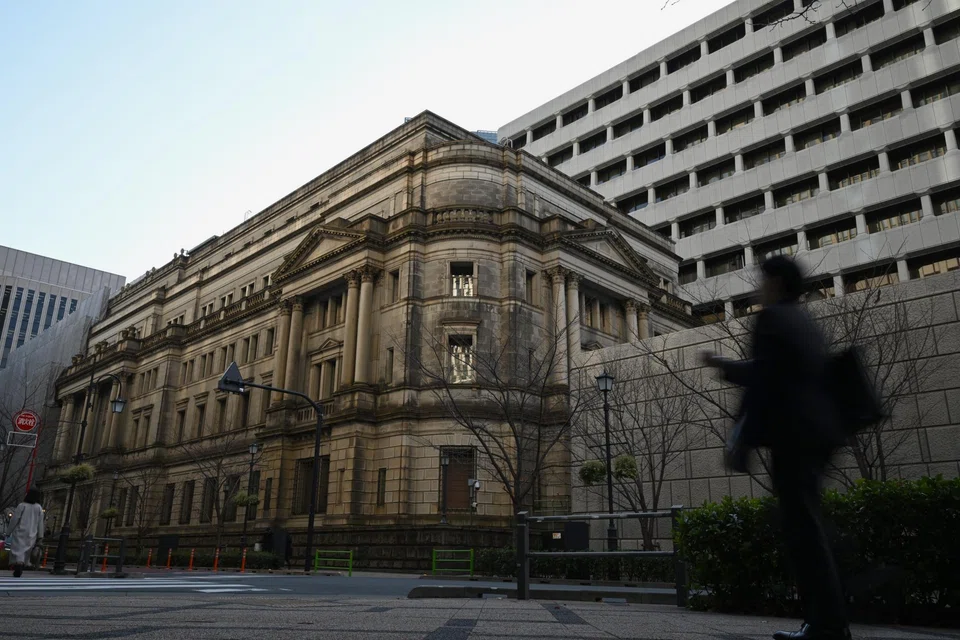
[TOKYO] The slump in Japanese government bonds (JBGs) deepened on Tuesday (Jan 20), sending yields soaring to record highs, as investors gave a thumbs down to Prime Minister Sanae Takaichi’s election pitch to cut taxes on food.
The 40-year rate rocketed past 4 per cent to a fresh high since its debut in 2007 – a first for any maturity of the nation’s sovereign debt in more than three decades.
The jump in 30 and 40-year yields of more than 25 basis points was the most since the aftermath of US President Donald Trump’s “Liberation Day” tariffs in April 2025.
A lacklustre auction of 20-year bonds earlier underscored broader worries over government spending and inflation.
Treasuries, already under pressure on concern that Trump’s tariffs may dim the allure of US assets, extended declines on Tuesday as the sell-off in JBGs accelerated.
Since Takaichi took office in October, the 20 and 40-year yields have risen by about 80 basis points.
Investors are on guard for moves in Japan spilling over into global markets, amid the prospect of continued volatility in Tokyo trading ahead of the snap poll Takaichi is scheduling for Feb 8.
Yuuki Fukumoto, senior financial researcher at NLI Research Institute, said: “There is no clear funding source for the consumption-tax cut, and markets expect it to be financed through government bond issuance.
“The bond market is effectively the canary in the coal mine, and despite the market reaction, there has been no communication from the government to push back. From an investor’s perspective, it’s hard to see a scenario where buying bonds makes sense.”

Shift in trend of low yields
The surge in yields marks a shift that has been going on in Japan’s bond market, where years of ultra-low interest rates had kept yields well below those of global peers.
The nation’s 30-year bond yield has surpassed Germany’s rate of that tenor, which sits at around 3.5 per cent. Japan’s bonds are quoted using simple yields, while international market conventions typically use compound yields.
Masahiko Loo, senior fixed-income strategist at State Street Investment Management, said: “The 40-year yield above 4 per cent – its highest since its 2007 debut and significantly above super-long (German government bonds) – offers increasingly attractive value for both domestic and foreign long-term holders, especially on a currency-hedged basis where yield pickup is substantial.”
The spike in yields has made Japan’s bond market increasingly attractive for foreign investors, who now account for roughly 65 per cent of monthly cash JGB transactions, data by the Japan Securities Dealers Association showed.
The Singapore Exchange will introduce futures on longer-dated JBGs, as trading in the world’s third-biggest debt market heats up.
Tuesday’s surge in yields for 30 and 40-year Japanese bonds are echoing the action on Apr 9 in 2025, when the impact of Trump’s reciprocal tariffs gave global markets whiplash.
This time, JGBs are leading the way higher, in contrast with April when treasuries were leading the way.
US 30-year yields are up by six basis points now, grinding higher as London traders come in and see the depth of the Japanese moves. This could get much nastier as the European session winds on toward the US day.
The yen weakened as much as 0.3 per cent to 158.60 as bonds slid. Meanwhile, Japan’s stocks slumped alongside broader declines in Asia.
Bearish bond sentiment got another shove, after data from the Japan Securities Dealers Association revealed that local insurers dumped a record 822.4 billion yen (S$6.6 billion) of bonds with original maturities over 10 years in December, the biggest net sale in Bloomberg-compiled records dating back to 2004.
While Japan’s debt-to-gross-domestic-product ratio has hit a 16-year low, it is still the highest public debt burden among advanced economies.
That means demand for the bonds is extra sensitive to government measures that increase borrowing, and some investors see a risk of higher yields sparking a downward spiral of selling.
Japan plans to reduce the sales of government bonds during the fiscal year starting in April, focusing on cuts to super-long debt. But as yields march higher, some market participants said that the Bank of Japan (BOJ) might need to intervene to stop the rout in the nation’s bond market.
Gareth Berry, a strategist at Macquarie Group in Singapore, said: “There’s no sign of the BOJ stepping in with its unlimited bond-buying tool, which is in reserve if they feel the need to wheel it out again.
“If the sell-off continues, and especially if it spreads globally, then we should see the BOJ dust it off and put it to work – maybe as early as tomorrow morning’s daily operations.”
While Takaichi’s strong approval ratings have led some investors to assume an easy victory, the merger between Japan’s largest opposition party and a former ruling coalition partner has increased the riskiness of the PM’s election gamble.
The Centrist Reform Alliance aims to generate the financing needed to eliminate the sales tax on food, through the management of a new government-related fund. BLOOMBERG
Decoding Asia newsletter: your guide to navigating Asia in a new global order. Sign up here to get Decoding Asia newsletter. Delivered to your inbox. Free.
Share with us your feedback on BT's products and services
TRENDING NOW

DBS, OCBC, UOB rout lops billions off STI as inflation, rate concerns spook investors

Grab CEO’s wife Chloe Tong on life with Anthony Tan and finding her purpose

OCBC sheds S$8 billion in value as shares close nearly 6% down; analysts cautious on banks

Deal between tycoon friends sparks scrutiny of Philippine power sector

