

Japan households cut outlays for eighth month as prices rise
Prices for fresh food rose 7% in July from a year earlier
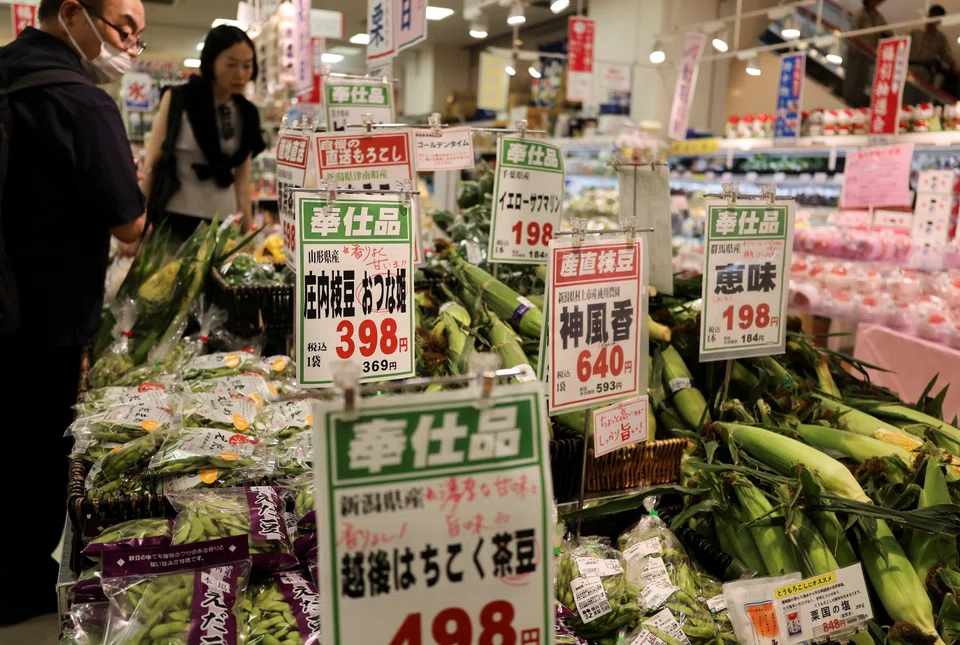
JAPANESE households cut spending for an eighth consecutive month as rising costs for daily necessities prompt consumers to pare discretionary purchases.
Household outlays adjusted for inflation fell 3.6 per cent in July from a year earlier, the Ministry of Internal Affairs and Communications reported on Friday (Sep 4). Economists had forecast a 1.6 per cent decline. Spending rose 0.5 per cent from June on a seasonally adjusted basis.
“Higher oil prices due to tensions in the Middle East, along with tighter global demand conditions, are affecting prices not just for energy but across a wide range of sectors,” said Junwen Pang, economist at Daiwa Institute of Research. “Food and beverages in particular have seen a large share of items affected by the situation in the Middle East.”
A decline in outlays on housing repairs and rents along with automobile-related expenses pulled the overall index lower.
The prolonged decline in spending comes as households continue to cope with persistent increases in daily necessities including food even as the government takes steps to limit costs for energy.
Prices for fresh food rose 7 per cent in July from a year earlier, while processed food cost gains slowed to 3 per cent.
Teikoku Databank reported that the number of planned price increases in July rose nearly 22 per cent from a year earlier, and that trend is poised to continue.
An 83 per cent increase in such price adjustments is forecast for August with another surge in September due to higher crude oil and naphtha prices stemming from the Middle East conflict, along with a weaker yen.
Consumers curbed their spending even as wages steadily rise, reflecting inflation fatigue. Friday’s data point to a weak start for the economy in the third quarter after private consumption flatlined in the second quarter, helping to exert a drag on overall growth in the period.


Prime Minister Sanae Takaichi aims to address the inflation problem by cutting the sales tax on purchases of food and soft drinks to 1 per cent for two years starting in April. The premier is also extending steps to cap petrol prices.
“Looking ahead, I think consumption will increase, but only moderately,” Pang said. “While Takaichi’s sales tax cut should provide some support, companies may pass on higher costs to consumers, given the situation in the Middle East.” BLOOMBERG
Decoding Asia newsletter: your guide to navigating Asia in a new global order. Sign up here to get Decoding Asia newsletter. Delivered to your inbox. Free.
Share with us your feedback on BT's products and services
TRENDING NOW

Once staunchly pro-China, Malaysian Chinese businesses are now distancing themselves from Beijing

Looking beyond looming CEO succession, should UOB potentially pursue a transformative merger?

Could stablecoins be the future of money?

Grab CEO’s wife Chloe Tong on life with Anthony Tan and finding her purpose

