

Japan set for record number of takeover offers by foreign firms
Under pressure from investors, the country’s companies have also been abandoning takeover defences
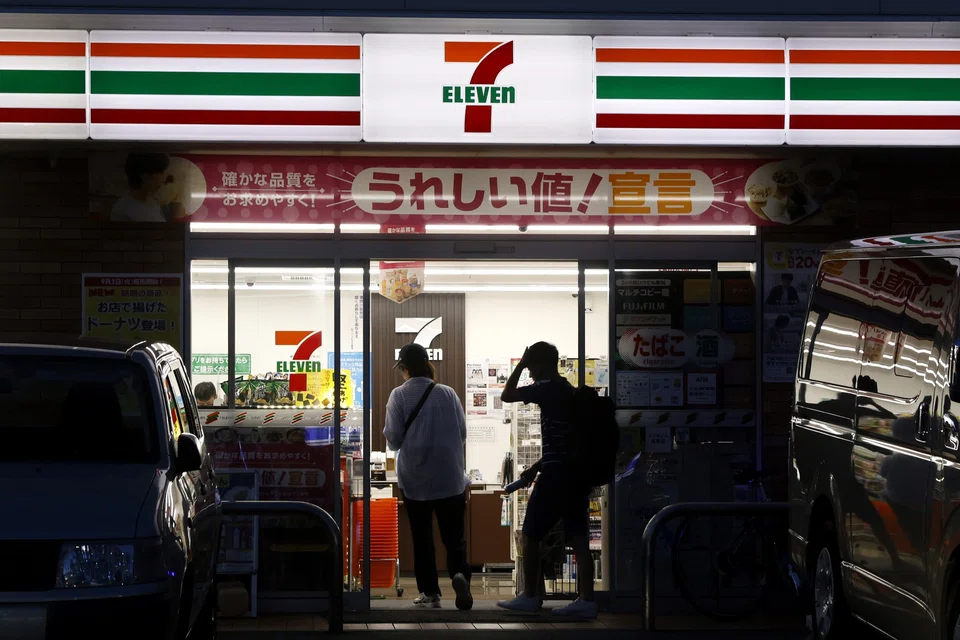
[TOKYO] Japan will likely see a record number of attempts by foreign companies to buy domestic firms this year, spurred by changes in government policy and a weak yen.
Foreign firms made 157 proposals to buy or acquire majority stakes in Japanese companies as at the end of August, according to data compiled by Bloomberg. That’s on pace to exceed last year’s record of 193.
Driving the trend are government guidelines from two years ago, which instructed companies to give “sincere consideration” to takeover offers and not reject them simply because they are unwelcome to the existing executives.
With the yen trading about 11 per cent less than its five-year average, targets are also cheaper for overseas buyers.
In the past, “if the target company’s management said no, that was often the end of it”, said Shigeru Matsumoto, a professor at Kyoto University’s Graduate School of Management. With the guidelines, “it’s no longer easy to just turn bidders away at the gate”.
Notable acquisitions or proposals this year include Bain Capital’s 510 billion yen (S$4.4 billion) purchase of Mitsubishi Tanabe Pharma and Blackstone’s offer in August to buy IT services provider TechnoPro Holdings for 490 billion yen.
Not every attempt by a foreign firm to acquire a Japanese company succeeds.
Canada’s Alimentation Couche-Tard abandoned its US$46 billion bid to buy Seven & i Holdings in July after a nearly year-long campaign.
Under pressure from investors, Japanese firms have also been abandoning takeover defences.
SEE ALSO





The number of Japanese companies with such measures dropped to 251 as at June 2024 – half the peak in 2008, according to Daiwa Institute of Research, a Tokyo-based think tank.
The trend to scrap such defences is especially strong among large-cap companies.
As at September 2024, less than 2 per cent of firms with market capitalisations above one trillion yen still had such measures, and less than 4 per cent of companies in the 300 billion yen - one trillion yen range.
The trend is following the US. About 60 per cent of companies on the S&P 500 index employed ‘poison pill’ defences two decades ago, but by 2022 that number had dropped to just six firms, according to a survey by law firm Nagashima Ohno & Tsunematsu.
Japan’s Foreign Exchange and Foreign Trade Act, which regulates foreign investment and acquisitions for national security reasons, has only been used once to block an acquisition. In 2008, the government stopped a British investment fund from increasing its stake in Electric Power Development (J-Power).
Taiwan-based electronic component maker Yageo passed the regulatory hurdle to go ahead with its offer to buy Shibaura Electronics, a major temperature sensor maker designated a “core industry” for national security purposes. Yageo outbid Japan’s Minebea Mitsumi, which had made a counteroffer as a self-declared white knight.
“Given the current exchange rate and the large number of listed companies in Japan, there are still a lot of bargains to be found,” said Ulrike Schaede, a professor at the University of California, San Diego, who specialises in Japanese companies. “But more importantly, 20 years of corporate governance reforms have left Japanese companies without any defences – they are naked, and have no guns.” BLOOMBERG
Decoding Asia newsletter: your guide to navigating Asia in a new global order. Sign up here to get Decoding Asia newsletter. Delivered to your inbox. Free.
Share with us your feedback on BT's products and services
TRENDING NOW

DBS, OCBC, UOB rout lops billions off STI as inflation, rate concerns spook investors

Grab CEO’s wife Chloe Tong on life with Anthony Tan and finding her purpose

OCBC sheds S$8 billion in value as shares close nearly 6% down; analysts cautious on banks

Deal between tycoon friends sparks scrutiny of Philippine power sector

