

Japan sets US$19 billion business target in Central Asia
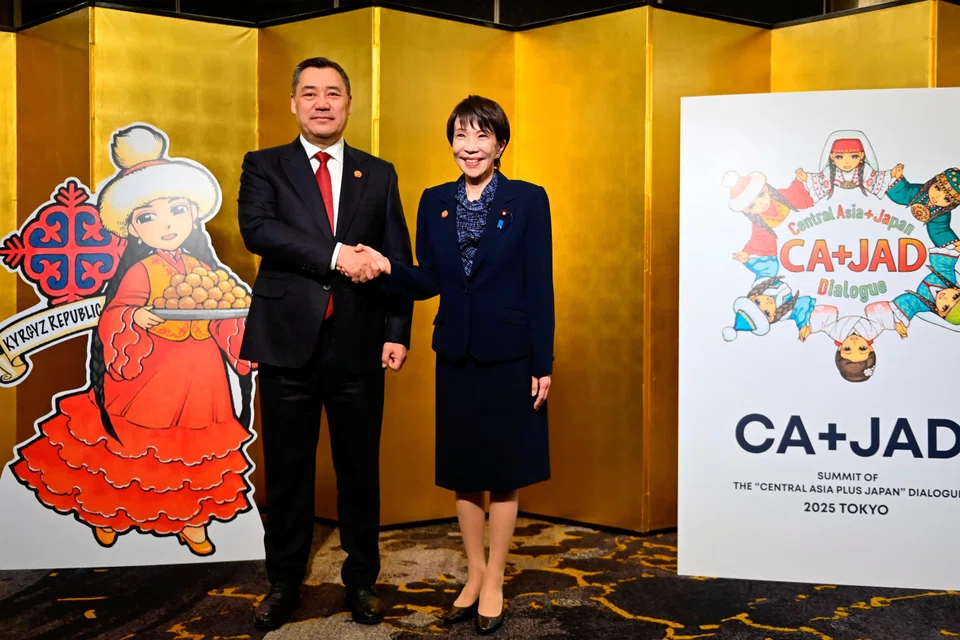
JAPAN unveiled a five-year goal on Saturday for business projects totalling US$19 billion in Central Asia as Tokyo vies for influence in the resource-rich region.
The announcement came after Prime Minister Sanae Takaichi hosted an inaugural summit with the leaders of five Central Asia nations - Kazakhstan, Kyrgyzstan, Tajikistan, Turkmenistan and Uzbekistan - in Tokyo.
Japan “set a new target of business projects at a total amount of 3 trillion yen in five years in Central Asia”, a joint statement said after Takaichi wrapped up her meeting with the five leaders.
Like the United States and the European Union, Japan is drawn by the region’s enormous, but still mostly unexploited, natural resources in a push to diversify rare earths supplies and reduce dependence on China.
“It is important for Central Asia, blessed with abundant resources and energy sources, to expand its access to international markets,” the statement said.
The leaders agreed to promote cooperation that can help the “strengthening of critical minerals supply chains”, while also pledging to achieve economic growth and decarbonisation.
They also held separate summits with Russia’s Vladimir Putin, China’s Xi Jinping and EU chief Ursula von der Leyen this year.
The summit was seen as important for Japan to increase its presence in the region, said Tomohiko Uyama, a professor at Hokkaido University specialising in Central Asian politics.
“Natural resources have become a strong focus, particularly in the past year, because of China’s moves involving rare earths,” Uyama told AFP on Friday, referring to tight export controls introduced by Beijing this year.

The leaders agreed on Saturday to expand cooperation regarding “Trans-Caspian International Transport Route”, a logistics network connecting to Europe without passing through Russia.
Efforts towards “safe, secure, and trustworthy Artificial Intelligence” were also agreed.
Tokyo has long encouraged Japanese businesses to invest in the region, although they remain cautious.
Xi visited Astana in June, and China - which shares borders with Kazakhstan, Kyrgyzstan and Tajikistan - has presented itself as a main commercial partner, investing in huge infrastructure projects.
The former Soviet republics still see Moscow as a strategic partner but have been spooked by Russia’s invasion of Ukraine.
Other than rare earths, Kazakhstan is the world’s largest uranium producer, Uzbekistan has giant gold reserves and Turkmenistan is rich in gas. Mountainous Kyrgyzstan and Tajikistan are also opening up new mineral deposits.
However, exploiting those reserves remains complicated in the harsh and remote terrains of the impoverished states. AFP
Decoding Asia newsletter: your guide to navigating Asia in a new global order. Sign up here to get Decoding Asia newsletter. Delivered to your inbox. Free.
Share with us your feedback on BT's products and services
TRENDING NOW

Once staunchly pro-China, Malaysian Chinese businesses are now distancing themselves from Beijing

Looking beyond looming CEO succession, should UOB potentially pursue a transformative merger?

Could stablecoins be the future of money?

Grab CEO’s wife Chloe Tong on life with Anthony Tan and finding her purpose

