

Japan’s July exports grow at fastest pace since 2022 on cars and chips
Weak yen boosted the value of shipments and has been a factor supporting businesses
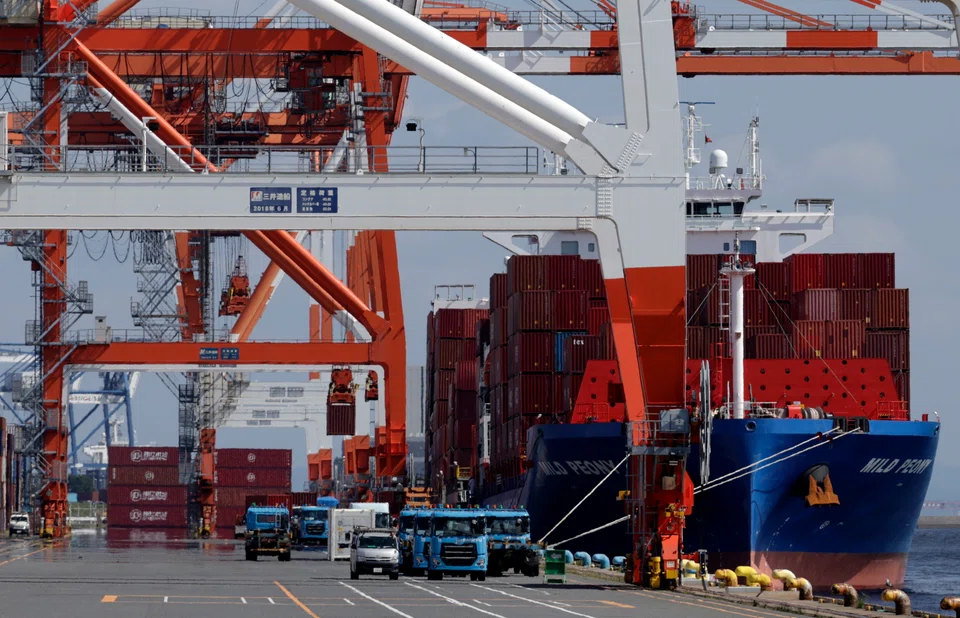
Japan’s export growth accelerated to the fastest pace since 2022, fuelled by robust demand for chips and cars and a yen that weakened to a 40-year low.
The value of exports rose 23.2 per cent in July from a year earlier, accelerating from a 19.3 per cent gain in June, the Finance Ministry reported on Thursday (Aug 20). The result compared with economists’ median forecast of a 20.1 per cent increase. It was the fastest advance since October 2022.
Imports rose 27.8 per cent, faster than the June’s 25.4 per cent gain and economists’ estimate of a 25.1 per cent increase. The trade deficit widened to 634.5 billion yen (US$4.01 billion) on an unadjusted basis from a revised 409.9 billion yen deficit in June, marking a third straight month in the red.
The data show that Japan’s manufacturers have largely managed to navigate the fallout from the Middle East conflict so far, an encouraging sign for Japan’s economy after growth fell short of expectations in the three months through June due to lacklustre domestic demand.
“Exports of semiconductor manufacturing equipment and semiconductor components are increasing due to the recent AI boom,” said Yuki Ito, economist at Nomura Securities.
Exports of chemical products also rose, he said, adding, “I suspect this is partly because supply constraints on naphtha have eased to some extent, allowing exports, which had been declining, to finally rebound.”
The weak yen boosted the value of shipments and has been a factor supporting businesses by making their products more competitive in overseas markets. The currency touched its weakest level against the US dollar in 40 years in July. The yen averaged 161.83 versus the US dollar, 11.2 per cent weaker than a year earlier, the ministry said.
Robust global demand for artificial intelligence was among the key drivers of the latest advance. Outbound shipments of electronic components including semiconductors increased about 49 per cent. Other gainers included passenger cars, which rose 21 per cent.
By destination, shipments to the US increased 22 per cent, while those to China and Europe climbed 25.8 per cent and 19.1 per cent respectively.

Meanwhile, the war in Iran continued to alter Japan’s energy procurement patterns after the conflict led to the virtual closure of the Strait of Hormuz.
The trade report showed the total value of oil imports jumped nearly 88 per cent, with the volume increasing 5.5 per cent. The proportion of imports from the US rose to 36 per cent of the total by volume, from 7 per cent in February, while the proportion coming from the Mideast fell to 59 per cent.
Uncertainty surrounding the conflict persisted after a 60-day negotiation window established under a US-Iran memorandum of understanding expired on Monday without a permanent peace deal. The interim agreement was aimed at resolving disputes over the Strait of Hormuz, Iran’s nuclear programme and economic sanctions, but failed to produce a lasting settlement.
“Looking at the shipping data, it seems Japan has continued to make progress in securing alternative supplies from the US,” Ito said. BLOOMBERG
Decoding Asia newsletter: your guide to navigating Asia in a new global order. Sign up here to get Decoding Asia newsletter. Delivered to your inbox. Free.
Share with us your feedback on BT's products and services
TRENDING NOW

Grab CEO’s wife Chloe Tong on life with Anthony Tan and finding her purpose

Hwa Seng Builder, two China companies win S$1.2 billion Tuas Road Viaduct phase two contracts

Deal between tycoon friends sparks scrutiny of Philippine power sector

Canada is upping oil flows to Asia, but South-east Asia’s refineries aren’t ready to handle them yet

