

Japan’s Takaichi faces fresh scrutiny over BOJ policy stance
The BOJ raised its short-term policy target to a 30-year high of 0.75 per cent in December
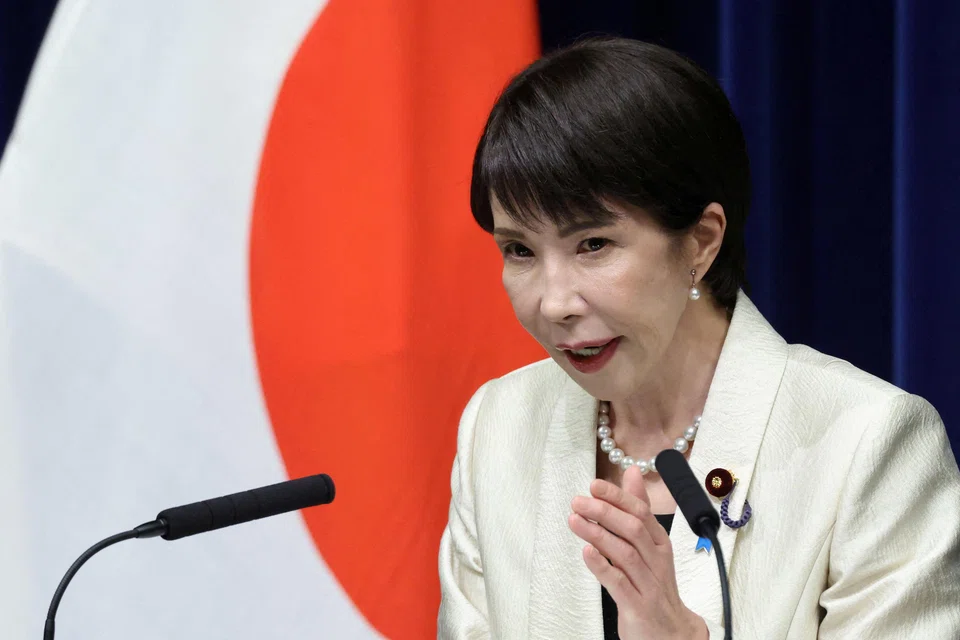
[TOKYO] Japanese Prime Minister Sanae Takaichi’s stance on monetary policy came under scrutiny on Tuesday when a lawmaker grilled her finance minister on whether she had pressured the central bank chief to hold off on raising rates further.
Although legally independent, the Bank of Japan has often faced political pressure to pump up stimulus or halt unwanted slides in the yen with rate hikes.
Speculation that dovish premier Takaichi would pressure the BOJ to go slow on rate hikes heightened after a media report that she had voiced reservations about additional tightening in a meeting with Bank of Japan Governor Kazuo Ueda last month.
Asked about the report by an opposition lawmaker, Finance Minister Satsuki Katayama said she had nothing to add beyond what Ueda told reporters after the meeting, including that Takaichi made no specific policy request.
“In general, specific monetary policy means fall under the jurisdiction of the BOJ. I believe it ought to be that way,” Katayama told parliament.
“I also hope the BOJ continues to work closely with the government, and seek to stably achieve 2 per cent inflation driven not by cost-push factors but accompanied by wage gains. I’m sure the prime minister feels the same,” she said.
Katayama declined to elaborate, calling it a highly “sensitive matter” that hinges on balancing two legal clauses — one guaranteeing the BOJ’s autonomy in setting monetary policy, and another requiring its decisions to remain “mutually compatible” with the government’s economic policy.
The BOJ raised its short-term policy target to a 30-year high of 0.75 per cent in December on the view Japan was on the cusp of durably achieving its 2 per cent inflation target.
Ueda has signalled the bank’s readiness to keep raising rates further, but has stayed silent on how soon it could do so.



The escalating conflict in the Middle East has complicated the BOJ’s rate decision as surging oil prices threaten to hurt an economy heavily reliant on fuel imports, while adding to already mounting inflationary pressure. REUTERS
Decoding Asia newsletter: your guide to navigating Asia in a new global order. Sign up here to get Decoding Asia newsletter. Delivered to your inbox. Free.
Share with us your feedback on BT's products and services
TRENDING NOW

ComfortDelGro appoints two new independent directors

Once staunchly pro-China, Malaysian Chinese businesses are now distancing themselves from Beijing

NoonTalk needs continued financial support from CEO Dasmond Koh, auditors warn

DP Architects sets the benchmark for sustainability disclosure and design

