

Japan’s trade balance swings to deficit as yen inflates imports
The country relies heavily on the Middle East for the bulk of its energy imports
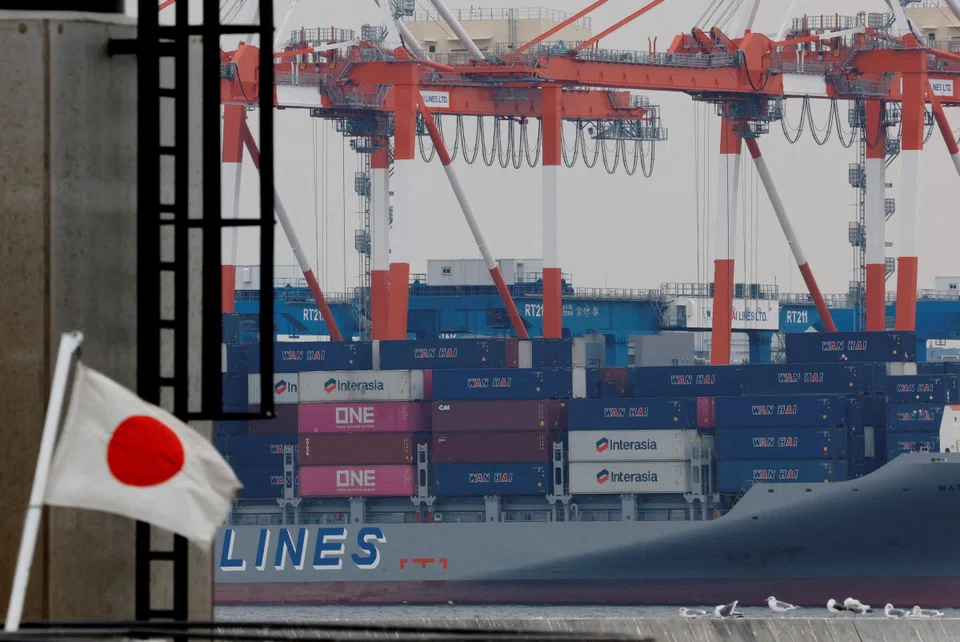
[TOKYO] Japan’s trade balance swung to a deficit for the first time in four months as the weak yen inflated the value of imports, even as volumes fell.
The trade balance flipped to a 378.6 billion yen (S$3 billion) deficit in May on an unadjusted basis, the Finance Ministry reported on Wednesday (Jun 17). Analysts had forecast a 547.6 billion yen deficit.
The value of imports increased 12.5 per cent in May from a year ago while the value of exports gained 17 per cent. However, by volume, imports fell nearly 7 per cent, indicating how the weak yen is making imports more expensive and offsetting the rise in exports, which rose at the fastest pace since late 2022.
The yen traded at 158.29 against the US dollar on average in May, 10 per cent weaker than a year ago, according to the ministry. A weaker yen makes it more expensive to import materials, including energy resources, squeezing profit margins at suppliers even as exporters gain a competitive advantage overseas. Prime Minister Sanae Takaichi created an extra budget to ease the pain for households by subsidising utility bills.
“Setting aside the portion where values are inflated by the weak yen, it is difficult to imagine that exports from Japan will grow significantly while countries across Asia are calling for austerity measures,” said Takeshi Minami, chief economist at Norinchukin Research Institute. “Therefore, I expect the trade deficit to continue.”
The gain in imports was driven by a 55 per cent jump in the value of inbound semiconductor and electronics shipments, as well as a 48 per cent advance in communication devices.
Oil imports plunged by both volume and price, highlighting the challenges for Japan posed by the war in Iran. Typically, Japan relies heavily on the Middle East for the bulk of its energy imports.
Based on the trade data, the US appears to be partly filling that gap. Imports of petroleum products from the US were up more than 660 per cent, while crude imports also surged. Japan’s trade ministry has said that it expects to secure a stable oil supply to March 2028.
Conditions for global oil supplies may improve in the coming months as the US and Iran reached an interim agreement to reopen the Strait of Hormuz, which US President Donald Trump said would reopen the waterway on June 19 after it’s signed.
SEE ALSO





Exports remained strong amid an ongoing boom in demand for tech products tied to artificial intelligence, with outbound shipments of chips up 61.2 per cent, including a surge for those heading to China.
Exports of autos climbed nearly 19 per cent and non-ferrous metals were also up notably after starting from a lower base last year.
Even so, the deficit suggests trade may weigh on growth in the second quarter, when economists largely expect a slowdown due to the impact of the war in Iran. That’s created a tricky situation for Bank of Japan policymakers, who signalled an intent to raise interest rates further to tame inflation without restraining the economy.
The BOJ raised its benchmark interest rate on Tuesday to the highest since 1995 and pledged more hikes to come, fuelling speculation of another move before the end of the year.
The trade surplus with the US narrowed for a sixth straight month, as Japanese companies continue to adjust to tariffs imposed by the Trump administration.
Last year, Trump agreed to set levies at 15 per cent on Japanese products and lower the duty for automobiles to the same level while Tokyo pledged to boost its investment into the US.
The US is proposing new tariffs on imports from trading partners, including Japan, but Japanese Trade Minister Ryosei Akazawa said that he confirmed with US Commerce Secretary Howard Lutnick that no additional tariffs beyond those in last year’s deal will be imposed. BLOOMBERG
Decoding Asia newsletter: your guide to navigating Asia in a new global order. Sign up here to get Decoding Asia newsletter. Delivered to your inbox. Free.
Share with us your feedback on BT's products and services






