

As jobs dry up, China’s migrant workers are returning to their villages and staying put
Despite the government’s concerns, however, things may be changing in the rural areas

[CHONGQING] When Zhang Feng, 40, lost his job at a construction firm in Suzhou city in April, he decided to return to his village in neighbouring Anhui province to plot his next move.
He had planned to be home for only two months at most. Eight months later, he finds himself still without a job or a clear decision on his next move.
In a phone interview with The Straits Times, he said he has no plan to leave his home town to search for work any more.
“The economy is bad and jobs are drying up in the cities. There’s nothing there for me,” added Zhang, who had lived in Suzhou for more than 20 years.
His experience is hardly unique.
Throughout the years since reform and opening up began in 1978, rural workers who have moved to the cities in search of a better future – and fuelled China’s economic development – have had to return home to the villages periodically as the country’s economy hit the speed bumps.
Just such a situation appears to have developed over the past several months after the Chinese New Year in January, with significant numbers of unemployed migrant workers returning to their home towns and remaining there, a phenomenon known as fanxiangzhixiang.
The flow is large enough that on Nov 13, the Ministry of Agriculture and Rural Affairs warned during a work meeting of the potential large-scale return of unemployed workers to their home towns, leading to economic stagnation in the villages.
More will need to be done to secure employment for those who have returned from the cities, on top of those in the villages who already face difficulties landing jobs, the authorities added.
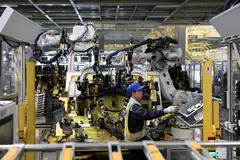


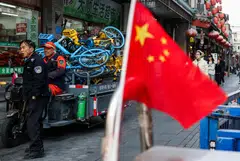
Despite the government’s concerns, however, things may be changing in the rural areas. The national policy to revitalise China’s villages may mean that there are job opportunities nearer home for rural migrant workers if they are willing to accept lower salaries.
Shrinking urban job opportunities
While there are so far no official estimates for fanxiangzhixiang workers in 2025, an article posted on the social media account of “China Agricultural Development” – a journal under the auspices of the Ministry of Agriculture and Rural Affairs – noted the difficulties that migrant workers in Hengyang county in central Henan province faced in trying to land jobs.
Henan has the highest number of workers with jobs outside the province at 16.1 million, according to official figures.
More than 40,000 workers could not resume work after the Chinese New Year celebrations, of the 183,000 who returned home, the article on June 18 reported.
In Hengyang county, 41.7 per cent of workers who did not return to their former jobs cited “fewer positions or low pay”.
Forced breaks and salary deductions have been increasingly common, the article pointed out, with a worker complaining that his monthly salary had fallen from 6,000 yuan (S$1,100) to 3,000 yuan.
This situation of migrant workers not being able to find work after Chinese New Year also caught the attention of a manager at a human resources firm in the port city of Ningbo in eastern Zhejiang province.
Giving his name only as Peng, he told ST that he first noticed that migrant workers were returning to their home towns in March, after failing to secure jobs in the city.
“The workers were just going back into the city after the Chinese New Year festivities,” said Peng, who started to make short videos in March on popular social media platform Douyin, warning rural Chinese of increasingly scarce job opportunities in the major cities.
Peng, who declined to give his full name because he is not authorised by his firm to speak to the press, said: “The factories in Ningbo have been badly hit by the US-China trade tensions, so there is less demand for workers.”
Why cities are shedding jobs
Indeed, the authorities’ latest warning about the massive return of migrants to their home towns comes as China’s economy struggles to grow amid a severe downturn in its property sector, weak domestic demand and geopolitical tensions with the United States.
China’s economic growth slowed to the weakest pace in a year in the third quarter, recording a rate of 4.8 per cent year on year, down from the 5.2 per cent pace in the second quarter, though full-year growth is expected to come in at 5 per cent, in line with the authorities’ target.
Latest official statistics published on Nov 30 showed that activity in China’s factories and the construction and services sectors shrank that month.
The purchasing managers’ index came in at 49.2, below the 50 mark that divides growth and contraction. The figure had remained below 50 for eight months in the world’s factory.
The figure for non-manufacturing activity in construction and services was 49.5, down from the 50.1 in October. This was the first contraction for the index in almost three years, due to weaknesses in the real estate and residential services sectors.
The government policy to push China’s economy up the value chain is also impacting jobs, particularly in traditional sectors.
“Adjustments towards high-quality development, urban industrial upgrading and slowing economic growth have reduced jobs in traditional sectors such as manufacturing and construction,” said the agricultural journal article.
“Migrant workers, who often lack diverse skills, are the first to be squeezed out,” it added.
Another migrant worker who has lost his urban job and returned to his home town, in central Hubei province, is Zheng Longfei, 43.
He was let go by his factory in Guangzhou, the capital of southern Guangdong province, in July, and has failed to find work since.
“My boss said that they were going to open factories in Hubei’s Tianmen and Xiantao cities, but who knows if that’s true?” said Zheng, who had been working in Shenzhen and Guangzhou for more than 25 years.
He is also doubtful that the newer, more high-tech factories will hire as many workers as before, given the country’s push for industrial upgrading, and softening global demand.
He said he plans to start looking for employment only after Chinese New Year in February 2026, in the hope that the job market would have improved by then.
“I don’t mind staying home for longer because of the lower expenses, and I get to be near family. Frankly, I’m sick and tired of living away from home,” he said.
Both Zhang and Zheng said that they are currently living on their retirement savings, which are “substantial enough”, given the long years they have spent working in the bigger cities.
Villages have opportunities too
Economic geography expert Wang Xuefeng said the fewer labour-intensive jobs in cities are par for the course, given technological advancements in factories.
China’s economic restructuring has also opened up new opportunities in the services and high-tech sectors, both in the villages and in the bigger cities, said Associate Professor Wang of the Xi’an Jiaotong-Liverpool University in Suzhou.
Furthermore, the number of vocational schools has also grown in China, which ensures that workers can undergo skills training, often with government subsidies, he told The Straits Times.
Wang, who has consulted with the Henan provincial government on employment, also warned against reading too deeply into the phenomenon of fanxiangzhixiang.
The last time fanxiangzhixiang gained prominence in China was during the financial crisis in 2008, when some 20 million migrant workers – 15.3 per cent of the total number of such workers then – lost their jobs or could not find work due to the economic downturn. The central authorities had to step in with a 4 trillion yuan stimulus package to prop up the economy.
“But today’s China is a very different China from 2008,” Wang said. “Then, life in China’s villages was not as comfortable and did not provide as many economic opportunities,” he added.
The latest statistics show faster growth in the rural areas than in the urban centres.
For the first nine months of 2025, the 6 per cent growth – after deducting price factors – in per capita disposable income of rural residents outpaced the 4.5 per cent increase among urban residents.
However, the rural per capita income at 17,686 yuan has some catching up to do with the per capita disposable income of urban residents at 42,991 yuan – although money stretches further in the countryside, where the cost of living is much lower than in the cities.
Wang also called for discarding “outmoded thinking that separates cities from villages” and the notion that “going out into the cities to work is necessarily the best option for those from the villages”.
“Restrictions to enter into cities for work have been abolished, so workers are free to choose where they want to seek employment,” he added, referring to China’s previous restrictions on domestic migration to ensure that cities do not get flooded by workers.
“So, if workers decide that staying in their home towns makes the most financial sense or makes them happiest, then they are the best judge of that.”
Zhang and Zheng said they are open to the idea of going back to the cities to work if “the pay and the job are right”.
In fact, they have not been looking for jobs nearer home, although these are available, because the pay is low, holding out instead for jobs in the cities.
“Otherwise, there are good opportunities in the villages, given China’s push for rural revitalisation,” Zhang said, referring to President Xi Jinping’s push to reform villages and upgrade farming technology in a bid to improve China’s food security and villagers’ livelihoods. THE STRAITS TIMES
Decoding Asia newsletter: your guide to navigating Asia in a new global order. Sign up here to get Decoding Asia newsletter. Delivered to your inbox. Free.
Share with us your feedback on BT's products and services
TRENDING NOW

Once staunchly pro-China, Malaysian Chinese businesses are now distancing themselves from Beijing

Cliff Tan has 7 million followers and a 4-month waitlist. Why won’t he expand his business?

Grab CEO’s wife Chloe Tong on life with Anthony Tan and finding her purpose
Singapore F1 to proceed despite haze; no changes planned to outdoor entertainment

