‘Low hire, low fire’ labour market: Britain’s boomers cling to jobs as young get locked out
Employment rates are at a record high as longer life expectancy, better health and cost-of-living pressures delay boomers’ retirement
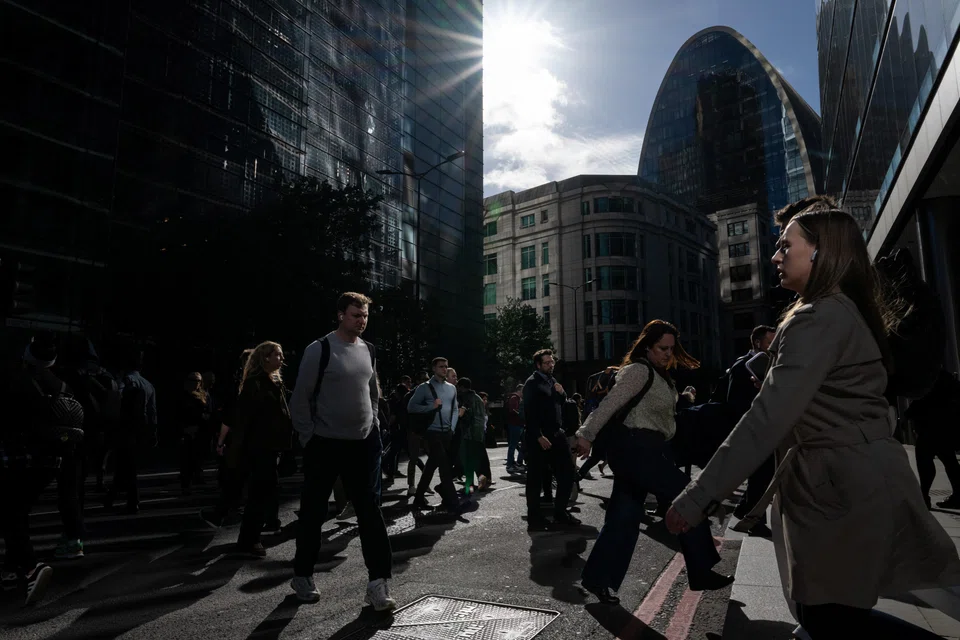
IN THE early 2000s, Britain had as many as 10 young workers for every person over 65 with a job. Today there are just two, as older employees hang on for longer and first jobs are harder to come by.
The number of Britons aged 65 and over in work topped 1.7 million earlier in 2026, according to the latest Office for National Statistics figures.
Longer life expectancy and better health are delaying retirement, while cost-of-living pressures have also convinced people from the baby boomer generation to stay on the payroll a little longer.
Employment rates for the group – many of whom are beyond state pension age – are at a record high.
In an ideal world, this would create a workforce resembling a traditional Italian family, with multiple generations under one roof and skills being freely exchanged between young and old.
However, the UK is suffering from what the Bank of England calls a “low hire, low fire” labour market, keeping young people stuck on the outside.
Youth unemployment is close to its highest rate in more than a decade, official figures showed, while entry-level jobs have plunged.
Young people are signing up for emergency degrees to delay their entry into an increasingly unwelcoming labour market.
Almost a million 16 to 24 year olds are out of work or education entirely, a Neet – not in education, employment or training – crisis, as it is known in the UK.



The country’s Labour government is trying to understand the problem, but has been accused of driving up the cost of hiring young workers.
Weak growth and a volatile global backdrop are making employers wary of hiring.
And with fewer jobs opening up, workers postponing retirement can have “a knock-on effect” on how many jobs are created for young people, according to Ben Harrison, director of the Work Foundation at Lancaster University.
The youth unemployment crisis is a priority for UK Prime Minister Andy Burnham, who has expanded a programme to subsidise minimum-wage jobs for young people, and announced plans to overhaul vocational paths into work.
Some of the left of the party want the government to go further to address what they see as generation unfairness.
A recent report from the Institute for Public Policy Research, a Labour-leaning think tank, called on the government to direct taxes away from young workers and towards pensioners, by targeting property and other wealth.
Pandemic
While Britain’s overall employment rate has held relatively steady, only half of 16 to 24-year-olds are in work, down more than four points since 2022 – a drop similar in scale to the pandemic and the 2008 financial crisis, according to the Institute for Fiscal Studies.
During the pandemic, the UK seemed to be facing a very different problem as a wave of the baby boomer generation decided to retire early.
Cost-of-living pressures have drawn some back in, however. Roughly one in six retirees have either returned to work or were considering it, according to a 2026 Standard Life survey.
“There might also be an element of older people topping up their income and working part-time in lower-skilled or lower-paid sectors, in jobs that might’ve gone to young people in the past,” said Bruna Skarica, chief UK economist at Morgan Stanley.
The bigger shift, however, is that people are staying in work for longer, helped by better health and the rise in flexible working since the pandemic, according to Alessandro De Arcangelis, senior research and policy analyst at Lewis Silkin.
UK firms are actively targeting older candidates and changing their benefits packages to retain workers approaching retirement, according to Natalie Hall, managing director at 55/Redefined, a firm helping companies attract older talent.
Veolia, an environmental services company, has a dedicated UK careers page for over 50s, advertising flexible working arrangements and well-being support such as free physiotherapy.
Insurer AXA offers training and reskilling opportunities for over 50s, while advertiser Dentsu has launched an apprenticeship programme aimed at the age group.
Technology
Artificial intelligence is also creating winners and losers along generational lines. The technology can help older employees work longer while rewarding experience, as bots take on tasks traditionally given to junior hires.
Graduate roles as a share of vacancies have halved since 2022, according to Indeed.
“AI may very well enable you to extend your working life,” said Harrison from Lancaster University. “If you’re a young person, the threat may very well be more direct.”
“We have a number of clients who’ve actually approached us saying, ‘We just want to get rid of some junior staff and replace them with AIs’,” De Arcangelis added. “There is more pressure to rely on more senior workers.”
Remote work may be a factor, too.
A Federal Reserve Bank of New York study attributed most of the rise in unemployment among young graduates to the work-from-home trend, suggesting firms are reluctant to hire juniors remotely because it makes training and development harder.
“As a millennial, I remember the old stereotype of saying ‘we are hiring for an entry-level position, but require five years’ experience’,” De Arcangelis added. “That sort of paradox has become even bigger.” BLOOMBERG
Decoding Asia newsletter: your guide to navigating Asia in a new global order. Sign up here to get Decoding Asia newsletter. Delivered to your inbox. Free.
Share with us your feedback on BT's products and services