

Motor vehicles lift US manufacturing output in July
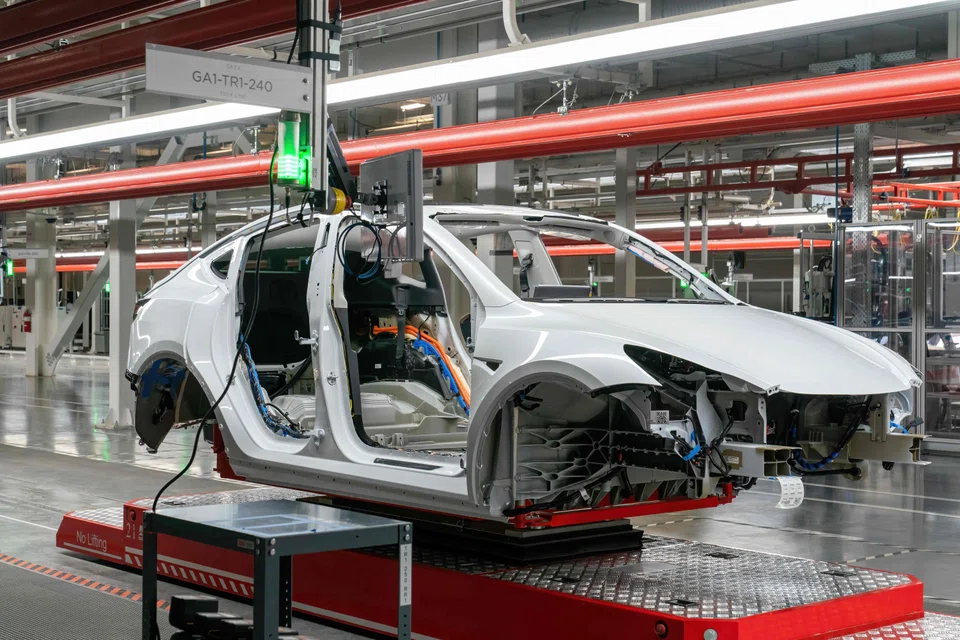
PRODUCTION at US factories unexpectedly rebounded in July as motor vehicle output surged, but activity continues to be hamstrung by higher borrowing costs.
Manufacturing output increased 0.5 per cent last month, the Federal Reserve said on Wednesday (Aug 16). Data for June was revised lower to show production at factories falling 0.5 per cent instead of 0.3 per cent as previously reported. Economists polled by Reuters had forecast factory output would be unchanged.
Production dropped 0.7 per cent on a year-on-year basis in July. Since March 2022, the Federal Reserve has raised its benchmark overnight interest rate by 525 basis points to the current 5.25 per cent-5.50 per cent range. That has pressured manufacturing, which accounts for 11.1 per cent of the economy.
There are, however, tentative signs that manufacturing could be stabilising. While the Institute for Supply Management’s measure of national factory activity contracted for the 7th straight month in July, the pace slowed, with the ISM noting that “customers’ inventory levels are at the proper tension ... a potential slight positive for future production.”
Demand for goods also continues to hold up.
Motor vehicle and parts output accelerated 5.2 per cent last month after declining 3.9 per cent in June. The jump likely reflected difficulties adjusting the data for seasonal fluctuations.

Production typically falls in July when automakers idle plants for retooling. The temporary plant closures, however, do not always happen, which could throw off the model that the Fed uses to strip out seasonal fluctuations from the data.
Outside motor vehicles, durable manufacturing recorded increases in output of machinery as well as computer and electronic products. But production of electrical equipment, appliances and components declined as did that of primary metals, furniture and related products.
In nondurable manufacturing, there were modest decreases in the production of paper, plastics and rubber products as well as apparel and leather.
Mining output increased 0.5 per cent after dropping 0.9 per cent in June. Utilities production soared 5.4 per cent, rebounding after three straight monthly declines as heat-wave across many parts of the country increased demand for air conditioning.
Overall industrial production shot up 1.0 per cent in July after dropping 0.8 per cent in June.
Capacity utilisation for the industrial sector, a measure of how fully firms are using their resources, increased to 79.3 per cent in July from 78.6 per cent in June. It is 0.4 percentage point below its 1972–2022 average. The operating rate for the manufacturing sector rose to 77.8 per cent last month from 77.5 per cent in June and is 0.4 percentage point below its long-run average. REUTERS
Decoding Asia newsletter: your guide to navigating Asia in a new global order. Sign up here to get Decoding Asia newsletter. Delivered to your inbox. Free.
Share with us your feedback on BT's products and services
TRENDING NOW

Motoring tycoon Peter Kwee is back in court: Here are his previous legal battles

Peter Kwee’s Ridley Park bungalow on the market with S$100 million asking price

Demand, tech capabilities position Apac and AI as Skyscanner’s next growth frontiers: CEO Bryan Batista

South-east Asia has lost Nvidia’s best salesman

