

Myanmar economy suffers another setback with military coup
Bangkok
MYANMAR'S economy, already teetering from the Covid-19 pandemic, was dealt another body blow by a military coup on Monday.
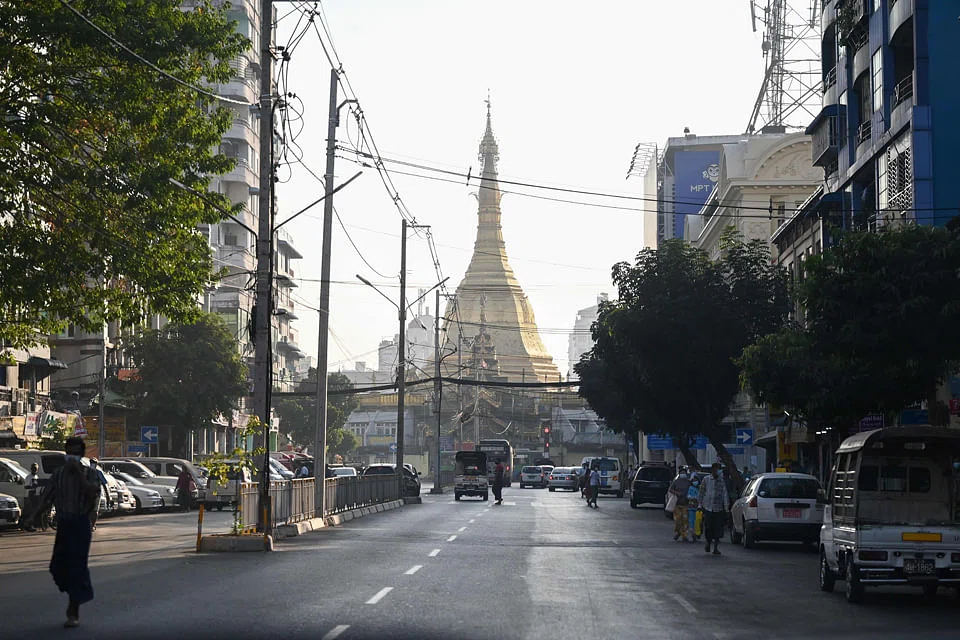
The country's military seized power in the capital Naypyidaw on Monday and declared a year-long state of emergency, but there was little immediate impact in Yangon - the country's commercial capital - where it was generally peaceful.
Observers, however, are expecting longer term repercussions on the diplomatic and economic fronts in the weeks and months to come.
The military's move spells an abrupt end to the numerous economic reforms that the National League for Democracy (NLD) had planned to implement during its second term as the leader of the government.
"A second civilian NLD government would have pushed more reforms, hopefully with more competent ministers," said one Yangon-based investor.
"There was traction - new industrial zones, new power plants, a good draft plan in the works to build on Covid recovery plans and banking reforms," he said.
According to World Bank estimates, the Asean nation eked out a 0.5 per cent growth in the 2019/20 fiscal year ended Sept 30, compared with 6.8 per cent growth in 2018/19. The country is currently struggling with a a second, much more devastating wave that broke out last August.
"The new waves of coronavirus are resulting in more severe and possibly prolonged restrictions on overall economic activity, posting a further impediment to growth in FY 2020/21," said the World Bank in its latest Myanmar report.
Observers say the military's actions will not help the country's already flagging Covid-hit economic recovery.
Several military trucks were posted at Yangon City Hall, which was closed on Monday along with commercial banks and mobile phone networks.
This after an early-morning raid that saw State Counsellor Aung San Suu Kyi and State Counsellor and President U Win Myint detained along with other leaders of the NLD party. The military announced it had seized executive, judicial and legislative power for a year.
In Yangon, the city generally went about its "new normal" business in the era of Covid-19.
As of Jan 31, Myanmar has recorded more than 140,000 Covid-19 infections and over 3,100 deaths, the third highest in the region after Indonesia and the Philippines.
The newly-installed regime will likely have to deal with a frosty response from US President Joe Biden's administration, which has since pledged to restore the US' position as a bastion of democracy.
"Myanmar's military coup is an early test for the Biden administration," said Thitinan Pongsudhirak, director of the Bangkok-based Institute of Security and International Studies.
"The Biden administration is likely to condemn the coup in no uncertain terms but not to the extent that it will isolate Myanmar," he said.
After Thailand's last military coup in May 2014, former US president Barack Obama and Mr Biden, who was then vice-president, were quick to condemn those actions and impose modest sanctions such as restrictions on arms sales and joint military exercises with Thailand.
"The Obama sanctions nudged Thailand after the May 2014 coup further into China's orbit," Mr Thitinan noted. "The Biden team seems to have broadly taken lessons from the Obama era where they spent a lot of ammunition early and came up short in the end."
Myanmar's military has justified its coup with claims of widespread voting fraud in the general election last November, which was won in a landslide by Ms Aung San Suu Kyi's NLD.
The new military-installed President is U Myint Swe, the former vice- president and a military appointee.
While former military-appointed Myanmar president Thein Sein ushered in political and economic reforms under his rule from 2010 to 2015, few are expecting similar relaxations under the sway of current military commander-in-chief Min Aung Hlaing, who has shown little interest in the country's economic matters.
After a slow start, the first NLD government, which served from 2016 to 2020, started to make progress in implementing economic reforms and attracting foreign direct investments.
In fiscal year 2019/20, Myanmar attracted US$5.5 billion in approved foreign direct investments, up from US$4.2 billion the previous year, with Singapore taking the lead with US$1.9 billion.
In a statement on Monday, Singapore's Ministry of Foreign Affairs expressed "grave concern" about the latest situation in Myanmar.
"We are monitoring the situation closely and hope all parties will exercise restraint, maintain dialogue, and work towards a positive and peaceful outcome," a ministry spokesperson said.
READ MORE: Myanmar coup may see investors exit; currency may weaken
TRENDING NOW

Once staunchly pro-China, Malaysian Chinese businesses are now distancing themselves from Beijing

New launch or resale unit? Here’s a guide for homebuyers
The lesser-known prospects in the Asian chipmaking supply chain

Cliff Tan has 7 million followers and a 4-month waitlist. Why won’t he expand his business?

