



New Fed chief Kevin Warsh a hawk in dove’s clothing?
Warsh sounds more hawkish than his predecessor Jerome Powell, emphasising the importance of ‘price stability’
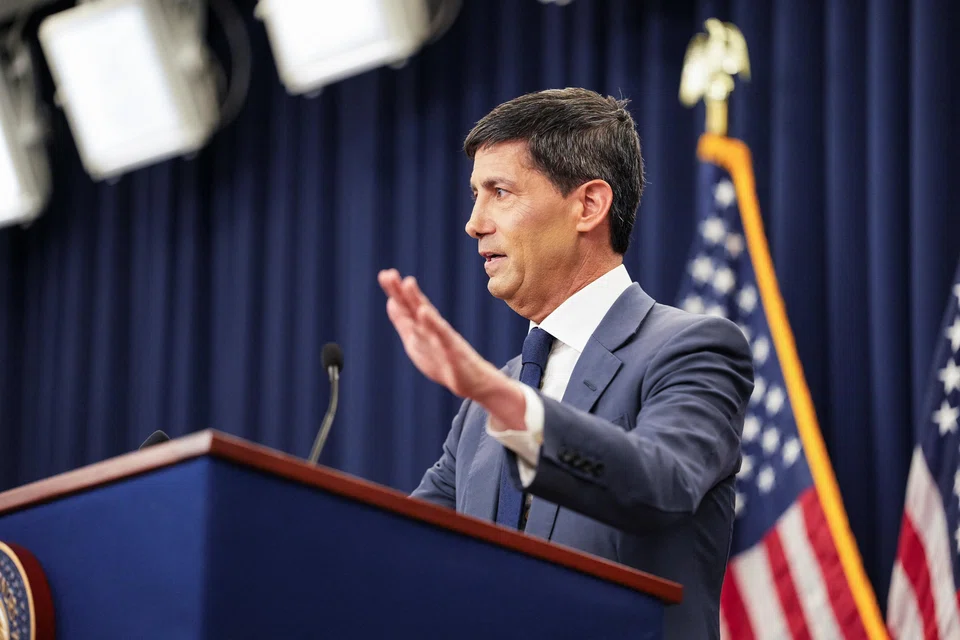
FEDERAL Reserve chair Kevin Warsh put his stamp on the central bank on Wednesday (Jun 17), but not in the dovish way that US President Donald Trump had hoped when he appointed the new head.
If anything, Warsh sounded more hawkish than his predecessor Jerome Powell, emphasising the importance of “price stability”, which is usually the catchphrase of inflation-fighting, rate-hiking hawks.
Warsh changed the tone of the Fed not by changing its stance on rates, but by issuing a terse policy statement. The statement was stripped of the detailed analysis and projections common in those of previous Fed heads, including Powell.
The 114-word statement, less than half the length of the last Powell statement in May, was a clear indication that the Warsh Fed would be a more tight-lipped institution than what markets are accustomed to in the modern era.
Eye on inflation
Publicly or privately, Warsh has to deal with many of the same problems that Powell faced at the end of his tenure, however. Those include inflation, and divisions in the Federal Open Market Committee over how to deal with it.
The board voted unanimously to keep rates steady in June at a 3.5 to 3.75 per cent level. All the bankers agree on the current situation, as reflected in the third paragraph of the statement: “Inflation remains elevated relative to the committee’s 2 per cent goal, in part reflecting supply shocks that have driven price increases in certain sectors, including energy.”
But there the unanimity ends.
Half of the members who filled out the “dot plot” rate predictions now anticipate a hike in 2026. Eight are expecting no change, while one sees a cut ahead.
“The June meeting was clearly hawkish,” said economists at brokerage Bank of America (BOA) Global Research, in a note to clients. Not only did nine officials project hikes this year, the economists noted, but most raised their inflation forecasts, too. The statement greatly increased the chances of a 2026 rate hike, the BOA economists added.
Due to hike fears, stocks fell sharply in the wake of the statement. The sell-off seemed to have moderated in late trading, however.
The catalyst for the majority on the Fed to pivot from a dovish stance early in the year to the current hawkish tone was the energy shock caused by the Iran war and the closure of the Strait of Hormuz.
With oil futures roughly back to where they were before the US started bombing Teheran and a deal in place to reopen the strait, the catalyst may be neutralised. The latest bout of inflation may be a wartime blip. The hawks could be doves again, before long.
“A task force for everything”
In the press conference, Warsh said that he had ordered reviews of many Fed practices, including how it measures inflation. “A task force for everything”, is how the BOA economists described this approach.
The first practice undergoing major change looks set to be communication.
One veteran Wall Street strategist noted that Warsh may put an end to the survey of central bankers’ rate expectations, which was started in 2012 under then Fed chair Ben Bernanke.
“This is going to be a slow takeover, by focusing on how the data upon which decisions are made is produced,” said Louis Navellier, in an e-mailed commentary. “The first casualty: the ‘dot plot’. I feel we have now seen the last one.”
Warsh even kept his answers at the press conference short, compared with his predecessor. If he wanted to cure markets of their obsession with central bank policy by giving them less to work with, he is unlikely to have succeeded.
Like the Kremlinologists who made a political parlour game of speculating political shifts in Soviet Russia using scant information, Wall Street always finds a way to read the Fed.
“It was clear from the policy statement, the ‘dot plot’ and the press conference that the Fed’s decision-making calculus has shifted from ‘should we cut’ at 2026’s start to ‘should we hike’ at mid-year,” said Bill Adams, chief US economist at Fifth Third Commercial Bank, in a note to clients.
Decoding Asia newsletter: your guide to navigating Asia in a new global order. Sign up here to get Decoding Asia newsletter. Delivered to your inbox. Free.
Share with us your feedback on BT's products and services
TRENDING NOW

‘Not trying to solve world hunger’: GoTo takes pragmatic approach to AI

He built the Vingroup empire. Now South-east Asia’s richest man is handing some key roles to his sons
Malaysian developer Eco World tops bids for Sin Ming area housing plot with S$1,612 psf ppr bid
Singapore’s new data centres must use renewables. Can they overcome the hurdles?

