

Next global rebalancing likely to dwarf 2008 financial crisis: George Yeo
The anticipation of such a rebalancing explains why the price of gold has continued to climb, says former Singapore foreign minister

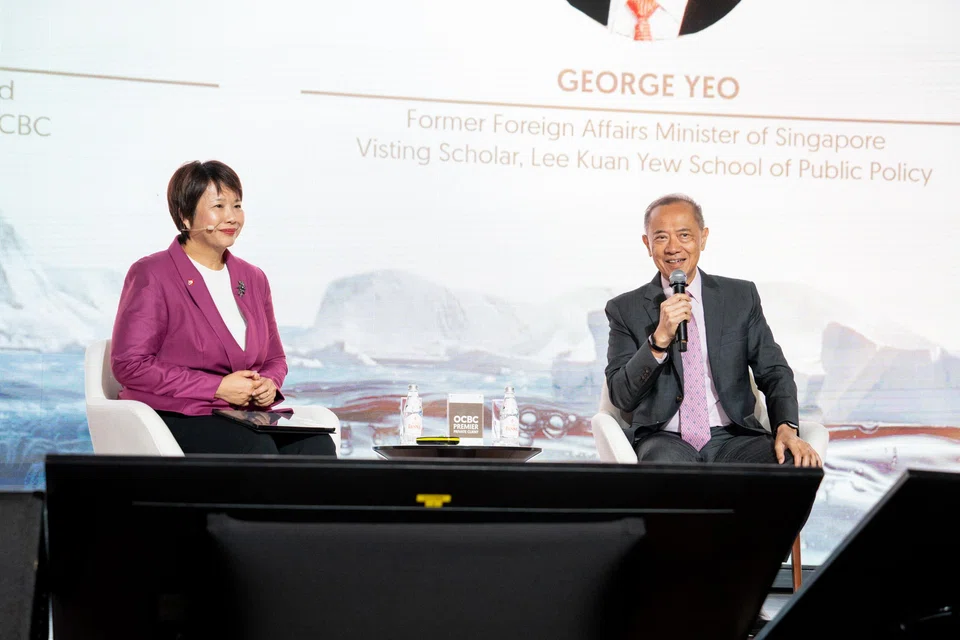
[SINGAPORE] A global economic rebalancing is inevitable, and when it comes, it will be more severe than the 2008 financial crisis, warned former Singapore foreign minister George Yeo on Tuesday (Jan 6).
Years of abundant liquidity and rising leverage have left the global system vulnerable to a sharper adjustment, he pointed out at an OCBC fireside chat.
“Sooner or later, a rebalancing must happen, and it’ll be a bigger rebalancing than the global financial crisis,” he added.
Yeo was speaking at a fireside chat with OCBC chief economist Selena Ling during the bank’s annual Premier Private Client Investment Seminar, held at the Ritz-Carlton, Millenia Singapore.
At the session, he said that if another recession were to occur, the kind of coordinated mitigatory measures seen previously are unlikely to be repeated.
During the last crisis, China rolled out a four trillion yuan (S$733 billion) stimulus package in 2009 to help spur global demand.
“Now, this time round, if there is a crisis, there’s no functioning G20. China isn’t going to introduce a budget to save the world. It will save itself and maybe its friends. Who will keep up global demand?” Yeo said.
The anticipation of such a rebalancing, he noted, helps explain why gold – traditionally a safe-haven asset during periods of volatility – has continued to climb in price, even as equity markets “appear to be doing well”.
“These are unpleasant thoughts, but they have to be kept at some corner of the mind because when that happens, things move very fast,” he added.

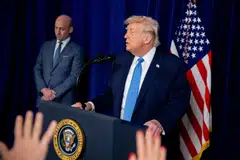
Yeo also shared his assessment of the US-backed leadership ouster in Venezuela over the weekend, which saw President Nicolas Maduro and his wife captured and flown to the US to face trial on narcoterrorism and cocaine trafficking charges.
Yeo, who served as Singapore’s foreign affairs minister from 2004 to 2011, said he was “surprised” by the lack of reaction from Venezuela’s military to the operation. US special forces troops had reportedly flown into the capital, Caracas, in low-flying helicopters to carry out the capture.
The move followed precision strikes on key military installations, including anti-aircraft radar systems and munitions depots, as well as a cyberattack that crippled the South American country’s electrical infrastructure.
Despite this, the Venezuelan military possesses manpads – portable missile systems that can be used for air defence, including against helicopters – yet these were not deployed, and a nearby air force base was also not attacked, Yeo observed.
“Obviously, the US had already made arrangements with key people in Venezuela for its operation, to betray Maduro,” he added. “I don’t know whether this operation is as surgical as the media would have us believe.”
Before entering politics in 1988, Yeo had risen to the rank of brigadier-general in the Republic of Singapore Air Force.
The Venezuelan operation represents an acceleration of trends that have been under way for some time, namely the world’s shift towards a multipolar order, said the former minister.
With the latest move – along with Trump’s subsequent threats towards Cuba, Colombia and Greenland – the US is signalling that “this is my hemisphere, you – China, Russia – don’t you dare interfere”, he said.
The subtext, he added, is that Washington would in turn refrain from interfering in China’s and Russia’s spheres of influence.
“If I were Ukraine, I’d think hard. If I were Taiwan, I’d think very hard about what all these mean for me,” he said.
Decoding Asia newsletter: your guide to navigating Asia in a new global order. Sign up here to get Decoding Asia newsletter. Delivered to your inbox. Free.
Copyright SPH Media. All rights reserved.






