

No substitute for keeping a good lookout – even with tech gadgets on board
 Add BT as a preferred source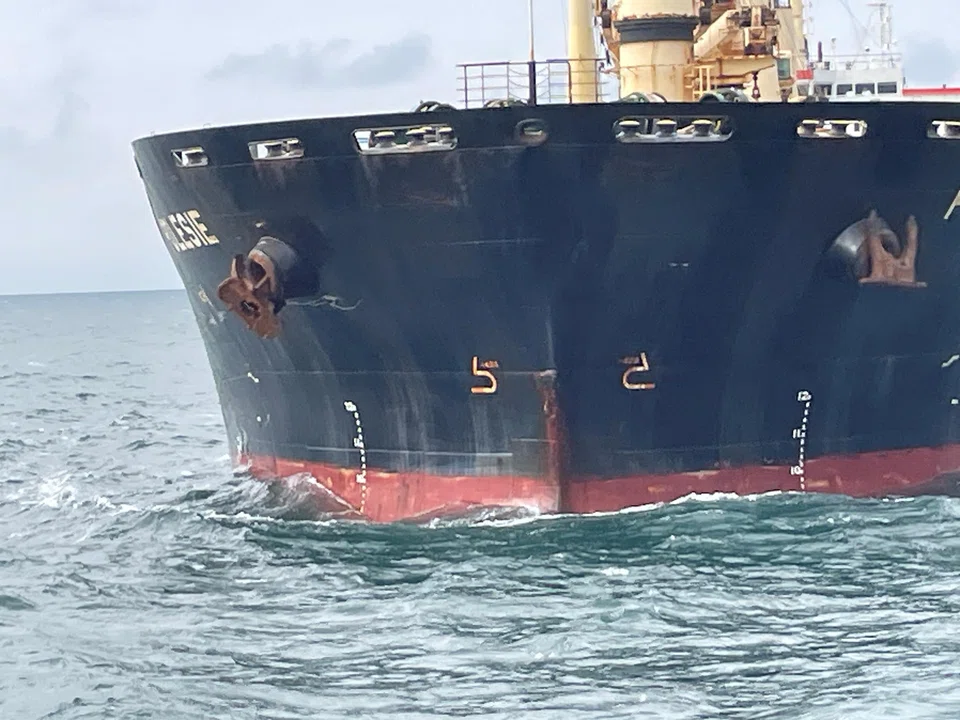
COLLISIONS between ships make up the second-largest category among all reported “shipping incidents” around the world, after machinery damage or failure.
And every collision – with or without loss of life and limb – is one too many.
Over a week ago, the dry-cargo ship Verity (at 2,601 gross tonnage or GT) collided with the bulk carrier Polesie (at 24,055 GT) in the North Sea off the German coast, killing five of Verity’s crew. The smaller vessel sank after the impact.
The tragedy will be thoroughly investigated, so it would be wrong to speculate on what happened.
In May, the major marine insurer Allianz Commercial published its Safety & Shipping Review, an annual publication that analyses the main causes of shipping incidents and losses around the world.
In a statement highlighting the findings from its analysis of shipping collisions in general, it noted that there were 280 reported in 2022 involving vessels exceeding 100 GT.
Vessel collisions, coming in as the second-biggest cause of shipping incidents overall, accounted for around one in 10 of the more than 3,000 reported shipping incidents around the world in 2022.
In the decade between 2013 and end-2022, there were almost 3,100 collisions globally.
Despite the tragic loss of life from last week’s collision, total losses of vessels involved in collisions are, thankfully, rare. Just four vessels were lost after a collision in 2022, representing only 1 per cent of all reported collisions. In the past decade, 30 vessels were written off as total losses after collisions.
SEE ALSO
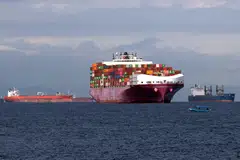
But these figures may be only part of the story, because of the number of collisions that go unreported. Allianz lists human error, equipment/engine failure and bad weather as common factors that can contribute to collisions.
Such mishaps are generally the result of bridge-team failure – specifically, the failure to keep a proper lookout. The reasons for this failure can be complex, and include watchkeeper fatigue, distraction and the inability of a small crew to undertake dedicated lookouts.
In another recent example of how badly things can go wrong, the UK-registered general cargo ship Scot Carrier and the Denmark-registered split hopper barge Karin Hoj collided at night, in a precautionary area next to the Bornholmsgat traffic separation scheme in Sweden. The Karin Hoj capsized, killing its two crew.
The report by the UK’s Marine Accident Investigation Branch (MAIB) makes for dismal reading. The vessels collided after the officer of the watch on board the Scot Carrier altered course at a planned waypoint without first checking the traffic in the area or ascertaining whether it was safe to execute the manoeuvre.
Following the collision, he did not immediately call the master or raise the alarm; instead, he returned the ship to its original course and speed. He was jailed for 18 months by a Danish court.
The investigation found that neither vessel had posted a lookout during the hours of darkness. It also established that the second officer on the Scot Carrier was distracted throughout his watch by a tablet computer, and had also consumed alcohol before taking over the watch.
It was not possible to find out the actions that were taken by the crew of the Karin Hoj because the vessel was not fitted with a voyage data recorder, and there were no survivors.
The MAIB has since issued recommendations, including having one crew member serve as a dedicated lookout during the hours of darkness.
But collisions resulting from a failure to keep a proper lookout do not happen only at night. A Mariners Alerting and Reporting Scheme (Mars) report, distributed by the Nautical Institute in its magazine, Seaways, tells of an officer of the watch being alone on the bridge of a small cargo ship, in daylight and with good visibility. He scanned the horizon through the bridge windows and observed automatic identification system (AIS) signals from a few smaller vessels on the radar, but none that were a concern.
He then turned to administrative tasks. On a fishing vessel about six nautical miles away, the crew was trawling for prawns. Their AIS had been set to passive mode during the night to conceal the vessel’s position, because the fishing grounds were considered a “trade secret”.
As the crew started hauling in the nets, the skipper saw the cargo ship bearing down on them. He reactivated the vessel’s AIS at about this time, but because it was daylight and visibility was good, he did not think it necessary to communicate with the cargo ship.
When he realised a collision was imminent, he set the engine to full speed astern, but it was too late to avoid the crash. The impact spun the fishing vessel almost 180 degrees around, and it keeled over. Fortunately, its crew was unharmed, but the vessel sustained considerable damage.
This was another incident highlighting the need to look out of the window and not rely on electronic equipment. It also underscores the danger of expecting officers to carry out administrative tasks when they are also the sole lookout.
It seems a really simple thing to say that ships need to keep a good lookout all the time, but in reality, having dedicated lookouts adds to costs, and, especially in the case of smaller vessels, lean manning is the order of the day.
The International Maritime Organization’s Seafarers Training, Certification and Watch-keeping Code requires that there must be a lookout on the bridge of a ship in the hours of darkness. Port State Control (PSC) inspectors can enforce this requirement, by checking the records of ships.
Whether lookouts are really being posted when they should be needs to be a PSC priority.
Decoding Asia newsletter: your guide to navigating Asia in a new global order. Sign up here to get Decoding Asia newsletter. Delivered to your inbox. Free.
Share with us your feedback on BT's products and services
TRENDING NOW

CSE Global independent director quits after clashes with chairman Eugene Lai over board refresh

‘I felt like dying’: Thai Singha beer scion speaks up after disclosure of alleged sexual abuse

Abandoned ‘Titanic’, failing ‘ancient towns’: Why China’s tourism boom leaves white elephants behind
Cat A COE rate exceeds Cat B for third time in 4 months; premiums largely down

