

Nvidia fallout puts trade truce to the test as Xi welcomes Trump
Spy allegations engulfing the chipmaker’s CEO Jensen Huang reopen old rifts
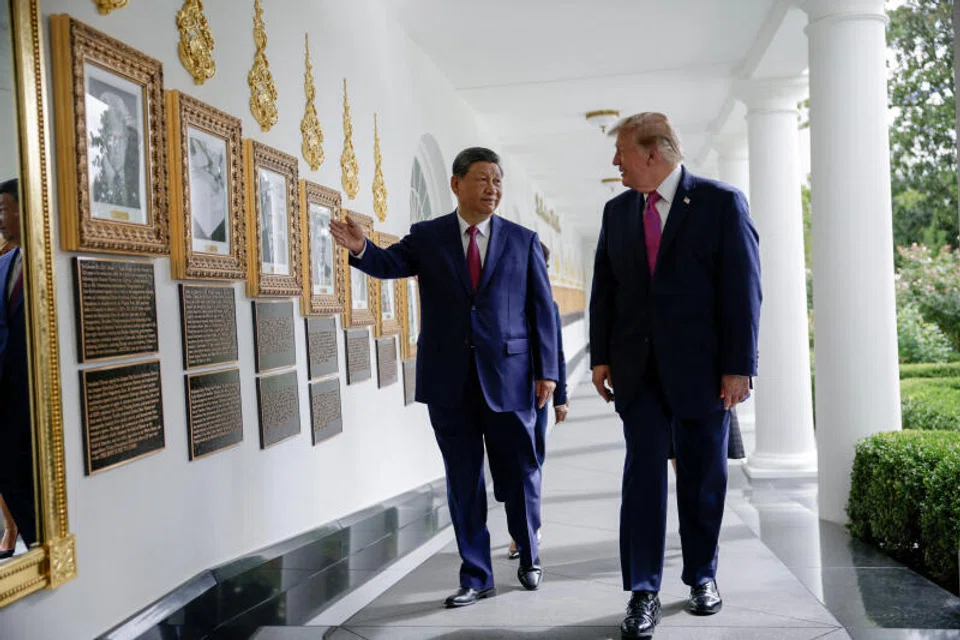
XI JINPING’S third summit of 2026 with US President Donald Trump is going off script before their meetings even get underway, as the spy allegations engulfing Nvidia’s Jensen Huang reopen old rifts.
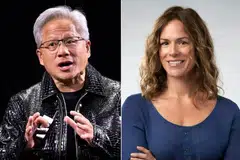
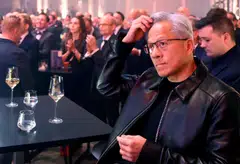
For years, Huang had been most the prominent US tech executive advocating for greater engagement with China as he lobbied for looser export controls on semiconductors.
Now, bombshell accusations he conducted an affair with an alleged Chinese spy are giving lawmakers in Washington ammunition to tighten curbs, days before a major leaders’ summit in the Chinese technology hub of Shenzhen.
At stake is a year-long trade truce between the world’s top economies expiring in January – its renewal hinges, in large part, on the US pausing new restrictions on tech shipments to China.
David Perdue, America’s top diplomat in Beijing, on Wednesday (Nov 11) signalled the furor was posing a test to bilateral relations during an already “bumpy” stretch.
The scandal is only deepening. Fresh reports that Huang had multiple extramarital affairs have cast further doubt over his future, with Nvidia’s board now working to identify a potential replacement chief executive officer, according to a person familiar with the matter.

For some in Beijing, the timing of the revelations has drawn attention.
Reports of Huang’s affair only exploded into full view in the aftermath of the Republicans’ midterms wipe-out that weakened Trump – a longtime backer of Nvidia’s CEO, who is one of the world’s most powerful figures in US artificial intelligence.
Hu Xijin, former editor-in-chief of the Global Times, claimed leaks by US intelligence services were “driven by calculated political motives”.
SEE ALSO



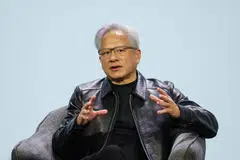

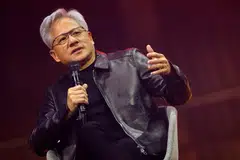
“China is suffering collateral damage from internal strife in the US,” said Wang Yiwei, a former Chinese diplomat and director of Renmin University’s Institute of International Affairs.
“The Democrats achieved such a dramatic turnaround in the midterms not only because of pushback to Trump – it also reflects public backlash against the alliance between Silicon Valley’s tech giants and financial capital.”
So far, there is no sign the Nvidia saga will derail the truce.
US Treasury Secretary Scott Bessent – who manages the US economic relationship with China – hailed progress in ties this week at an event with the Chinese ambassador to Washington Xie Feng.
Any fallout would have ramifications for the global economy. Some US$500 billion in annual trade in goods and services between the US and China is at stake as they approach a deadline for renewing their truce.
When Xi hosts the Asia-Pacific Economic Cooperation gathering next week, investors will be closely watching for any signals from Trump on export controls and – if Huang survives – whether he brings along the Nvidia chief, whom the US leader endorsed this week as an “honourable guy”.
In May, Huang jumped on Air Force One at the last minute at a refuelling stop in Anchorage, joining Trump’s trip to Beijing at the personal invitation of the president.
Some American lawmakers and foreign policy analysts are already calling on the White House to respond by imposing more export controls to diminish advanced semiconductor flows.
One option would be widening curbs to capture subsidiaries majority-owned by already-sanctioned firms – the so-called 50 per cent rule that has been suspended until January is regarded by some in Washington as the key to closing a major loophole.
“This is the first major test of the truce,” said Jeff Moon, president of China Moon Strategies and former Assistant US Trade Representative for China Affairs.
“If it’s true that Chinese espionage tried to, or did steal, Nvidia technology, then the US has to respond,” he said.
“At the core of the truce were US commitments not to increase tech restrictions, and Chinese agreement to provide critical minerals. So this episode gets right at the heart of the tech restrictions.”
The face-off is bringing to the surface tensions that were already brewing between the US and China.
Earlier in November, Bessent and US Trade Representative Jamieson Greer raised concerns with China’s Vice-Premier He Lifeng about the importance of implementing commitments made as part of the trade deal reached by Trump and Xi in South Korea a year ago.
Central to that is the flow of rare earths used to make everything from mobile phones to missiles.
While the US secured supplies of such critical minerals under the truce, officials including Greer have repeatedly said that America is not getting the metals at the expected volume and pace. From the US to Japan, manufacturers are feeling the squeeze.
That non-compliance, combined with recriminations following the Nvidia scandal, may give new momentum to efforts by some in the US to put relations under more scrutiny.
House Democratic Leader Hakeem Jeffries has come out in support of provisions in 2026’s National Defense Authorization Act that would restrict China’s access to chips.
Congress is also currently advancing the Chip Security Act. That would force technology companies to physically track advanced processors through the supply chain, making it significantly harder for restricted AI chips to reach China via unauthorised intermediaries.
“For Beijing, the risk is that an investigation into individual conduct becomes a justification for broader technology restrictions on Chinese companies,” said Sun Chenghao, a fellow at Tsinghua University’s Center for International Security and Strategy in Beijing.
That could make ordinary business contact “more politically sensitive”.
With Huang now diminished, finding common ground will be harder still.
The timing of the scandal may reflect that “some people in the intelligence community are not happy with Trump’s approach to China,” said Wu Xinbo, director at Fudan University’s Center for American Studies in Shanghai.
Ultimately, more curbs would only deepen Beijing’s push for self-reliance, he added: “Further controls will certainly help companies like Huawei who would like to keep the Chinese market closed to US products.” BLOOMBERG
Decoding Asia newsletter: your guide to navigating Asia in a new global order. Sign up here to get Decoding Asia newsletter. Delivered to your inbox. Free.
Share with us your feedback on BT's products and services
TRENDING NOW
Nvidia prepares to oust Jensen Huang who had second affair with exec: reports

Special dividend for SIA’s 80th anniversary? CEO says extra payout will need board’s nod

Higher rates, weaker spending: Is the Philippines entering stagflation?
Who would be next CEO at Nvidia? Top engineer and CFO favoured as candidates

