PM Wong urges Apec leaders to keep Asia-Pacific from splitting into ‘competing economic blocs’
He says willing economies should move ahead on trade initiatives where consensus is difficult and keep the door open for others to join

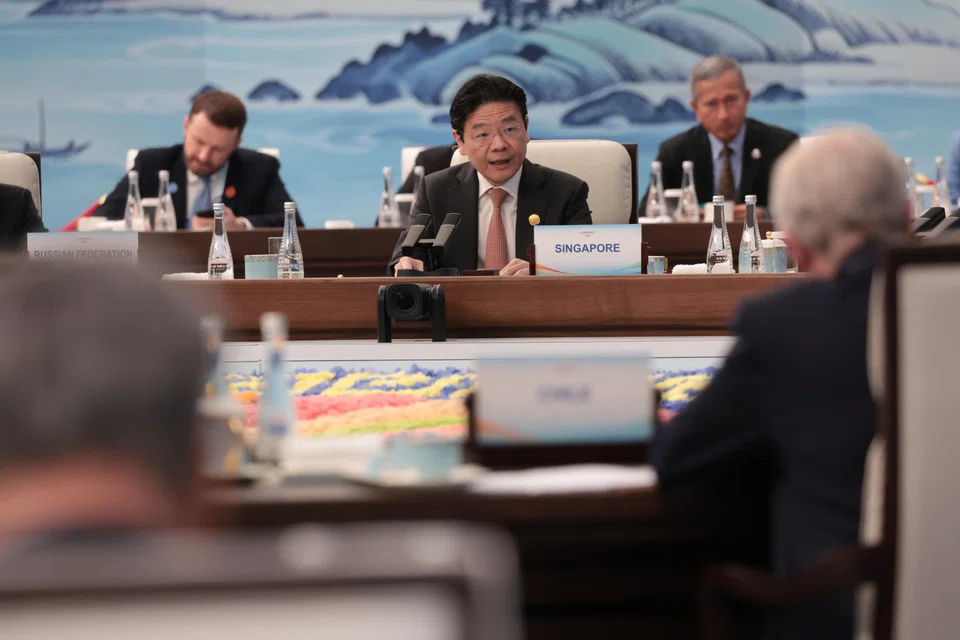
[SHENZHEN] The world may be entering an era of globalisation that is more fragmented and contested than before, but the Asia-Pacific should avoid becoming divided into “competing economic blocs”, said Singapore Prime Minister Lawrence Wong.
Instead, the region can choose to remain open, connected and outward-looking, he said on Thursday (Nov 19).
“By working together, we can ensure that our region continues to be an engine of growth and prosperity for the world,” said PM Wong.
He was speaking at a plenary session on the second and final day of the 33rd Asia-Pacific Economic Cooperation (Apec) Economic Leaders’ Meeting in China’s southern tech and manufacturing hub of Shenzhen.
Remarkable transformation
Shenzhen was little more than a fishing village before it was designated China’s first special economic zone in 1980.
Today, it is a megacity, with more than 18 million residents as at end-2025, and an economy a quarter larger than neighbouring Hong Kong’s.

PM Wong praised the city’s “remarkable transformation” and said it shows what openness, innovation and economic cooperation can achieve.
“It is also a reflection of the wider Asia-Pacific success story – a region that has prospered by opening up and connecting with the world,” he said.
Apec comprises 21 member economies, including several Asean member states such as Indonesia, Malaysia and Thailand, as well as the US, Russia and China, whose leaders were present at the summit.
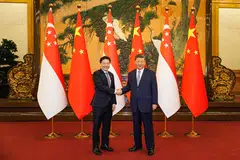
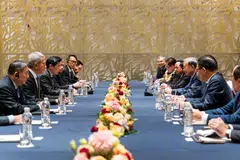
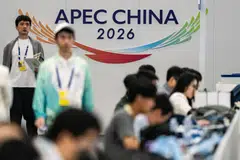
PM Wong’s call for stronger cooperation echoed his remarks as the incoming Asean chair at the closing ceremony for the bloc’s 49th summit on Tuesday in Manila, where he spoke about deepening economic integration among the grouping’s members while remaining open to the rest of the world.
New realities
PM Wong urged leaders at the Apec gathering to “adapt to these new realities” of global fragmentation and said the forum has an important role to play in keeping the region united.
In outlining how it could do so, he stressed the importance of keeping the Asia-Pacific open and connected.
While Apec has trade agreements such as the Comprehensive and Progressive Agreement for Trans-Pacific Partnership, and the Regional Comprehensive Economic Partnership (RCEP), PM Wong said “we should not stop there”.
Rather, effort should be made to “build on these agreements and take concrete steps towards Apec’s vision of a free trade area of the Asia-Pacific”.
He added that these arrangements should remain “open and inclusive”, and reinforce rather than divide the wider trading system.
A general review of the RCEP is scheduled to take place in 2027.
He added that Apec must continue to support reforms to strengthen the World Trade Organization (WTO) and uphold a rules-based multilateral trading system.
PM Wong acknowledged that reaching consensus among all economies will be increasingly difficult.
“But that should not become an excuse for inaction,” he said.
He pointed to plurilateral initiatives at the WTO, such as the Multi-Party Interim Appeal Arbitration Arrangement and the E-commerce Agreement, as examples of how willing partners can make progress.
He said newer initiatives such as the Green Economy Partnership Agreement and the Future of Investment and Trade Partnership can also help develop innovative approaches to emerging opportunities.
“We should pursue a more flexible and pragmatic approach to multilateralism,” said the prime minister. “Allow willing partners to move ahead, demonstrate what works, and keep the door open for others to join when ready.”
Working together on AI
On artificial intelligence, PM Wong said there has been much public discussion about the competition for leadership position, as well as who has the best chips or models.
While “some of that is inevitable”, he said there is also much scope to work closely together on important issues such as AI safety and the responsible use of the technology.
He said Apec can help by supporting AI adoption among small and medium-sized enterprises, fostering investment in resilient AI infrastructure, and equipping workers with the skills to benefit from these technologies.
The Apec Business Advisory Council (Abac) recently released a report that provides suggestions to governments on how they could help companies adopt AI by setting common standards for data sharing, clarifying regulation and reimbursement rules, and investing in workforce skills and digital infrastructure.
Furthermore, the prime minister said Apec must ensure that economic cooperation delivers real benefits for businesses and people.
One example he cited was the Apec Centre of Excellence for Paperless Trade, conceived by Singapore and Australia together with Abac.
The initiative, he said, aims to make it easier for businesses to exchange trade documents electronically across borders, reducing paperwork and costs, and making it easier for smaller companies to enter new markets.
“Ultimately, Apec’s success will be judged not by the declarations we issue, but by whether businesses find it easier to trade, workers have better opportunities, and our people see improvements in their lives,” said PM Wong.
Earlier in the day, Chinese President Xi Jinping had announced in opening remarks that China would provide US$20 million to support “Apec’s practical cooperation”.
Without going into details, he said in Mandarin that China would establish a centre for Asia Pacific Community Studies in Shenzhen to conduct policy research and exchanges and “provide intellectual support”.
China will also set up institutions to facilitate cooperation in areas such as digital technology, cross-border data flow, clean energy, and the development of SMEs, to “contribute to the innovation-driven and green growth in the Asia-Pacific”, Xi added.
Decoding Asia newsletter: your guide to navigating Asia in a new global order. Sign up here to get Decoding Asia newsletter. Delivered to your inbox. Free.
Copyright SPH Media. All rights reserved.