

Political instability ‘puts decarbonisation of shipping at risk’
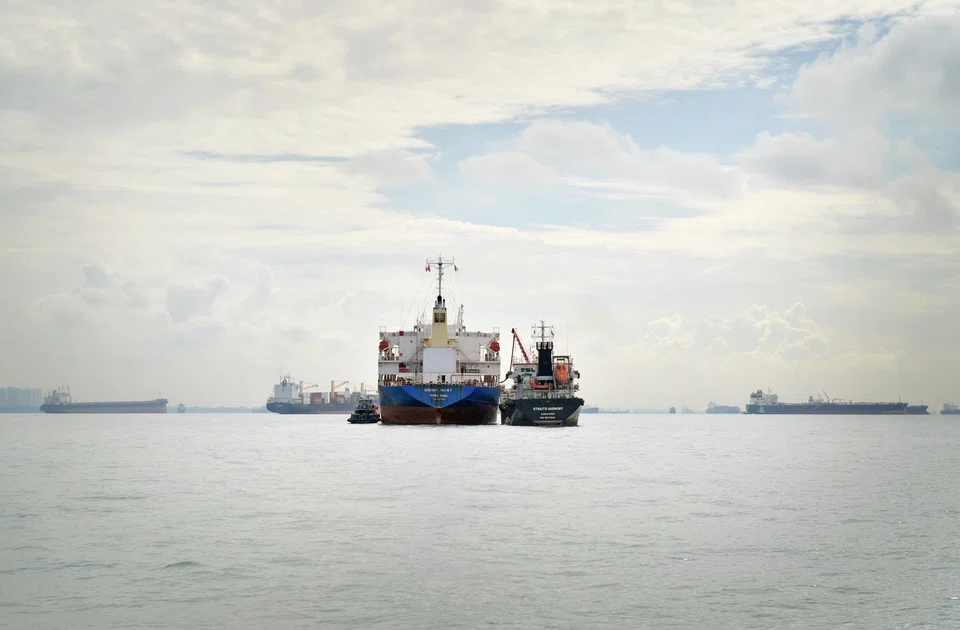
POLITICAL instability is a “risk multiplier” which is putting a successful green energy transition in maritime in jeopardy, according to a new report from the International Chamber of Shipping (ICS).
Political instability, financial instability and cyberattacks are among top risks identified, according to the ICS Maritime Barometer Report 2022-2023 that concludes clear direction from governments is needed to accelerate the green energy transition.
That assessment chimes with views expressed by top shipping executives at a major event during the recent Singapore Maritime Week, Moore Stephens’ Shipping Forum 2023.
The inaugural ICS Maritime Barometer Report is said to be the first full-scale annual survey of risk and confidence among maritime leaders. ICS said that more than 130 “C-suite decision makers”, half of them shipowners and approximately 35 per cent consisting of ship managers, have provided insights into the issues preoccupying them and how they are placed to manage their impact.
ICS commented that the respondents’ views on decarbonisation factors highlight a maturing of the shipping industry’s understanding of the complex implications of the energy transition. While the practical implications of new greenhouse gas reduction regulations have continued to be the biggest concern for two years in a row, respondents demonstrated evolving opinions on the fuel landscape. This includes a shift in attitudes towards wind and nuclear power as potentially viable energy sources.
Among other things, the report also asserted that as financial and political risks have risen, particularly due to the ongoing conflict in Ukraine, so too have concerns about companies’ capabilities in managing these issues. However, ICS noted that although some risks hold the potential to have a serious impact on operations, maritime leaders have high confidence in the industry’s abilities to manage these situations.
ICS chairman Emanuele Grimaldi warned: “The need for clear direction from our regulators and political leaders shines through in the data gathered from maritime leaders around the world for this report. Delays in government decision-making will have far-reaching consequences for the shipping industry as key choices regarding supply chain resilience, as well as greenhouse gas reduction measures (including carbon pricing, alternative fuel availability and the provision of new onshore bunkering infrastructure) will determine how the industry evolves over the next decade.”
Meanwhile, at the forum held at the Raffles Hotel by law firm Moore Stephens, speakers said they believed greater volatility is in store for the maritime industry in the year ahead, as it navigates mounting disruptions from geopolitics, technological evolution, as well as decarbonisation regulation.
The forum attracted some 250 participants consisting of senior executives from the shipping, logistics and finance industries and was organised with the support of the Chartered Institute of Logistics and Transport, and the Institute of Chartered Shipbrokers.
Coincidentally, given the then-pending publication of the ICS Barometer, the forum’s guest of honour was Esben Poulsson, who is immediate past chairman of ICS as well as, among other roles, the chairman of Enesel and other companies, and a board member of the Maritime and Port Authority of Singapore.
He opened the forum by referring to current regulatory challenges particularly in the area of decarbonisation. Describing the shipping industry as being poised for the “fourth propulsion revolution”, he opined that a key challenge the industry faces now is the uncertainty in the regulatory landscape.
Poulsson urged the International Maritime Organization (IMO) to take the opportunity at its upcoming Marine Environment Protection Committee meeting to clarify the regulatory landscape for the industry. He believed the industry will be ready to comply with the regulatory requirements once IMO sets the necessary regulations.
The next speaker, Choi Shing Kwok, is the director and chief executive officer of the ISEAS-Yusof Ishak Institute and former permanent secretary of the Ministry of Transport. Focusing on geopolitical instability, Choi noted that US-China rivalry may persist for some decades, as neither side backs down in the short term. Ultimately, this may lead to some, but not full, decoupling, with both countries competing for friends.
Choi also noted it is unlikely that the Russia-Ukraine war will be resolved quickly. He added that while this presents a quandary for Europe and other global powers, it also presents opportunities for countries like China. Choi said that South-east Asia is likely to be a bright spot amid the current complex global geopolitical environment, not without its internal challenges, albeit relatively contained.
Chris Johnson, Moore Stephens Singapore’s shipping and transportation partner, provided a brief overview of current shipping markets. Presenting various shipping statistics relating to the current shipping freight market, sales and purchases, and the composition of the global fleet, he said that the tanker market was performing very well, the bulker market to a lesser extent, while the container industry may come under pressure as rates correct from the peak in mid-2022.
Tan Chong Meng, group CEO of PSA International, spoke on supply chain opportunities. He said that the “new normal” would be marked by multiple developments, including deepening geopolitical divisions, increased ESG awareness, and technological developments.
The forum ended with a panel session facilitated by Steve Saxon, partner, McKinsey & Company, who introduced the panel topic “Managing the Waves of Shipping – The Way Forward”, with a discussion of various megatrends impacting the shipping industry. First, supply and demand. He was cautiously optimistic about supply and demand dynamics for certain vessel segments, such as tankers, dry bulk and cruise ships, but less optimistic on containers and LNG ships.
On the topic of further investments in shipping, there were mixed views. On one hand, there were views that investments need to be approached with caution in view of regulatory uncertainty. On the other hand, there were advocates for investments in technological research to be ahead of the regulatory curve. There were also views that investments should proceed as usual, predicated on the belief that fossil fuels will be around for longer periods than expected.
So, from both the ICS view, based on its barometer, as well as the concerns and opinions expressed at the Raffles Hotel forum, it is clear we are sailing through uncertain, risky waters. But there is plenty of confidence that shipping will be able to meet the challenges ahead.
Decoding Asia newsletter: your guide to navigating Asia in a new global order. Sign up here to get Decoding Asia newsletter. Delivered to your inbox. Free.
Share with us your feedback on BT's products and services
TRENDING NOW
World’s largest offshore wind platform by Seatrium consortium on track to be completed by 2028

Is stamp collecting enjoying an analogue revival or are its best days over?

GovTech retrenches another 38 staff in second round of layoffs
MBS adjusted property Ebitda falls 20.6% in Q3 with fewer high-roller visits, weaker hold

