

Rising wages push more Japan firms into bankruptcy in January, survey shows
Some firms cite soaring labour costs, tight job market
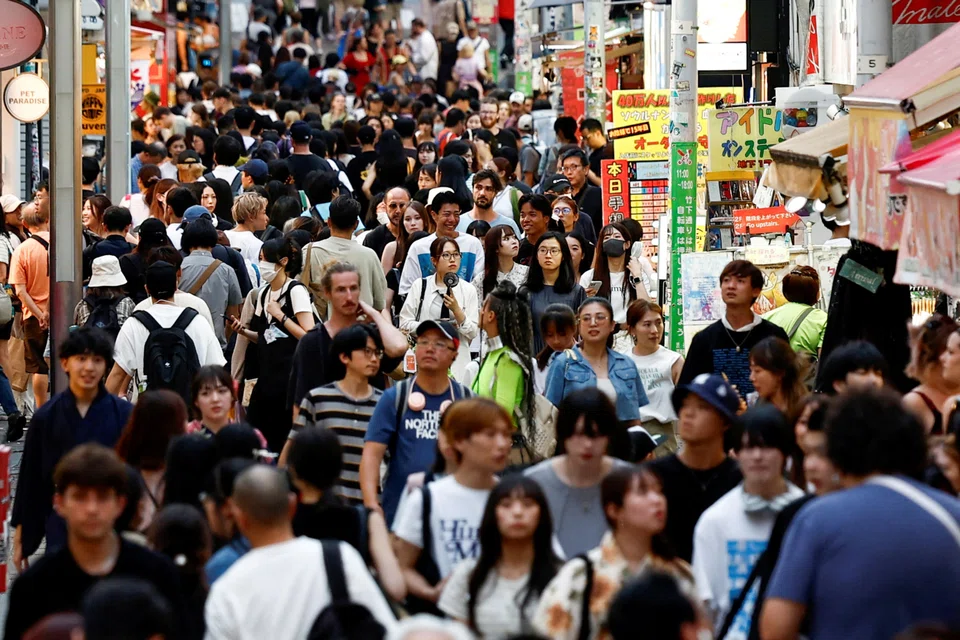
[TOKYO] Japan’s bankruptcy cases rose in January as companies struggled with rising labour costs in a tight job market, a private survey showed on Monday (Feb 9), a sign of how increasing pay was hitting smaller firms.
Separate data showed real wages fell 0.1 per cent in December from a year earlier, much slower than a 1.6 per cent drop in November, as inflation eased and workers saw a steady gain in bonuses.
The data highlights the difficulty for the government to boost wages to support household purchasing power while helping smaller firms weather rising labour costs.
Prime Minister Sanae Takaichi, who won a landslide victory in a general election on Sunday, has offered to help small firms struggling to lift pay as part of efforts to boost wages.
Bankruptcy cases rose 5.6 per cent in January to 887 from a year earlier, the highest level for the month in 13 years, a survey by private think tank Tokyo Shoko Research shows.
Of the total, 19 cited surging labour costs for their filing, a three-fold increase from a year earlier and 36 cited labour shortages, marking the first rise in eight months, it said.
“Many small firms cannot cope with rising costs and labour shortages. With demand for funds likely to increase towards the March fiscal year-end, bankruptcy cases are expected to rise moderately,” Tokyo Shoko Research said in a report.
Japan’s core consumer inflation has exceeded the central bank’s 2 per cent target for nearly four years, as companies continued to pass on rising raw material costs.
Such sticky inflation, coupled with an intensifying labour shortage, have prodded firms to push up wages, though the pace of pay hikes has yet to catch up to the rate of inflation.
SEE ALSO





Analysts expect consumer inflation to moderate in coming months due to the base effect of last year’s sharp rises, and the impact of fuel subsidies that roll out from February.
Yoshiki Shinke, senior executive economist at Dai-ichi Life Research Institute, expects real wages to rise year-on-year in January and stay positive at least until March.
“But inflationary pressure from a weak yen is a risk. Firms could become more keen to hike prices again if the yen weakens, which would keep inflation elevated,” he said. “If this happens, real wages could sink back to negative territory in April.”
The outlook for real wages is key to how soon the Bank of Japan will raise interest rates after pushing them up to a 30-year high of 0.75 per cent in December.
Governor Kazuo Ueda has said the BOJ must have the conviction that underlying inflation is sustainable at its 2 per cent target to proceed with further rate rises. REUTERS
Decoding Asia newsletter: your guide to navigating Asia in a new global order. Sign up here to get Decoding Asia newsletter. Delivered to your inbox. Free.
Share with us your feedback on BT's products and services
TRENDING NOW

Once staunchly pro-China, Malaysian Chinese businesses are now distancing themselves from Beijing

‘How many will survive?’: Bubble fears arise as China’s humanoid robotics face reality check

Philippine power giant First Gen rebuffs foreign offers, plans up to US$2.6 billion in expansion

Indonesia imposes US$116 million in fines over manipulation of Sinar Mas, Prajogo-linked stocks

