

Russia seizes key southern Ukraine city of Kherson after week of war
Kyiv
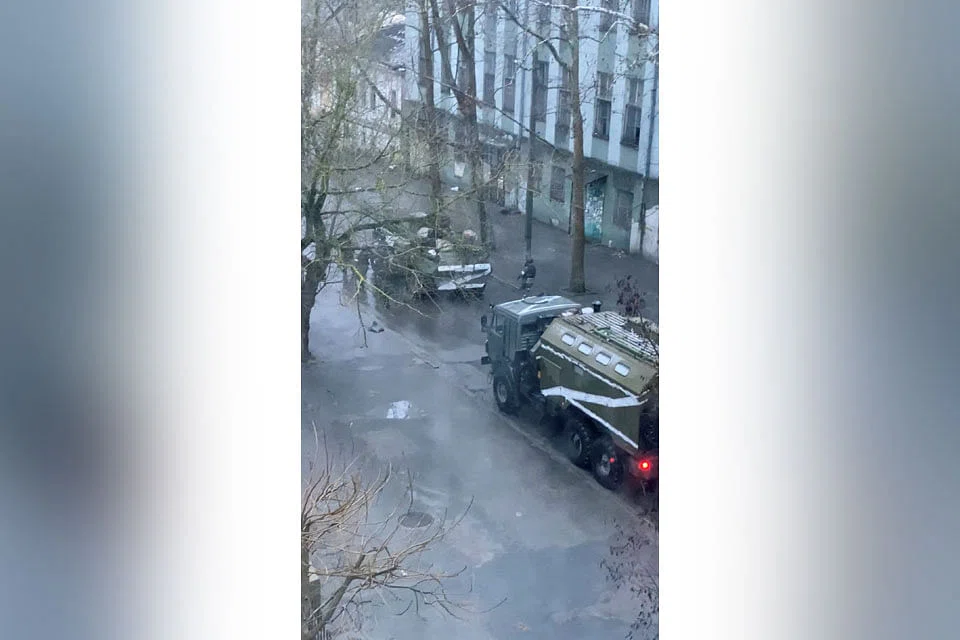
RUSSIAN troops have seized Kherson, the first major Ukrainian city to fall in a devastating week-old war that has already created one million refugees.
The capture of the Black Sea city of 290,000 people, which just last year hosted Nato-supported war games, appeared to be a significant boost for Moscow as it readied for potential ceasefire talks on Thursday (Mar 3).
Russian "occupiers" were in "all parts" of Kherson, Ukrainian regional official Gennady Lakhuta conceded late on Wednesday.
After a 3-day siege that left Kherson short of food and medicine, and struggling to collect and bury its dead, the town's mayor also announced he was in talks with "armed guests".
He had "made no promises" to the invading forces, but agreed to a night curfew and restrictions on car traffic.
"So far so good. The flag flying above us is Ukrainian. And for it to stay that way, these requirements must be met," he said in a Facebook post.
Stalled elsewhere, Russia continues to make significant advances on the southern front, with troops breaking through in Kherson - opening the path west and north - and besieging the larger strategically vital port city of Mariupol. There, mayor Vadym Boychenko reported hours of punishing bombardments that trapped civilians in a city now without light, water or heating as temperatures hover around freezing.
"Today was the hardest, cruellest of the 7 days of this war," he said. "Today they just wanted to destroy us all."
Moscow's victory in Kherson comes one week after Russian President Vladimir Putin's army marched into Ukraine from the north, east and south, training a vast arsenal of weaponry at Ukrainian cities.
Russian forces have sporadically bombarded civilian targets across the country, including the capital Kyiv and the majority Russian-speaking second city of Kharkiv, which is now coming under more intense attack.
Ukrainian President Volodymyr Zelensky has called the barrage of missiles, shells and rockets a "war crime" and the International Criminal Court has confirmed an investigation is underway.
Putin's long-telegraphed invasion has frequently appeared hamstrung by poor logistics, tactical blunders and fierce resistance from Ukraine's underpowered and outgunned military - and from ever-swelling ranks of volunteer fighters.
Scores of images have emerged of burned-out Russian tanks, the charred remains of transporters and of unarmed Ukrainians confronting bewildered occupying forces.
Russian authorities had been silent on the toll of the invasion, and have a domestic media blackout on what the Kremlin euphemistically calls a "special military operation".
But the Ministry of Defence on Wednesday acknowledged for the first time that 498 soldiers had "died in the line of duty". Ukrainian forces put the Russian toll at 10 times that number.
Russians have turned out for large anti-war protests across the country, in a direct challenge to Putin's 20-year rule. Thousands of anti-war demonstrators have been detained, including several dozen in rallies in Moscow and St Petersburg on Wednesday.
At the United Nations, the General Assembly issued another powerful rebuke, overwhelmingly backing a resolution demanding Russia "immediately" withdraw from Ukraine.
Moscow lost the vote 141-5 winning the support of only 4 other nations - Belarus, North Korea, Eritrea and Syria. Its allies China and Cuba abstained.
In Washington, top US diplomat Antony Blinken warned the human costs were already "staggering", accusing Russia of attacking places that "aren't military targets".
"Hundreds if not thousands of civilians have been killed or wounded," said the secretary of state, who will travel to eastern Europe next week to shore up support for Ukraine - and for efforts to secure a ceasefire.
Kyiv was sending a delegation to the Thursday ceasefire talks, at an undisclosed location on the Belarus-Poland border, but has warned it would not accept "ultimatums".
Western countries have already imposed heavy sanctions on Russia's economy and there have been international bans and boycotts against Russia in everything from finance to tech, from sports to the arts.
European Union and Nato members have already sent arms and ammunition to Ukraine, although they have made clear that they will not send troops and the EU has dampened Zelensky's hopes of membership of the bloc. AFP
READ MORE:
Decoding Asia newsletter: your guide to navigating Asia in a new global order. Sign up here to get Decoding Asia newsletter. Delivered to your inbox. Free.
Share with us your feedback on BT's products and services
TRENDING NOW
OCBC mobile, online banking services restored after Friday afternoon disruption
SGX CEO Loh Boon Chye to step down; succession planning under way
Waymo founder predicts ‘landslide’ robotaxi adoption in Singapore, driven by high car costs

Vietnam’s northern provinces, not Hanoi or Ho Chi Minh City, are powering near 10% GDP growth

