Saudi Aramco tower targeted in rare strike by Houthis on Riyadh finance hub
This upsets return-to-normal plans about a month after deadly attacks on the capital’s airport
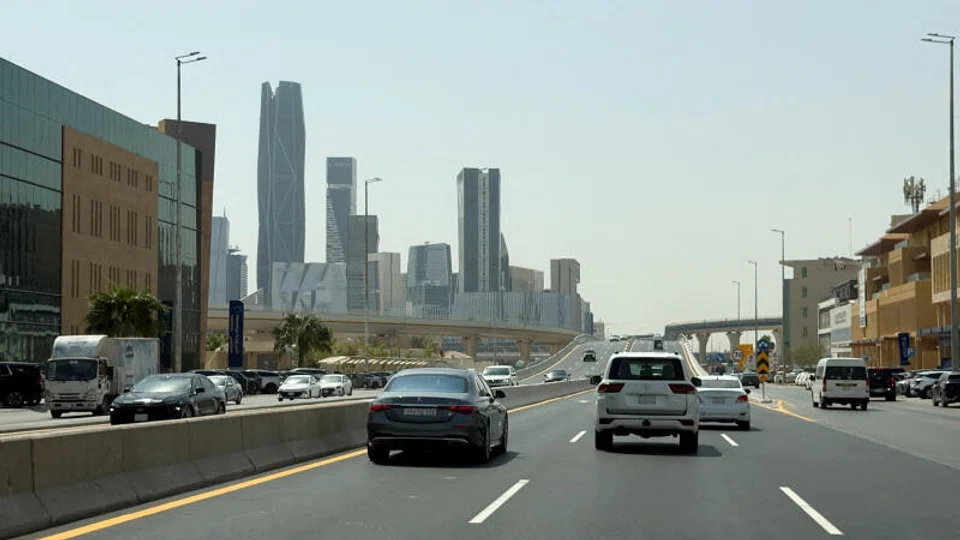
[RIYADH] A Houthi attack damaged one of the landmarks of the Saudi Arabian capital’s financial district, upsetting plans for a return to normal about a month after deadly strikes on Riyadh’s airport disrupted travel and cancelled showpiece events.
The offices of state oil giant Saudi Aramco suffered minor damage as the city fended off a new barrage of ballistic and cruise missiles on Sunday (Nov 8).
There were no deaths or injuries, the state-run Saudi Press Agency reported.
The Iranian-backed Houthis in Yemen, who have been fighting Saudi Arabia for a decade, claimed responsibility. Saudi authorities later said they had retaliated by destroying two missile launchers used in attempted attacks.
The rare strike on Riyadh’s financial hub, known as King Abdullah Financial District (KAFD), will do little to reassure international companies already buffeted by months of regional conflict.
KAFD hosts Saudi Arabia’s Public Investment Fund as well as the stock exchange, global consultancies and finance heavyweights including Goldman Sachs and Brookfield.

The incident happened while KAFD was under remote-work orders – limiting the immediate fallout – but came during the morning rush hour and as many Riyadh schools resumed in-person learning for the first time in a month.
KAFD told tenants a few days ago they could return to offices, only to renege on Saturday and order a return to remote work until further notice.
The latest attacks risk spurring more travel restrictions for executives who shuttle back and forth to Riyadh from hubs such as Dubai, Abu Dhabi and London. They came almost a month after Houthi strikes on Riyadh’s main airport killed more than a dozen people and injured hundreds more.
SEE ALSO


The upheaval threatens to heap further pressure on Saudi Arabia’s crown prince and de-facto leader, Mohammed bin Salman, as he works to keep his multi-trillion dollar economic diversification plan on track.
The kingdom has over the last month been forced to delay or scrap events, including the AFC Asian Cup and FII forum, that were poised to be a boon for the economy and the broader push to bring in more foreign investment.
Saudi Arabia is facing a growing budget deficit while its economy contracts and stock market performs anemically.
To be sure, business activities are going ahead. Barclays announced on Monday the opening of its office in KAFD and appointed Majed Al Hassoun as chief executive officer and head of investment banking for Barclays Capital Saudi.
Air traffic at King Khalid International Airport in Riyadh remains limited, with many global carriers still restricting travel. KAFD did not respond to a request for comment.
The Houthis earlier in the weekend threatened to hit Saudi infrastructure in response to attacks by Saudi-led forces in Yemen.
Iran’s foreign ministry on Sunday condemned what it said were Saudi airstrikes on civilian infrastructure in Yemen and urged an immediate end to attacks. It also encouraged the Saudi-Yemen conflict to be resolved through dialogue.
The Saudi-Houthi escalation comes as speculation mounts in the Middle East over the next developments in the US-Iran war and elections in Israel.
The US attacked unspecified targets overnight outside residential and commercial areas on the island of Qeshm in the Strait of Hormuz, state-run Islamic Republic of Iran Broadcasting reported.
US Secretary of State Marco Rubio meanwhile played down the chances of a breakthrough in talks on ending the Iran conflict, while US President Donald Trump told CNN it is “highly unlikely” he will order more strikes on Iran if negotiations make substantial progress.
In Israel, election challenger Gadi Eisenkot moved a step closer to ending Prime Minister Benjamin Netanyahu’s tenure after getting the chance to form a new government.
Aramco has become a semi-regular target of attacks since the US and Israel went to war with Iran in late February. But the frequency of strikes has accelerated in recent months, with the Houthis stepping up their attempted assaults on Saudi shipping and infrastructure.
Assets that have come under threat include Aramco’s headquarters in Dhahran, its main oil hub at Ras Tanura on the Persian Gulf and the East-West pipeline transporting crude to the Red Sea for export.
Aramco has said it is looking to expand its pipeline capacity and store more oil overseas as it aims to increase its resilience and protect against possible disruptions. BLOOMBERG
Decoding Asia newsletter: your guide to navigating Asia in a new global order. Sign up here to get Decoding Asia newsletter. Delivered to your inbox. Free.
Share with us your feedback on BT's products and services