

Singapore F&B sector braces for labour, cost squeeze from MCO
Singapore
MALAYSIA'S latest Movement Control Order (MCO) will exacerbate a manpower shortage and cost issues that have plagued food and beverage (F&B) firms in Singapore for nearly a year now, companies in the sector told The Business Times.
The silver lining is that many companies have adjusted to the manpower and supply-chain disruptions over the last several months. As a result, most firms anticipate a rise in costs but no significant disruptions resulting from the new MCO.
Manpower costs have been rising since Malaysia implemented its first MCO in March 2020.
The worker pool stagnated and even shrank as some decided to return home after being away from their families for several months to more than a year, and employers have had to offer pay raises ranging from S$250 for kitchen assistants to S$1,000 for staff with special expertise.
Companies, including White Restaurant, Dian Xiao Er and Pine Garden, say poaching is now common, with competition getting tougher in the lead-up to Chinese New Year.
Victor Tay, managing director of White Restaurant, said: "Those with higher margins can afford to do this, but more casual restaurants like us tend to lose out."
Another issue is that locals continue to shun the available jobs, resulting in insufficient foreign worker quotas for some companies, said Pine Garden managing director Wei Chan. Currently, foreign workers can make up a maximum 35 per cent of the workforce for a firm in the services sector.
Locals who do take jobs in the sector tend to go for the more limited senior positions. Dellen Soh, chief executive of Minor Group, said: "We have generals, the Singaporean managers, but it's the soldiers that we need, clearing plates, cleaning and serving."
The Singapore government established a Periodic Commuting Arrangement (PCA) with Malaysia in August 2020, so that workers can cross the border for at least 90 days at a time and return home for short-term home leave after each stint. Companies will need to sponsor employees' applications, and the employees will need to serve a 14-day stay-home notice period and take a Covid-19 test before they can start work.
However, not all the companies BT spoke to have used it to bring in new Malaysian workers.
White Restaurant was one of the few that managed to leverage the scheme. Mr Tay's team found candidates through recommendations from employees and friends, and conducted phone interviews to assess their suitability.
Cedric Tang, managing director of Ka Soh Restaurant, said the ever-changing pandemic situation makes it hard to use a short-term solution like the PCA, as workers may get stuck in Malaysia if they choose to return.
Not all companies can afford the additional costs from the stay-home notice period and medical insurance, added Samuel Yik, managing director of Dian Xiao Er.
To combat the manpower shortage, SaladStop! has hired more local part-timers and taken advantage of the temporary slowdown between the year-end festive season and Chinese New Year (CNY) to hire workers looking for new opportunities, said managing director Adrien Desbaillets.
Matthew Nonis, group head of operations at Les Amis Group, said the group has focused on hiring Singaporeans and permanent residents since the start of the pandemic.
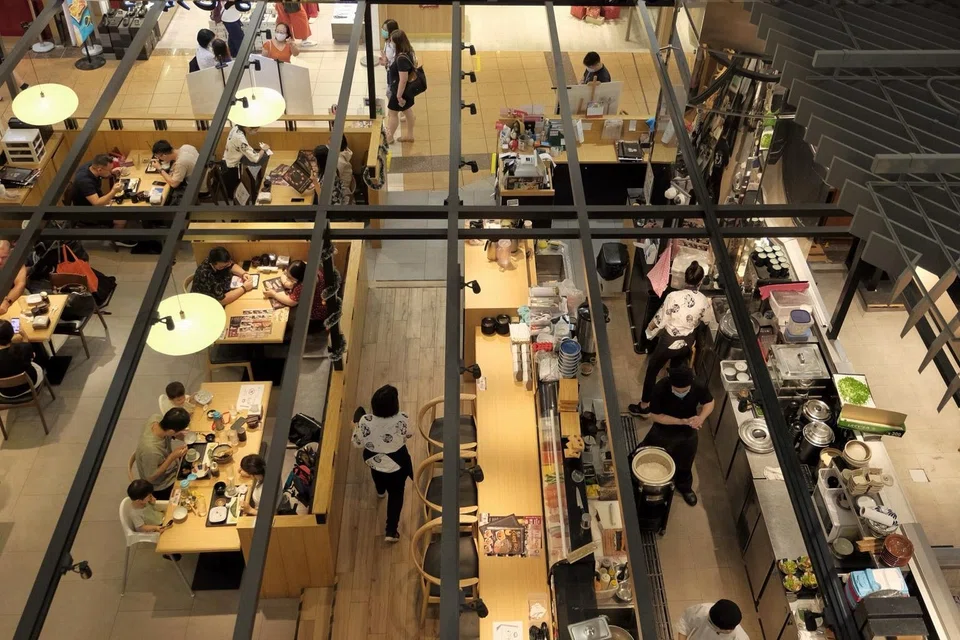
Restaurant capacities have already been reduced as a result of safe management measures, but some operators said they may further reduce the number of bookings they accept for the CNY period as manpower numbers are well below needed capacity.
Said Mr Soh of Minor Group: "A restaurant that usually has 10 people, sometimes only has five to six workers. It burns them out. Even if we offer them more money for overtime, they get to a point where money is not enough. They just need to rest."
Noting that manpower shortages have been an issue for the F&B industry for a long time now, TungLok Group president and chief executive Andrew Tjioe said his company will continue to find ways to cope, such as by hiring part-timers, using automation and restructuring workflows for higher efficiencies.
Technology aids could help mitigate the problem, said Jay Teo, international director of restaurant technology firm iCHEF. "We may see more owners adopting POS (point of sale) systems to increase outlet efficiency, streamline orders with delivery services and utilise the new data... to better forecast demand and reduce the pressure faced by physical outlets."
Unfortunately, technology can only do so much, and food operators facing a labour crunch may have to accept "compromised service" and lower table turnover rates, said Foodtech F&B Ventures chief executive Serene Ang.
Supply chain disruptions are expected to be less of an issue, as the Singapore government has helped to keep essential lanes open and secure alternative sources.
However, prices for some goods, especially fresh produce, could continue to rise. Mr Tang noted that chilli padi used to cost S$5-6 per kilogram, but now costs more than S$10 for the same amount.
Mr Desbaillets of SaladStop! met suppliers last week and got assurances that they would be able to deliver all the needed supplies. He anticipates more issues if restrictions are tightened, but added that his company will adapt as it did to initial challenges in the pandemic. "We have explored other options for the last nine months, so it's easier to pivot back to different supply channels."
Les Amis Group also plans to monitor the situation and adapt accordingly. Said group executive chef Galvin Lim: "As a group, we do import our produce from multiple countries and we are on constant lookout for alternative sources. What is important is to remain nimble during this time, have more dynamic menu planning and not over-rely on just one avenue of supply."
Besides the PCA, Singapore has a Reciprocal Green Lane (RGL) arrangement with Malaysia for short-term business travel. Malaysian senior minister Ismail Sabri Yaakob said on Tuesday that both schemes will continue despite the MCO.
According to a written Parliamentary reply by the Ministry of Health on Jan 6, Singapore received a combined total of about 835 travellers via its RGLs with Asean countries (namely, Malaysia, Brunei and Indonesia) from June 8 to Dec 25, 2020.
READ MORE:
TRENDING NOW

Simba admits exceeding spectrum limits amid failed M1 deal; full-year profits surge 277%

Temasek’s Wan Chee Foong to helm PIL, Lars Kastrup to be board adviser

He built the Vingroup empire. Now South-east Asia’s richest man is handing some key roles to his sons
One-third of Singapore-listed firms at risk in severe AI downturn: MAS

