Singapore’s Charge+ announces US$20 million Series B target for network growth in South-east Asia
Funds raised will be used to support the company’s regional development and strategic goal of 30,000 chargers globally by 2030

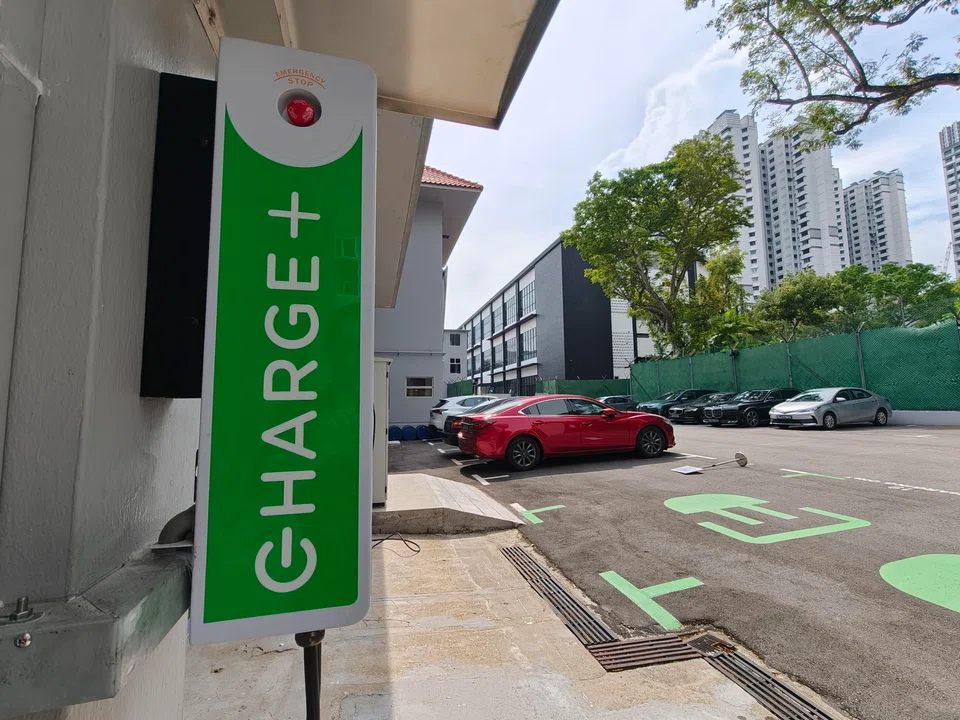
[SINGAPORE] Singapore-based electric vehicle (EV) charge-point operator Charge+ revealed on Monday (Mar 30) that its Series B funding round is currently under way, with a target of US$20 million in 2026.
The company did not disclose details of when the round will close nor the potential investors involved. But Charge+ chief executive Goh Chee Kiong told The Business Times that he expects a “good slate” of investors for the round.
The funds raised will be used to further expand Charge+’s network in Singapore and South-east Asia.
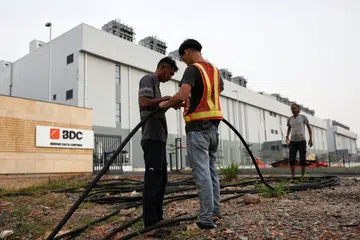
It will complete a 5,000 kilometre-long regional EV “charging highway” going from Singapore to Hanoi, through Malaysia, Thailand, Cambodia and Vietnam, by the end of this year.
Meanwhile, its long-term goal is to have 30,000 charging stations globally by 2030.
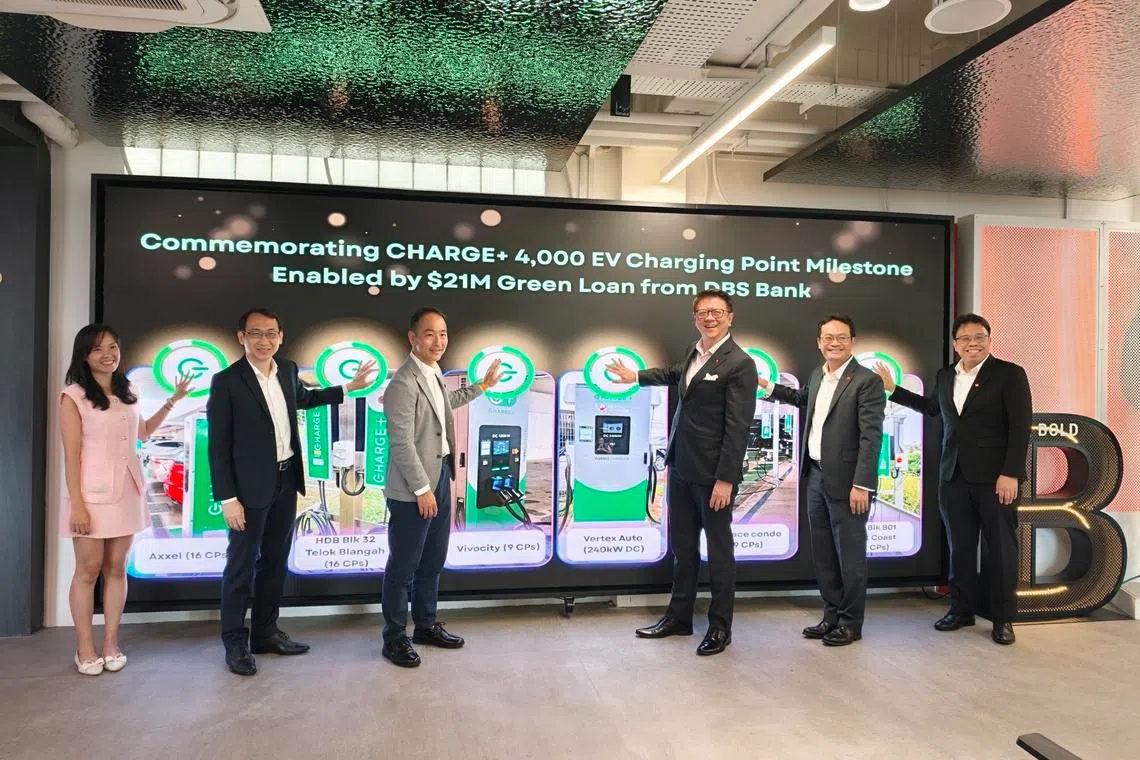
In 2024, Charge+ raised US$8 million in a Series A round. It also said on Monday that it had signed a US$16 million green loan with DBS under the Enterprise Financing Scheme – Green that same year.
“This timely combination of equity and debt will bolster the capital base of Charge+ and help it achieve its goal of being the leading EV-charging company in South-east Asia,” it said.
Largest EV-charging network in Singapore
This comes as the charge-point operator now has Singapore’s largest EV-charging network, with around 4,200 such charging points.
More than 2,000 of these are under Singapore’s national EV-charging network, located in Housing & Development Board car parks and other public places.
SEE ALSO




It has other publicly available charging points in malls as well as commercial and industrial buildings. The company’s network also includes around 1,700 charging points in condominiums.
The next-largest charge-point operator is SP Mobility – part of state-owned power and infrastructure company SP Group – with more than 3,300 charging points.
As at January 2026, Singapore has around 28,000 charging points, 12,000 of which are publicly accessible.
Ong Tze Boon, chairman of Charge+, said that the DBS loan was a “turbo-booster” in helping the company realise its regional ambitions.
Chen Ze Ling, group head of corporate and SME banking for DBS, noted that Charge+’s goal to scale up is in step with Singapore’s move towards cleaner transport. At the same time, it can build capabilities that can extend beyond the Republic.
“Its progress shows how local enterprises can help translate national sustainability ambitions into real-world outcomes,” he added.
As at end-2025, DBS had committed more than S$102 billion in sustainable financing commitments, net of repayments, with green loans to sectors that include real estate and renewables as well as to support small and medium-sized enterprises (SMEs). EV-charging rates in Singapore have held stable even as petrol and diesel prices spike due to the Middle East conflict, though observers say that rising energy prices might lead to higher charging rates in April.
Decoding Asia newsletter: your guide to navigating Asia in a new global order. Sign up here to get Decoding Asia newsletter. Delivered to your inbox. Free.
Copyright SPH Media. All rights reserved.