
A snapshot of which flag states take their responsibilities seriously
 Add BT as a preferred source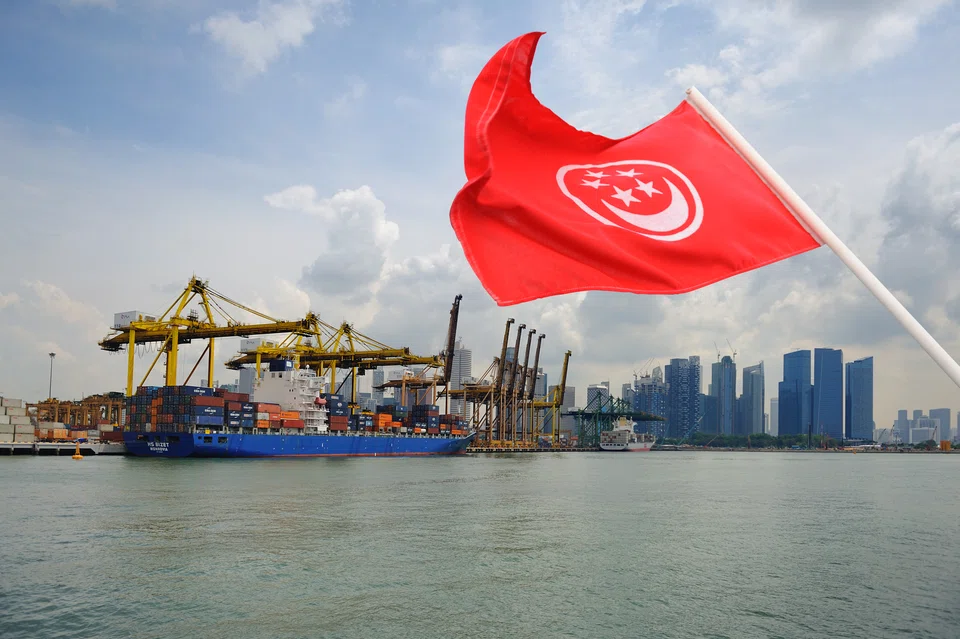
EVERY January, the International Chamber of Shipping (ICS) publishes its annual Shipping Industry Flag State Performance Table.
Examining the ICS table is really the only way of comparing the performance of the world’s shipping administrations and is available free of charge on the ICS website. It is a very large matrix covered in blue (generally good) and red (generally bad) squares that show compliance under six categories: Port State Control (PSC), Ratification of Conventions, Recognized Organizations Code, Vessels’ Age, Reports to the International Maritime Organization (IMO) and IMO attendance.
The message from ICS is broadly that things are getting better. Notably, Singapore is one of the best performers with an impressive record.
A simple means of assessing the effective enforcement of international rules is to examine the collective PSC record of ships flying a particular flag.
The three principal PSC authorities are the countries of the Paris Memorandum of Understanding (MOU), the Tokyo MOU and the United States Coast Guard (USCG). All three authorities target particular flags on the basis of deficiencies and detentions recorded for ships flying that flag.
The table identifies flag states that feature on the Paris and Tokyo MOUs’ white lists and that have fully qualified for the USCG’s Qualship 21 programme, and those which do not appear on their respective black lists/target lists. Ships whose flag states do not appear on PSC white lists tend to be subject to a greater likelihood of inspections.
Navigate Asia in
a new global order
Get the insights delivered to your inbox.
The table now also identifies those flags whose ships suffered no detentions within a particular PSC region over the previous three years, but did not meet the relevant minimum requirement of inspections or arrivals to be included in the MOU white lists/ Qualship 21 programme. In order to be identified in this way with respect to the Paris and Tokyo MOU white lists, a flag must have undergone at least one inspection in the previous three years.
With respect to the Qualship 21 programme, a flag must have made at least three distinct arrivals in each of the previous three years. As regards the USCG Target List, flags which are listed as “medium risk” on the list are identified with a neutral indicator, which is how the three PSC authorities present this information.
The table also reports that a record 49 flag administrations have achieved full qualification status this year under the US Coast Guard’s Qualship21 programme. The initiative seeks to reward those companies, operators, and vessels that demonstrate the highest commitment to quality and safety through the highest level of compliance with International standards and US laws and regulation.

As in previous years, ICS notes, a number of flag states have achieved all green/positive indicators in the ICS Flag State Performance Table 2022/2023. These include Bahamas, Bermuda, Cayman Islands, Denmark, France, Germany, Greece, Isle of Man, Italy, Japan, Liberia, Malta, Marshall Islands, the Netherlands, Norway, Panama, Singapore and the United Kingdom.
Among the top 10 largest ship register by deadweight tonnage, covering over 79 per cent of the world’s merchant fleet, only two have one negative indicator, while the remaining eight have all positive indicators. Of those flag states which are the lowest performing, a single flag state (Togo) is featured on the black/target lists for all three of the PSC regimes assessed (Paris MOU, Tokyo MOU and USCG Annual Report).
While PSC activity has traditionally focused on the structural condition and operation vessels, inspectors have increasingly looked at crew welfare as protected by the Maritime Labour Convention.
Each year, flag states must report on labour standards as part of their ILO audit commitments. Some of the labour standards specific to seafarers include repatriation of seafarers, accommodation provision, health protection and medical care. Last year, 67.6 per cent of flag states reported on their ILO audit commitments, an increase of 25 per cent on the previous year, “representing,” according to ICS, “a growing awareness on the importance of this area of reporting”.
In its commentary on the new table, ICS says: “Continuing to increase the levels of reporting on labour standards is vital to maintain seafarer welfare. As the shipping industry moves towards further digitalisation and a green transition, there will be changes to the way seafarers work. Through increases in and improvements to reporting, the industry can identify how working conditions can continue to be safe for the world’s seafarers.”
ICS secretary general Guy Platten says: “As new technologies are introduced on board ships, we must make sure innovation does not come at the cost of safety. By continuing to report on labour standards, we can improve working conditions for our seafarers, equip them with the appropriate skills they need to carry out their jobs, and ensure a just transition for all.”
Now, we shouldn’t be too carried away by this apparently good scenario. There are still some very poor flag states, very bad shipowners and shamefully poor ships. Nevertheless, the pressure is steadily increasing on substandard shipping and pushing it further into the margins of world trade.
Decoding Asia newsletter: your guide to navigating Asia in a new global order. Sign up here to get Decoding Asia newsletter. Delivered to your inbox. Free.
Copyright SPH Media. All rights reserved.

